
Fostering exchange and collaboration among experts from academia, research institutions, and industry.
The Machine Learning to Advance Quantum Technologies (ML4QT) Symposium serves as a leading forum for researchers and developers interested in the convergence of machine learning and quantum innovation. Whether you are actively working in this space or seeking to get involved, ML4QT provides an ideal environment to discover new opportunities, foster collaboration, and help drive the next generation of quantum technologies.
This second annual gathering will be held at the Institute for Quantum Computing, within the Quantum-Nano Centre, University of Waterloo from the 23 to 25 of September 2026.
Important Dates
- July 1, 2026 |Call for Contribution Submission Deadline
-
July 1, 2026 | General Registration Opens
- August 1, 2026 | Contribution Decision Notifications
-
September 1, 2026 | Registration Closes
- September 23 - 25 | ML4QT Symposium
Have questions about the event? Contact us at iqc.events@uwaterloo.ca
Invited Speakers
Aida Ahmadzadegan-Shapiro, D-Wave
Yuval Baum, Q-CTRL
AI enhanced infrastructure software: integrating machine learning across the quantum computing stack
Quantum computers promise to revolutionize computing and have made incredible hardware strides, but they remain notoriously error-prone. While low-level control tweaks and clever circuit design can compensate for these hardware errors, current techniques require the availability of highly detailed noise models, deep algorithmic knowledge, and labor-intensive manual tuning. Because of this, they rarely generalize beyond a few narrow use cases.
In this talk, I will show how machine learning (ML) can be integrated across the entire quantum computing stack to solve this bottleneck. We will explore how ML methods outperform traditional techniques at every level: from device and gate calibration at the bottom, to compilation and error suppression in the middle, up to algorithmic optimization and quantum error correction at the top.
Pierre-Emanuel Emeriau, Quandela
Jem Guhit, Quantinuum
Learning Quantum State Preparation with Generative AI
Preparing quantum states efficiently remains a central challenge in quantum chemistry. This talk presents recent work on using generative AI to learn molecular ground-state preparation circuits directly from molecular Hamiltonians, replacing expensive iterative circuit construction with learned generation. I will discuss the insights gained from this approach, its current capabilities, and limitations, and conclude with an outlook on generative quantum eigensolvers and future directions for machine learning in quantum algorithm design.
Tak Hur, Yonsei University
Estelle Maeve Inack
Pavithran Iyer, Xanadu
Data-Driven Belief Propagation Decoding of quantum LDPC Codes under Realistic Noise
Quantum error correction enables reliable logical computation on noisy hardware, but its guarantees typically rest on simplified noise models and incur large physical overheads. Real devices, however, exhibit correlated errors that fall outside these models. We enhance the performance of quantum low-density parity-check (qLDPC) codes, a family of codes which contain candidates with the lowest known overheads for fault tolerance, under spatially correlated noise. We leverage a correspondence between belief propagation (BP) decoding of a qLDPC code and a neural network, in which the message-passing iterations of BP unroll into the layers of the neural network. This correspondence opens a wide scope for data-driven generalizations of BP. We train the neural network weights on characterization data obtained via Cycle Error Reconstruction, yielding a decoder adapted to the error model of the underlying hardware. Our neural network decoder achieves up to a tenfold reduction in logical error rate over standard BP across diverse noise regimes.
Roman Krems, University of British Columbia
Wolfgang Mauerer, OTH Regensburg

Machine Learning, Quanta, and the Extraction of Physical Compute Power
Quantum computing’s industrial and scientific impact depends on more than established computational advantages; it requires progress across algorithms, architecture, engineering, and foundational concepts. This talk advocates a vertically integrated, interdisciplinary systems perspective. We discuss how machine learning can help extract greater value from quantum systems by reducing unnecessary classical computation in hybrid algorithms and improving use of available quantum resources. We argue that this broader framing can reveal deeper structural origins of quantum advantage and inspire new views of learning.
Manas Mukherjee, National University of Singapore
Seeking advantage in Quantum-Classical Machine Learning with trapped ion system
Quantum technologies, specifically Quantum Computing (QC), represent a paradigm shift in computational power. However, the roadmap to utility is hindered by the inherent fragility of quantum states—a hurdle that makes scaling the industry’s greatest challenge.
To address this, we have developed a quantum-classical hybrid framework designed to push the boundaries of Quantum Machine Learning (QML). By leveraging the trapped-ion platform—noted for its superior coherence times and high gate fidelities—we have demonstrated that quantum classifiers can achieve over 98% fidelity in supervised learning tasks using real-world datasets [1, 2].
While achieving parity with classical systems is a significant milestone, our current research pivots toward the ultimate goal: identifying the specific parameters and architectures where QML provides a definitive advantage over classical counterparts. Here, we will discuss detail of our findings across varied application contexts, highlighting the conditions under which quantum enhancement becomes a reality.
[1] 10.1103/physreva.106.012411
[2] 10.1016/j.isci.2025.113058
Christine Muschik, University of Waterloo
Kohei Nakaji, NVIDIA

Toward ML for Quantum Algorithms at Practical Scale
How to apply modern machine learning techniques to quantum algorithms at practically relevant scales remains an open question. We will explore this question through the Generative Quantum Eigensolver (GQE) and its variants, which use generative machine learning to discover quantum circuits for quantum chemistry. We will then discuss MoLe, an approach for constructing molecular wave functions that can transfer across different molecules, highlighting a path toward scalable and transferable machine learning for practical quantum algorithms.
Lirandë Pira, National University of Singapore

Computational Structure of Learning in Quantum Systems
How can quantum systems learn from data? Quantum learning problems arise naturally when quantum systems are used as models, as data sources, or as physical platforms.
This talk examines learning in quantum settings through two complementary perspectives: using quantum systems as learning models, and learning quantum systems themselves from data. On the modelling and designing side, a recurrent theme is the role of structure in determining learnability. Structured operator representations, together with tools from quantum linear algebra, lead to quantum models whose complexity and behavior can be analyzed more systematically.
From a complementary perspective, one can view tasks such as reconstructing states, channels, or Hamiltonians as problems of learning quantum systems. This connects naturally to ideas from system identification and operator approximation.
I will also discuss recent directions on coherent training protocols, where model parameters are treated as quantum degrees of freedom and optimized through quantum evolution. More broadly, the goal is to better understand what makes quantum systems learnable, and how these principles shape the design of quantum learning and computational models.
Connor van Rossum, University of Queensland

Can noise help quantum algorithms? Insights from sampling and variational methods
Quantum algorithms typically claim to be resource efficient relative to classical algorithms but it is well known that this performance differential may vanish under realistic operating conditions or noise. While the field has developed strategies to retain quantum advantage, the interaction between quantum and classical resources is often ignored but critically determines the efficacy of quantum algorithms. Our first result, in the context of noisy quantum variational learning, shows that performance depends on how noise interacts with classical optimisation. I show that commonly used subroutines in error‑mitigation strategies such as Pauli twirling can degrade variational optimisation by suppressing gradients and reducing expressivity. In contrast, biased or non‑unital noise can introduce exploitable structure that improves optimisation outcomes. Through analytical and numerical studies, this work demonstrates that preserving noise asymmetries can lead to better performance than symmetrising noise, challenging standard assumptions about mitigation in the variational setting. In recent times, quantum variational models have evolved towards sample-based quantum algorithms for chemistry. For the specific example of Sample‑based Quantum Diagonalisation (SQD), in our second result, I show that noise enables a higher unique sampling rate that allow classical stochastic algorithms to outperform quantum algorithms for naively designed chemistry demonstrations. I discuss that standard error mitigation is not useful for these algorithms, before showing how machine learning can enable better ansatze design and measurement techniques to not only increase the unique sampling rate but ensure noise-robustness and resource efficiency of these demonstrations.
Barry Sanders, University of Calgary
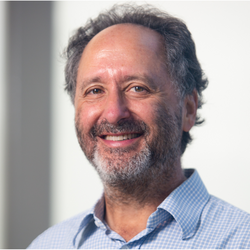
Artificial Intelligence for Representing and Characterizing Quantum Systems
I review how integrating AI into quantum-system characterisation is typically based on machine learning, deep learning and language models for the core tasks of quantum-property prediction and quantum-system reconstruction with applications to certification, benchmarking, enhancing quantum information processing and identifying critical quantum phenomena. https://arxiv.org/abs/2509.04923
Justyna Zwolak, NIST
ML4QT Organizing Committee
Achim Kempf

Christian Tutschku

Christine Muschik

Lirandë Pira

Virginia Frey

Marco Roth

Kevin Qu


