Connecting Canada’s North with a quantum sensing system
IQC researchers are using contest funding to pioneer entanglement swapping for quantum information distribution
By Naomi Grosman
A research group at the Institute for Quantum Computing (IQC) at the University of Waterloo has secured $1 million to develop a proof of concept linking observation stations by sharing quantum entanglement via drones, creating a sensing system with unprecedented resolution.
Dr. Michael Reimer’s Quantum Photonic Devices group at IQC received the funding as a semi-finalist of the Innovation for Defence Excellence and Security (IDEaS) NORAD Modernization Science and Technology contest.

“This is a highly competitive contest, and we are already well positioned to demonstrate our proof of concept within the contest’s one-year deadline. Quantum technology is developing fast and access to funding like the IDEaS contest, and private and public investments, shows how seriously quantum tech adoption is being pursued—and quantum sensing is taking off.”
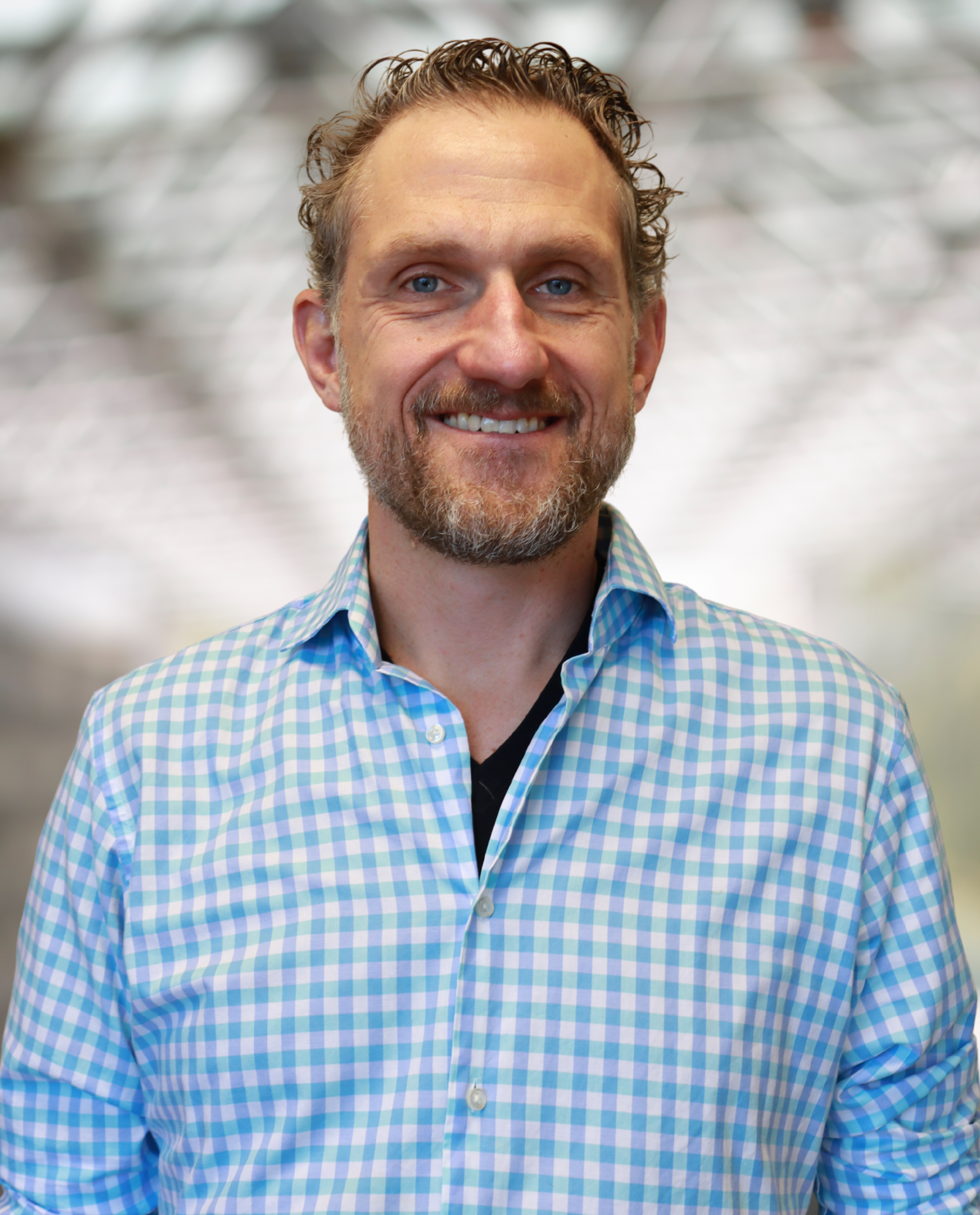
- Dr. Michael Reimer, IQC faculty and professor, Department of Electrical and Computer Engineering
The sensing system relies on a quantum phenomenon called entanglement where two particles are so strongly correlated that the properties of one cannot be described without considering the properties of the other.
Entanglement allows separated sensors to share quantum information and improves the combined ability of the sensors to detect and distinguish objects with higher precision than two individual sensors on their own. Sharing entanglement over long distances has been demonstrated and can be pushed even further by developing techniques like entanglement swapping and quantum repeaters.

Dr. Tarun Patel (Left) and Sayan Gangopadhyay (right) in the Quantum Photonic Devices lab at the Institute for Quantum Computing (IQC).
But distributing this quantum information in remote regions like Canada’s North is challenging because fiber connections aren’t always available or the distance between stations is too great to effectively distribute the entanglement.
In collaboration with scientists across Canada, Reimer's project aims to develop a distributed quantum network through entanglement swapping using drones as a mobile link to connect two observation stations; like a relay that connects two stations that don’t have a direct network link.
Reimer and his research group have been working on entanglement swapping for almost a decade— and is a world-leader in its development.
“This would be a new capability and infrastructure that doesn’t exist today for a range of quantum sensing applications with dramatically increased resolving power to see details that are currently impossible to detect,” says Reimer.

Dr. Tarun Patel is leading the project in the lab.
At the Quantum Photonic Devices lab, Postdoctoral Fellow Dr. Tarun Patel and graduate students Matteo Pennacchetti, Anthony Drouin and Sayan Gangopadhyay, have developed a method to efficiently produce nearly perfect entangled photon pairs using a quantum dot source in a nanophotonic device. The light source is grown at the National Research Council Canada in Ottawa and produces entangled single photons (photons are the smallest quantity of light). The team at IQC has developed novel nanofabrication techniques to enhance efficiency and tune the energy of the quantum dot entangled photon source for the quantum network application.
“We are developing the best entangled photon source in the world for this project; a quantum dot that can generate entangled photons deterministically,” says Patel, who is leading the project in the lab. “With a push of a button the photons are released with high efficiency, a feature that is not widely available from our competitors. Our technology would be game-changing as it increases the rate at which we can distribute entanglement, effectively achieving quantum networks over long distances in real world settings.”
The technology’s potential is broad and has civilian and defense applications, Reimer says.
“It can be used for deep-space exploration of exoplanets, as well as geospatial imaging for search and rescue missions, and wildfire monitoring. My vision is to help create a global quantum network that can enable the realization of a telescope with an aperture the size of Earth,” he says.
Project collaborators are Dr. Thomas Jennewein, IQC affiliate and professor at Simon Fraser University, and Dr. Jean-Philippe Bourgoin, CEO & co-founder of IQC-linked startup Single Quantum Systems, a quantum technology startup also co-founded by Reimer. Single Quantum Systems and Jennewein are developing the drones and technology needed to transmit the quantum signals in an outdoor environment.
Un système de détection quantique pour le Nord canadien
Des chercheurs de l’IQC utilisent les fonds d’un concours pour révolutionner l’échange d’intrication aux fins de la distribution d’information quantique
Naomi Grosman
Un groupe de recherche de l’Institut d’informatique quantique (IQC), à l’Université de Waterloo, a obtenu un million de dollars pour démontrer la faisabilité de la mise en réseau de stations d’observation grâce au relais de l’intrication quantique par drones afin de créer un système de détection d’une résolution sans précédent.
Le groupe de Michael Reimer, qui travaille sur les dispositifs photoniques quantiques à l’IQC, a reçu ce financement à titre de demi-finaliste au concours Innovation pour la défense, l’excellence et la sécurité (IDEeS) sur la modernisation de la science et de la technologie du NORAD.
« La concurrence est féroce pour ce concours, et nous sommes en bonne position pour démontrer la faisabilité du concept dans l’année allouée. La technologie quantique évolue rapidement, et le financement reçu de concours comme celui-ci, sans compter les investissements privés et publics, prouve tout le sérieux de la recherche dans ce domaine – de fait, la détection quantique gagne du terrain. »
– Michael Reimer, professeur à l’IQC et au Département de génie électrique et informatique
Le système de détection étudié repose sur le phénomène quantique de l’intrication, dans lequel deux particules sont si corrélées que les propriétés de l’une ne peuvent être décrites indépendamment des propriétés de l’autre.
L’intrication permet à des capteurs appareillés de partager de l’information quantique, ce qui leur confère une capacité et une précision de détection combinées supérieures à celles de deux capteurs individuels. La possibilité d’étirer l’intrication sur de longues distances a déjà été prouvée, mais l’idée peut être poussée encore plus loin avec des techniques et technologies comme l’échange d’intrication et les répéteurs quantiques.
Toutefois, il est difficile de distribuer l’information quantique dans les régions éloignées, comme le Nord du Canada, car la fibre optique n’y est pas toujours disponible, et la distance entre les stations est parfois trop grande pour relayer efficacement l’intrication.
En collaboration avec d’autres scientifiques du pays, l’équipe du Pr Reimer travaille à élaborer un réseau quantique distribué fondé sur l’échange d’intrication. L’objectif : raccorder deux stations d’observation sans lien direct à l’aide de drones-relais.
Le groupe de recherche étudie l’échange d’intrication depuis près de dix ans et est reconnu à l’international pour ses travaux.
« Une telle infrastructure ouvrirait des possibilités novatrices pour diverses applications de détection quantique, notamment grâce à un pouvoir de résolution largement supérieur permettant de détecter des détails jusqu’ici impossibles à voir », explique le professeur.
Dr. Tarun Patel is leading the project in the lab.
Dans le laboratoire de dispositifs photoniques quantiques, le stagiaire postdoctoral Tarun Patel et les étudiants des cycles supérieurs Matteo Pennacchetti, Anthony Drouin et Sayan Gangopadhyay ont mis au point une méthode efficace pour produire des paires de photons presque parfaitement intriquées à l’aide d’une source appelée point quantique intégrée à un dispositif de nanophotonique. Cette source de lumière leur provient du Conseil national de recherches du Canada, à Ottawa, et produit des photons (la plus petite unité de lumière possible) uniques intriqués. L’équipe de l’IQC a conçu de nouvelles techniques de nanofabrication pour augmenter l’efficacité et régler l’énergie de la source de photons intriqués aux fins d’un réseau quantique.
« Pour ce projet, nous travaillons à produire la meilleure source de photons intriqués au monde : un point quantique capable de générer des photons intriqués par voie déterministe, relate Tarun Patel, qui dirige le projet. Avec notre dispositif hautement efficace, il suffit d’appuyer sur un bouton pour relâcher des photons, ce que nos compétiteurs n’offrent pas encore à grande échelle. Notre technologie change la donne parce qu’elle augmente la vitesse de relais de l’intrication, ce qui permet de créer des réseaux quantiques efficaces sur de longues distances dans le monde réel. »
Selon le Pr Reimer, cette technologie a de vastes applications, notamment dans la vie civile et dans la défense.
« Elle peut servir à l’exploration d’exoplanètes dans l’espace lointain, à l’imagerie géospatiale dans les missions de recherche et sauvetage, ou encore à la surveillance des feux de forêt. Mon objectif est d’aider à créer un réseau quantique mondial capable d’agir comme télescope géant à l’ouverture de la taille de la Terre », rêve-t-il.
Collaborent également au projet Thomas Jennewein, membre affilié de l’IQC et professeur à l’Université Simon-Fraser, ainsi que Jean-Philippe Bourgoin, PDG et cofondateur de Single Quantum Systems, une jeune entreprise de technologies quantiques affiliée à l’IQC (et également cofondée par le Pr Reimer). Single Quantum Systems et Thomas Jennewein travaillent sur les drones et autres technologies employés pour transmettre les signaux quantiques dans l’environnement extérieur.