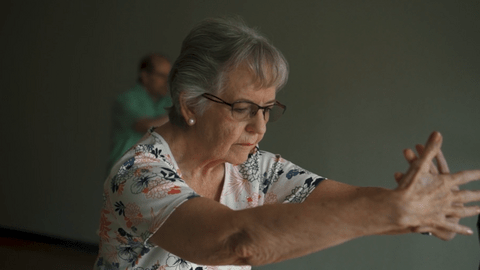
University of Waterloo led research improves equal access to community supports
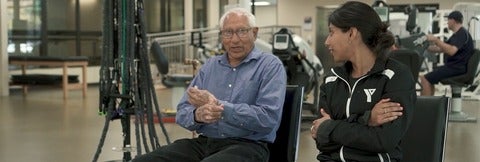
A group of researchers from the University of Waterloo is providing community partners with training and resources to support people living with dementia.
Researchers have linked the fitness of elite soccer players to the positions they play. The ability to make this assessment can help coaches regulate individual training loads based on player position.
Synthetic cannabidiol, a non-psychoactive compound also found in the cannabis plant, appears to prime the innate immune system of cells, potentially offering protection against pathogens such as SARS-CoV-2.
Remote monitoring of health-related behaviour with wearable sensor technology is feasible for people with complex health conditions, shows a recent University of Waterloo study.
Many things change when a person is diagnosed with dementia, but one thing that doesn’t have to is the ability to exercise.
Marina Mourtzakis, a Kinesiology professor who leads Waterloo’s Centre for Community, Clinical and Applied Research Excellence, examines how to exercise safely as a cancer survivor during or after treatment.
Persons with neurodegenerative diseases can monitor at home
Flip-flops have a tendency to come off the foot entirely during slips in dry and wet conditions, contributing to a greater risk of injury, says a University of Waterloo study.
We talked to sports mental performance consultant Wade Wilson in the Department of Kinesiology to help us understand some of the risks of convening the major leagues to play again.
The study, conducted by the Brain and Body Lab at the University of Waterloo, is asking people of different age groups how vulnerable they believe they are to COVID-19.