After a stroke: regaining mobility
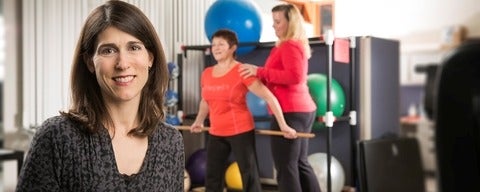
McIlroy’s team is working on development of novel exercise programs and equipment geared to stroke victims.
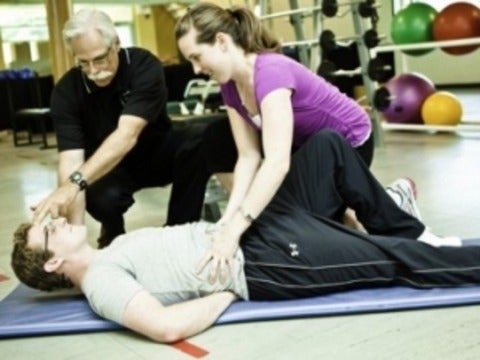
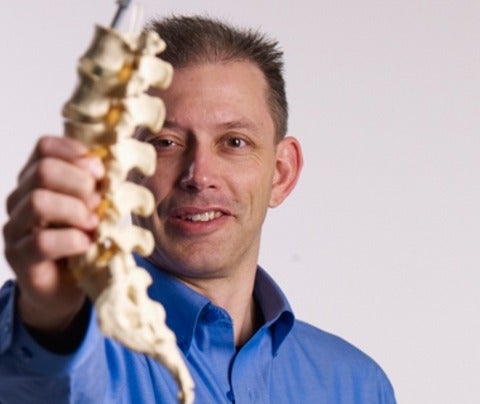
Fill a room with 100 people and you can bet your bottom dollar 80 will have a tale to tell about back pain. Jack Callaghan is trying to answer why that is, and find ways to change it.
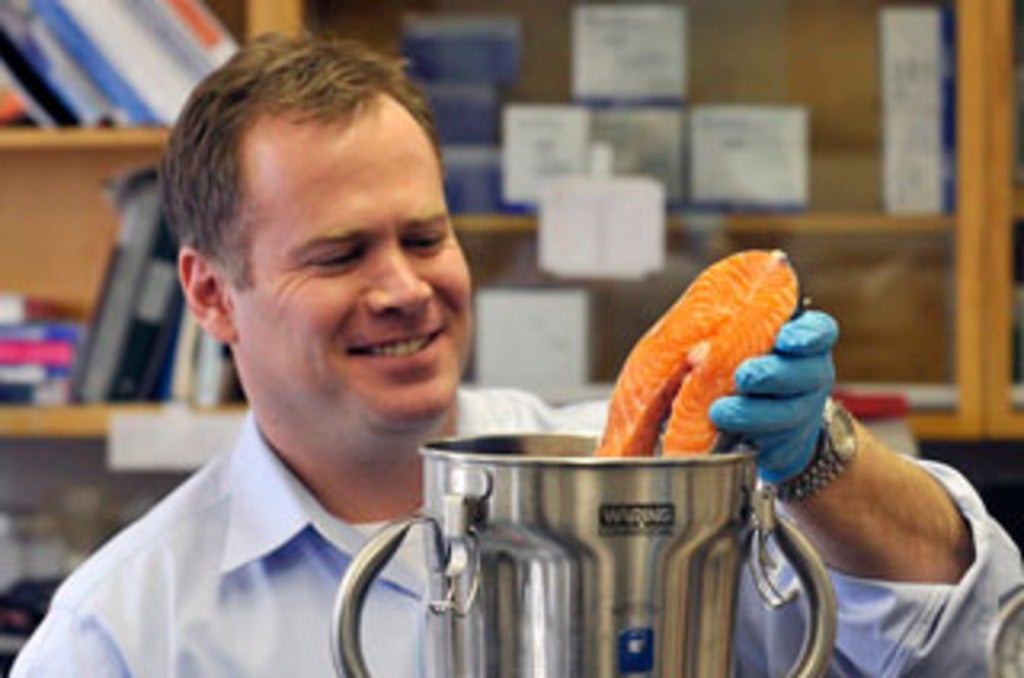
The assistant professor in kinesiology develops innovative ways to uncover how much Omega-3 Canadians are consuming. He's testing not the food they eat, but the blood in their veins.
Astronauts living on the International Space Station (ISS) regularly do experiments for Earth-bound researchers in the station’s near-zero gravity.
They call it the New Year’s Eve effect. Even the most impassioned resolutions and best intentions to get physically fit often go unrealized when challenged by the pressures of daily life.
Laura Middleton, assistant professor of kinesiology, is investigating the impact of exercise and physical activity on slowing cognitive decline.
Andrew Laing, an assistant professor in the Department of Kinesiology, has spent the last 10 years pioneering ways to minimize fall-related injuries among older adults.
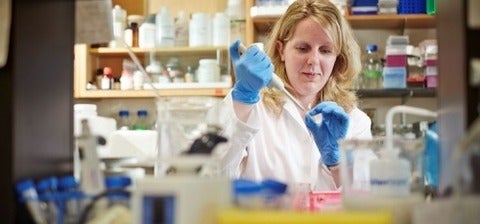
For the last ten years Marina Mourtzakis, an expert in nutrition and physiology in the Department of Kinesiology, has been studying why cancer patients lose muscle and gain fat during chemotherapy and radiation.
Two experiments based at the University of Waterloo soared into space with astronaut Chris Hadfield, who became the first Canadian commander of the International Space Station during his five-month mission in 2013.
It seems astronauts hovering in weightless environments and earthlings reclining in front of the TV share a surprising trait: both avoid the effects of gravity — and both age rapidly as a result.