New director aims to strengthen vision research
Dr. Ben Thompson brings a record of research excellence, visionary leadership and familiarity with the School of Optometry & Vision Science.
Our Waterloo Optometry Clinic has moved to the nearby location of 419 Phillip St., Unit C, as of October 21, 2024. This location will be open until late 2026 while the Waterloo Eye Institute is under construction. Our downtown Kitchener location (Health Sciences Optometry Clinic) remains open with no change to service.
Dr. Ben Thompson brings a record of research excellence, visionary leadership and familiarity with the School of Optometry & Vision Science.

Dr. Chelsea Bray, head of the Advanced Contact Lens Service, is using her new tenure-track role to make a difference through patient care and research.
The journal Ophthalmic and Physiological Optics ranked the papers it has published by their impact. Two University of Waterloo papers made the list, with one occupying the top spot.
A world-leading expert in ophthalmic optics and vision, Dr. Austin Roorda is joining the faculty at the School of Optometry and Vision Science, where he completed his PhD in 1996.
Eye makeup and other beauty products can cause irritation to the eyes or worse – they can result in styes, the worsening of dry eye disease, even an overgrowth of microscopic mites in the eyelashes. However, quality cosmetics are safe when used correctly. Dr. Olivia Ricci explains how to maintain your eye health when using a range of beauty products.
Dr. Stanley Woo has received a prestigious award from the Ontario Association of Optometrists for his contributions to the optometric profession.
This past November, Dr. Nadine Furtado and Waterloo optometry students Sophie Borho and Leah Cuscito participated along with several recent alumni in an Eye Health Institute volunteer trip to northwestern Jamaica.
If you’ve ever had an eye exam, you’ve probably been asked to look at an eye chart through a device where the optometrist flips through different lenses. That device is called a phoropter. Dr. Natalie Hutchings explains how it works.
Dr. Sarah MacIver is applying her expertise in ocular disease to advocate for scope modernization and continuing professional development.
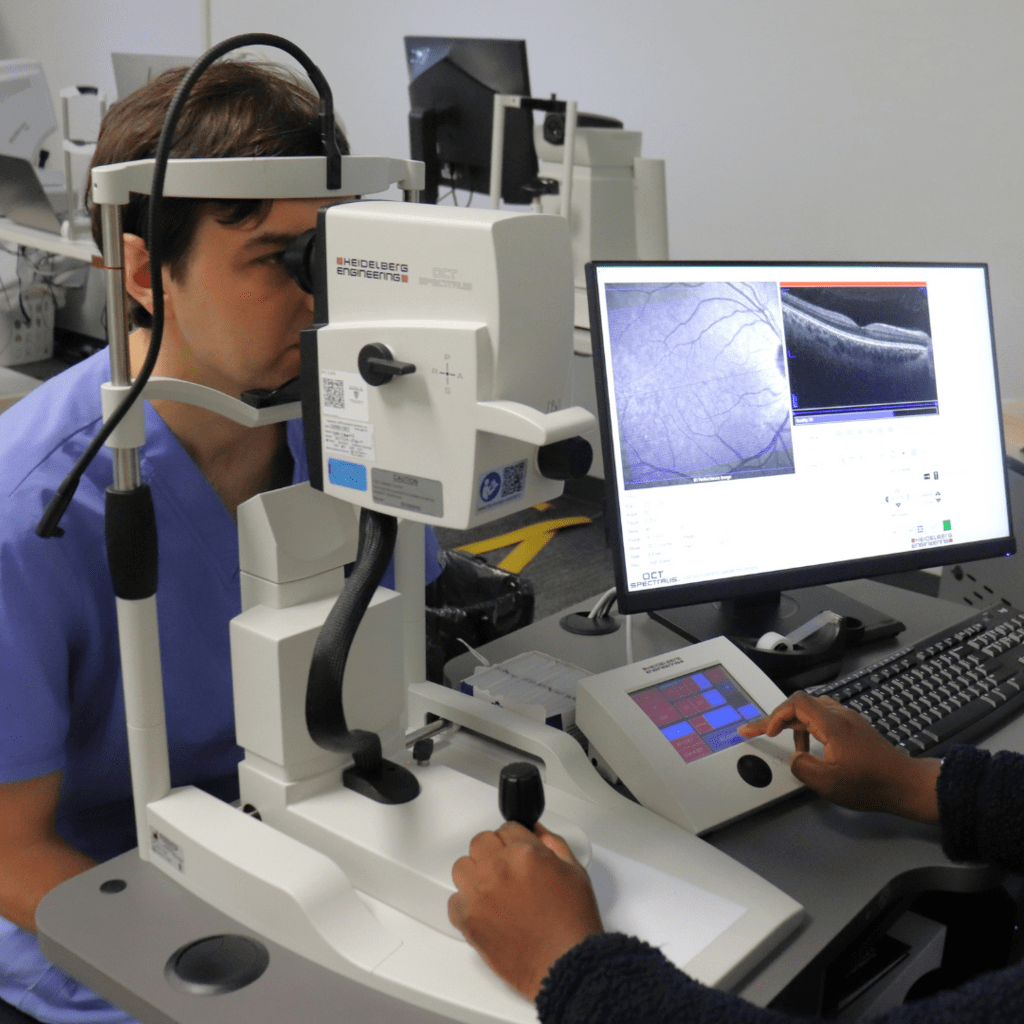
Optical coherence tomography (OCT) is a non-invasive imaging device that uses light waves to examine each layer of the eye so optometrists can detect and track the progression of vision-threatening diseases.