Becoming a point of contact (lenses)
Dr. Chelsea Bray, head of the Advanced Contact Lens Service, is using her new tenure-track role to make a difference through patient care and research.
Our Waterloo Optometry Clinic has moved to the nearby location of 419 Phillip St., Unit C, as of October 21, 2024. This location will be open until late 2026 while the Waterloo Eye Institute is under construction. Our downtown Kitchener location (Health Sciences Optometry Clinic) remains open with no change to service.
Dr. Chelsea Bray, head of the Advanced Contact Lens Service, is using her new tenure-track role to make a difference through patient care and research.
Eye makeup and other beauty products can cause irritation to the eyes or worse – they can result in styes, the worsening of dry eye disease, even an overgrowth of microscopic mites in the eyelashes. However, quality cosmetics are safe when used correctly. Dr. Olivia Ricci explains how to maintain your eye health when using a range of beauty products.
Changes to site aim to provide additional information and make it easier for patients to find what they need
If you’ve ever had an eye exam, you’ve probably been asked to look at an eye chart through a device where the optometrist flips through different lenses. That device is called a phoropter. Dr. Natalie Hutchings explains how it works.
New, state-of-the-art optometric equipment donated by FDC Foundation improves patient care and clinical education.
Optical coherence tomography (OCT) is a non-invasive imaging device that uses light waves to examine each layer of the eye so optometrists can detect and track the progression of vision-threatening diseases.
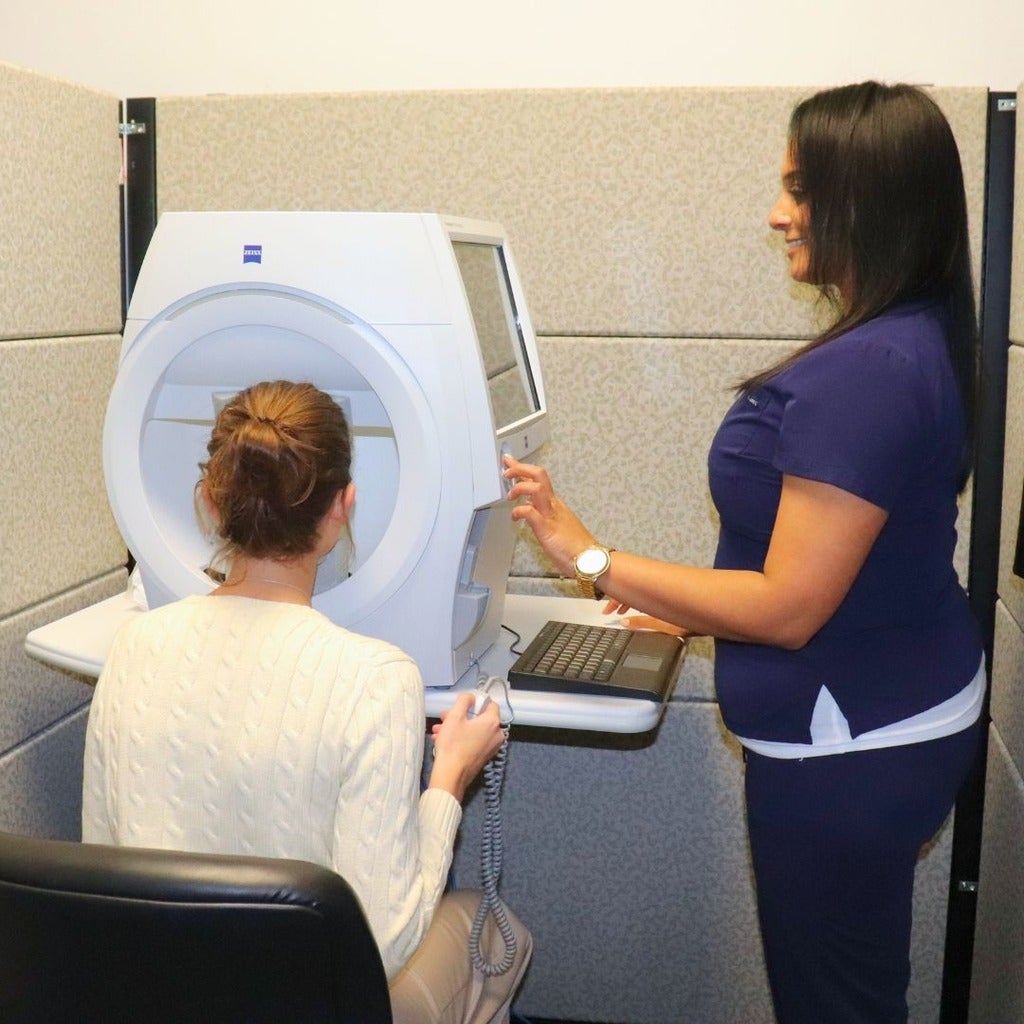
A visual field test assesses peripheral vision. It is a non-invasive test that involves simply clicking a button when you see lights at the sides of your vision. Learn why you might be asked to take a visual field test and what will happen next.
Diabetic eye disease refers to a group of vision problems caused by diabetes, including diabetic retinopathy, diabetic macular edema, cataracts, and glaucoma. These conditions can lead to vision loss or blindness if left untreated.
Amblyopia, also known as lazy eye, is a condition where one or both eyes have impaired vision because the eyes and brain aren’t working together properly. Learn what causes amblyopia and how the condition can be diagnosed and treated.
Dry eye disease is a chronic condition that occurs when an individual does not produce enough quality tears to properly lubricate their eyes. It is estimated that up to 30% of Canadians suffer from dry eye. In the coming years, this number is expected to increase as the population ages.