Welcome to our Fall Issue of WATtimes!

Peter Russell rock garden on campus.
WATtimes: Volume 31 Number 2
Published by the Retirees Association and the University of Waterloo
Judi Jewinski, WATtimes Editor

WATtimes Editor's message
It is a pleasure to deliver this newest issue of WATtimes to your digital mailbox. One of the advantages to producing a magazine that does not have physical pages is that the size of a page no longer dictates the length or positioning of pictures or text. We are fortunate that Rose Vogt, a former board member with unbelievable technical expertise, can adapt, tailor, and revise the format and layout to suit.
The flexibility of a virtual magazine not only allows for more and varied content (from extended articles to photo albums) but adapts to different sized screens. At the same time, we acknowledge that delivering the content to you electronically allows us, frankly, to save trees and dollars at the same time.
Even though we have now officially leapt into the twenty-first century (some of us admittedly still don’t really enjoy scrolling), WATtimes has not forgotten its audience. You are members of a vibrant academic community who share an interest in the activities and contributions of colleagues, former and current. Your editorial team comes with diverse on-campus experience, both academic and technical, and we want you to like our choices of content and delivery. This issue welcomes Rosemary Killeen to the fold.
Our fall issue offers regular features relevant to Waterloo retirees: pension updates, reminiscences, campus news, and articles on thriving in retirement. At the very end, we have added something new: a one-time readership survey that we encourage you to complete with a chance to win a $50 gift card.
Each of us is a volunteer, remember. We keep your interests in mind with everything we do. I look forward to learning whether you believe WATtimes is on the right track.
Ron Champion, UWRA President

UWRA President's message
On Belonging
As I watched the installation of Bill Rosehart as the University’s eighth President and Vice-chancellor on October 22, I felt a sense of pride – both as an alumnus and as a retiree. That sense of pride got me thinking, and I realized how much I value my relationships with the University of Waterloo.
I’m a proud alumnus of Waterloo. Sure, I fumbled around in first year as I struggled with the transition to university from a high school of 400 students and there were a few low points in my academic career, but the high points are top of mind now, and I can see the many ways I’ve grown with my UW education.
I’m especially proud to be a UW retiree. One way or another, I’ve worked at or with the University of Waterloo for more than five decades. The best part? That’s easy to answer: the people. My colleagues in the Writing Centre and at Renison, many of whom remain dear friends. The countless other “interesting people doing interesting things” that I had the good fortune to interact with in every faculty. The students I worked with in the Writing Centre and at Renison. The staff I met through my courses for OHD. The people I collaborated with in Mexico, China, and other countries.
When I (sort of) retired in 2017, I immediately joined the UWRA and the UWRA Board. Belonging to the UWRA and being active with the Board have been rewarding and extended, in significant ways, my relationship with the University, all positive.
I’m grateful to and proud of the University of Waterloo. I hope you are too.
Table of Contents
Then and Now
Looking back at WATtimes 30 years ago
Celebrating 50 years of English Language Proficiency
by Judi Jewinski
This year my Waterloo ID is 56 years old. I was a child of the ‘60s who had chosen Waterloo for its youth and, yes, true back then, innovation. Back in those days, you were allowed to go barefoot and smoke in class. I was there to study English and become a teacher.
My friends and I were determined to make a difference—and for many of us that difference was to bring good grammar to a world which seemed to have forgotten all about it. Exit exams in Ontario (called departmentals) had ended in 1967, and by the time I was completing my MA in 1976, everyone was seriously worried about proper English going to the dogs. Universities everywhere sensed that some students needed help. This was the advent of the English Language Proficiency program here at UW. And the writing exam (the dreaded ELPE that finally ended in 2019) identified candidates for such help—to be offered in a “Writing Clinic,” by professional tutors.

On campus here at UW, professors Ken Ledbetter and Mary Gerhardstein were the movers and shakers. By 1980, there were 25 of us busy almost round the clock.

What an enthusiastic group of recent graduates and older professionals we were! Armed with unshakable principles of elegant, well-organized prose and proper grammatical structure, we shared our expertise willingly and, with almost evangelical zeal.
Over the years, we recognized that language was changing as fast as we were greying: some of the rules we had insisted on were clearly not as clear cut as they had been. The genderless “he” we had all been taught to use in good writing was replaced by “he or she” and eventually “they.” One by one, we realized that effective communication depended less on rules from old textbooks than on context, purpose, and readers. And the epiphany was glorious. Everyone, it seemed, was finally jumping on board.
Now, here we are in 2026, fifty years after the first season of the Writing Clinic, content with the realization that improvement in all things is always possible. We now know that shaking a finger at someone is not as effective as working with them. We accept that working with writers at all stages is better than making them pass arbitrary tests. Best of all, we learned that when the entire university shares the same goals and rewards, everyone benefits.

I am still proud of the fact that I can undangle a participle and use an m-dash effectively. But I thank Waterloo’s Writing and Communication Centre for having taught me the best lesson of all: there is a place for all of us in a community that shares what it knows best. Happy half century!
50 years of Transformation
A Showcase of Poetry, Spoken Word, and Storytelling
To commemorate the Writing and Communication Centre's 50th anniversary, we hosted 50 Years of Transformation: A Showcase of Poetry, Spoken Word, and Storytelling in the Student Life Centre's Black & Gold Room. The celebration brought together students, alumni, faculty, staff, university leaders, and friends from the broader community to reflect on five decades of supporting students at the University of Waterloo.
The event featured performances by five poets representing different corners of the Waterloo community, highlighting the power of storytelling, creativity, and personal expression. Guests also heard remarks reflecting on the WCC's history, impact, and future from WCC founder, Judi Jewinski; Associate Vice-President, Students, Chris Reid; and the Director of the WCC, Clare Bermingham.
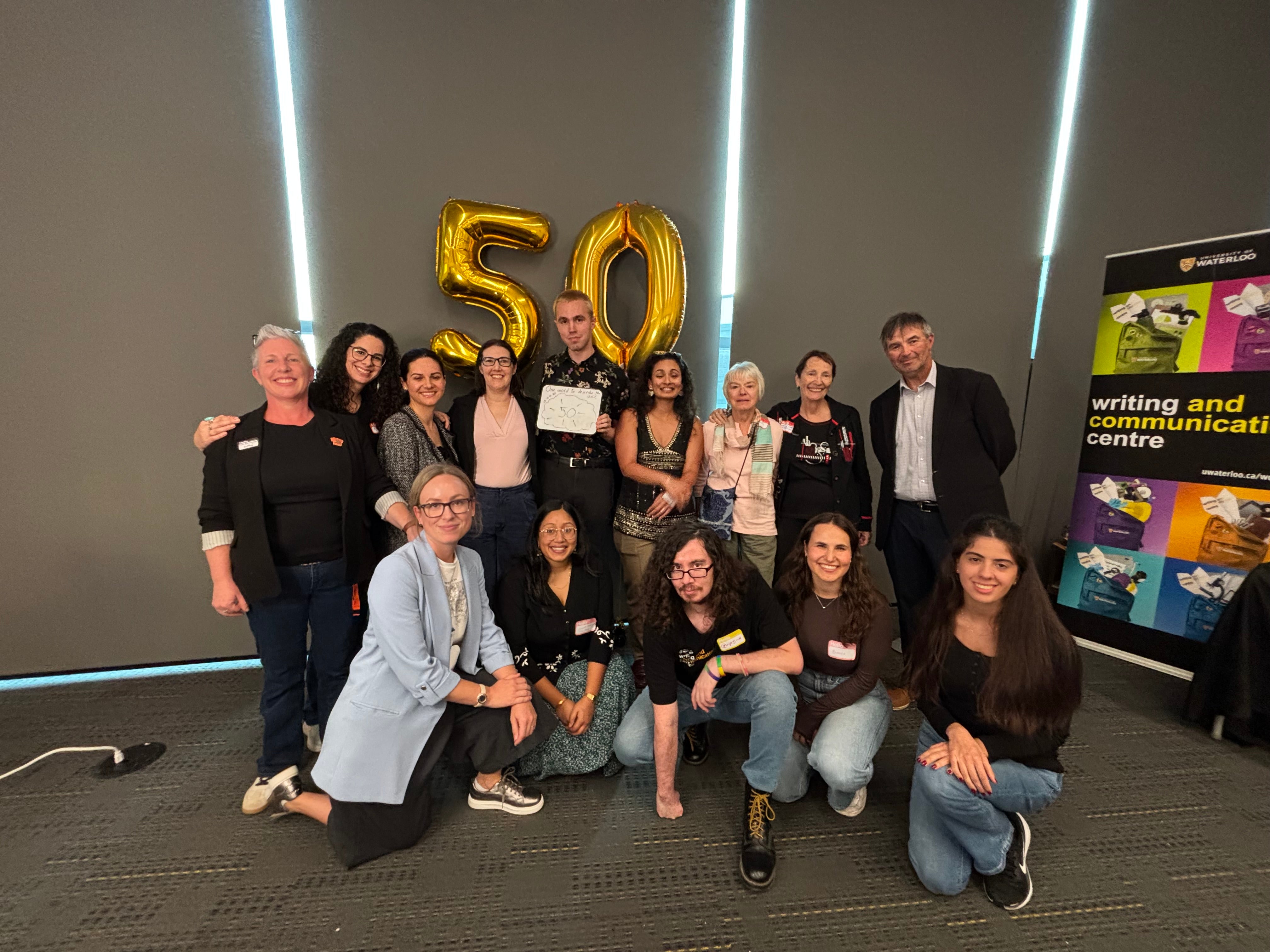
More details about the 50 years of Transformation celebration

Welcome to Rosemary Killeen, our new co-editor of WATtimes

I’m very pleased to join the WATtimes team as Co-Editor. I came to the University and Waterloo in 2013, starting at the School of Pharmacy as Teaching Staff, directing a newly established centre providing continuing professional development for pharmacists and other health professionals, as well as the delivery of for-credit distance education. I retired as Director, Lifelong Learning in December 2026 and continue to contribute to the world of pharmacy as an Adjunct Assistant Professor and a member of the International Committee of the Lifelong Learning in Pharmacy Conference.
A bit about me: I earned my Bachelor of Science in Pharmacy from the University of Toronto and practised in primary care and community pharmacy settings for more than 40 years. I caught the “writing bug” in the 1990s while working on public education projects at the Society of Obstetricians and Gynaecologists of Canada and loved the world of writing and wordsmithing so much I ended up serving as Editor-in-Chief and Deputy Publisher of the Canadian Pharmacists Journal in Ottawa for several years. My interest in health promotion and public health led me to further study at the London School of Hygiene and Tropical Medicine. That provided great background for my work at Waterloo, which often included health literacy and public health elements.
I’m looking forward to working with the UWRA Executive and Communications teams to keep our readers interested and informed. I’ve met a few of you at UWRA events this year and look forward to getting to know many more of you as we move into 2027.
Giving Day 2026
Compiled with information from Jennifer Murray
University of Waterloo’s Giving Day took place on May 21, 2026, following three weeks of promotion. The total raised in 2026 from 1589 donors exceeded $1M. This year’s promotion included an online game featuring a goose flying over campus collecting tokens for points. A total of 17500+ entries and 6,038,679 total points were earned during the promotional period. The top player secured a $1K bonus for Conrad Grebel University College (CGUC), while the top five areas (CGUC, School of Pharmacy, Renison College, UW Libraries, and the Faculty of Environment) shared $4K.
The Retirees Bursary Fund grew by $1,010 from the generosity of five donors, while the Retirees Scholarship Fund grew by $663 from four donors.
Key Findings:
- Faculty, staff and retiree gifts represent 15.5% of total revenue from Giving Day
- Faculty, staff and retiree donors represent 18% of total donors from Giving Day
- Retirees contributed the most revenue ($45,535) despite representing the smallest number of donors (57) of the three constituencies
- Giving Day is supported by existing or recent faculty, staff, and retiree donors rather than new donors
The Annual Giving Team has prepared a separate PDF entitled Giving Day 2026 Retiree Participation.
Spring Luncheon
April 14, 2026
What's the Objective of Economic Immigration?
This event was quickly sold out! Professor Skuterud argued that the objective of Canada's economic immigration system should be to boost growth in real GDP per capita. He described the optimal policy design to achieve this objective and how current policy undermines this objective. While the ideas underlying the talk will be grounded in core economic theory, the lecture was accessible to a broad audience, including individuals with no formal training in economics.

Fall Luncheon
October 20, 2026
Vera Rubin Telescope
Our Fall 2026 luncheon sold out fast! It was held at noon in the Ruby Room at the Village at University Gates and sponsored by RBJ Schlegel.

Our fascinating guest speaker, Liza Sazonova, delighted attendees with her well-illustrated talk: "Seeing the Unseen with the Vera Rubin Telescope.” With its ten-year Legacy Survey of Space and Time, Rubin maps the night sky over and over again, helping us track how galaxies grow, interact, and evolve. It also captures short-lived events like supernovae and moving objects like asteroids, providing a fuller picture of the dynamic universe.
Dr. Chris Burris Presentation
September 28, 2026
(Why) Would You Leave Like This?: Understanding Final Body Disposal Preferences.
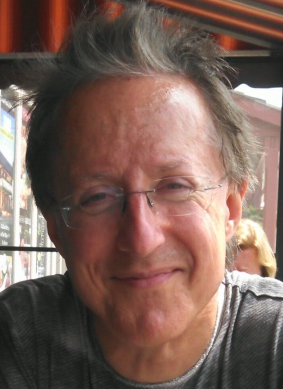
Chris Burris from St. Jerome’s University gave a powerful presentation to a well attended event held at the Village at University Gates. Dr. Burris introduced his Final Body Disposal (FBD) model, developed to better equip people to make sense of the many personal, practical, and policy considerations when facing the ultimate question.
Heather Keller and Laura Middleton Presentation
November 3, 2026
Nutrition and Physical Activity for Health Aging
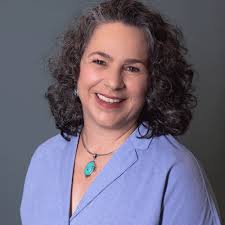
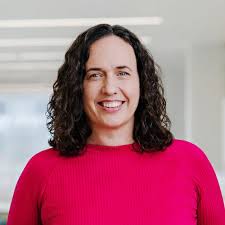
Fifty people registered for a seminar offered by Research Institute for Aging (RIA) researchers Heather Keller and Laura Middleton, who presented practical, science-based guidance to help UWRA members stay strong, independent and mentally sharp.
Let's Get Active!
October 5, 2026

November 11, 2026

Eight serious hikers enjoyed a morning at the Marguerite Ormston Trail.
October 29 2026

Woolwich Dam hike followed by lunch at Bonnie Lou’s in Floradale. Seventeen people attended and shared wonderful food afterwards at a favourite dining spot
Congratulations to Howard Armitage!
Squash Masters World Champion!
Presentations and Events Committee Co-chair Howard Armitage has returned from representing Canada at the recent World Masters Squash Championships in Perth, Australia.
Over a thousand players representing fifty-five countries participated. Of the thirty or so Canadians, four brought home medals — one gold, one silver, and two bronze. Howard was one of the bronze medallists, and we are all very proud of him.
The next World Championships will be held in two years' time in Johannesburg, South Africa — at which point Howard plans to be one of the youthful 85-year-olds in the 85–89 age bracket.
Howard Armitage in Perth, Australia.

Team Armitage
- Trainer & Mind-Coach: Gary Waite
- Nutritionist: Phyllis Armitage
- Medical Advisor: Dr. Earl
- Ophthalmologist: Dr. Rayat
- Massage Therapist: Barbara Brendemuehl
- Physiotherapist: Jamie Wong
- Sparring Partners:
- Jeff Dawkins, Derek Armitage,Kathy Cowper *
* Silver medallist
Congratulations to retired faculty members named Distinguished Professor Emeritus/ Emerita at UW’s 2026 convocations
The designation of Distinguished Professor Emeritus/Emerita is granted for the lifetime of a faculty member who has had a distinguished record of service in teaching and research at the University.
Dr. Cameron L. Stewart

A world-renowned number theorist, Dr. Cameron Stewart has contributed fundamental answers to deep questions across the field of Pure Mathematics. With a BSc from the University of British Columbia in 1971 and an MSc from McGill University in 1972, he completed a PhD under the direction of Fields medalist Alan Baker at the University of Cambridge in 1976. Dr. Stewart is a Fellow of the Royal Society of Canada, an inaugural Fellow of the Canadian Mathematical Society, and a former Canada Research Chair holder and Killam Fellow.
Dr. Melanie C.W. Campbell

Dr. Melanie C.W. Campbell is Professor Emerita in the Department of Physics and Astronomy. Her groundbreaking research in visual optics bridges fundamental science and real-world applications, focused on the optical properties and imaging of the human eye. Her work includes internationally recognized advances in adaptive optics imaging and innovative retinal biomarkers for Alzheimer’s disease, leading to patents and the co-founding of Lume Neuro. A former President of the Canadian Association of Physicists, Dr. Campbell is also celebrated for exceptional mentorship, educational leadership and longstanding advocacy for equity, diversity, and inclusion in physics.
Dr. Robert Mann

Dr. Robert Mann is Professor Emeritus in the Department of Physics and Astronomy. His theoretical physics research includes noted contributions to black hole thermodynamics, quantum gravity, and relativistic quantum information. A Fellow of the Royal Society of Canada and recipient of the Canadian Association of Physicists Medal for Excellence in Teaching Undergraduate Physics, Dr. Mann is renowned for both scholarship and teaching. He is a Life Member of the International Society for General Relativity and Gravitation and has mentored generations of physicists while advancing Canadian science nationally and internationally.

Pension and Benefits Update
by David Taylor
In many respects, little has happened related to pension and benefits since the last issue of WATtimes. The following includes continuing good news on the state of the pension plan and a couple of miscellaneous items.
A Pension Communication Advisory Group was established to advise on communication related to the University Pension Plan (UPP) and other pension matters. With their advice, an information session took place in June. It provided fairly basic information comparing the current UW pension plan and UPP. It also reiterated the assertion that the process is currently, in essence, just due diligence with respect to understanding the options the University has for providing pensions.
The attempt to rewrite the terms of reference for the Pension and Benefits Committee (P&B) and the Pension Investment Committee has largely stalled, principally because of concerns raised by the Faculty Association. At the recent October meeting of P&B, it was suggested that there might be a special meeting of P&B to consider (newly revised) terms of reference, prior to its next regular meeting, scheduled for January. That suggests renewed hope the process will soon be complete.
As of May 2026, Health Care Spending Accounts are being provided for members of the Staff Association as well as for faculty. Members of the unionized groups are still not included. Although this moves us closer to a single benefit plan for all, the University still intends to negotiate benefits separately for each group. While the UWRA Board continues to believe a single benefit plan for everyone is the best option, that does not appear to be achievable, so the Board approved a proposal by the Faculty Association that they attempt to negotiate benefits for both current and retired faculty. It has been suggested to other employee groups that they might take the same approach.
One item of good news is probably already known to most retirees. The last of the “missing” pension indexation from 2022, when inflation exceeded 5%, was fully made up in 2026. Thus, until we have another year with high inflation, the indexing will simply proceed according to the formula in the plan.
The investment performance of the pension plan continues to be discouraging, but an investment manager with particularly poor performance has been terminated and those assets reallocated. It is too soon to see the effects of that change.
In spite of the poor investment performance, the pension plan continues to be in excellent shape. The most recent available valuation of the pension plan is for the second quarter of 2026 (June 30). Each quarter, the consulting actuaries report three measures of the health of the pension plan. Possibly two are most significant: going-concern and solvency. The going-concern valuation assumes the University will continue to operate and that assumptions are correct or nearly so. It is also important because when there is a going-concern deficit, the University must make additional contributions to eliminate the deficit. The solvency valuation is artificial. It assumes the pension plan is terminated and current assets must be used to pay current and future pensions, according to the provisions of the plan, except for an absence of inflation indexing. Its practical significance is that it is a major factor in determining the premium the University pays to the Ontario Pension Benefit Guarantee Fund.
At the end of the second quarter, the pension plan had assets valued at $3.31B and a surplus, on a going-concern basis, of $457M, for a funded ratio of 116.0%. On a solvency basis, there was a surplus of $823M, for a funded ratio of 133.1%. On a going-concern basis, the pension plan has been fully funded since the end of 2023. On a solvency basis, the plan has been fully funded for even longer, since the end of 2021. In both cases the surpluses are now quite large, putting us in a good position to absorb future economic shocks.
Professor Emeritus of the David R. Cheriton School of Computer Science, David Taylor represents UWRA on UW's Pension & Benefits Committee. He has been preparing updates for WATtimes since 2021.
Feature Articles

Feature Articles
In Her Own Words: A November Reminiscence
by Deborah (Clark) Allerton

It was over thirty years ago on a visit to my parents that my late father casually mentioned he had an invitation to attend the 50th D-Day anniversary in Normandy. Casually. “Really?” I said. “You were at D-Day? That’s a big deal. I never knew you were there.”
But, then again, I had never asked the question.
I knew Dad had been a Lieutenant Surgeon in the Royal Navy. He was in the Canadian Navy, but anxious to see action, so he convinced the RCN to loan him to the UK as an Officer on a minesweeper. In my growing up years, I knew he would not eat lamb, watercress, or scrambled eggs. Olfactory memories of mutton, watercress sandwiches, and powdered eggs never left. His lips would curl on a face that was mostly upbeat and uplifting to others.

But he did enjoy his gin. Every day at 5pm. This pastime was born during his time in the UK, as were treasured friendships. Of these, he spoke. A lot.
He was not anxious to visit Scotland again, either. His experiences sweeping the bleak coastline of the Hebrides for mines during the winter left him still chilled.
But of D-Day, I don’t recall conversations.
Until he attended the anniversary. He would have been 75 at the time on June 6, 1994, in excellent health and still practicing medicine. He debated going but was honoured to be invited to take part of this enormous recognition of the turning point in the liberation of the allied countries.
There was much media coverage, of course. But on his return, stories unfolded in ways they had not previously. He recounted his time with characteristic circumspection. He spoke of entering a German bunker and “seeing from the other side.” This also left him chilled.
He reconnected with Royal Navy cohorts, many of whom he had not seen in fifty years. I still wonder what they talked about other than, as he mused with humour, “I guess you made it.”
He was the only Canadian on a Royal minesweeper, fronting for the American flotilla to Omaha Beach. They called him a savage, he would say, bemused.
The minesweeper was far enough out from the beach that he must not have witnessed the shooting down of 2,400 soldiers. His reference to witnessing, however, a “sea of grey in the skies” has stuck with me. This, of course, was his metaphor for the almost 12,000 aircraft deployed by the Allies.
Maybe that is why Dad liked bright colours. Never grey . . . too many monochromatic memories of sea, sky, ships, and soldiers.
Deborah (Clark) Allerton retired from Renison University College in 2013, where she had been Field Education Coordinator for the Bachelor of Social Work program since its inception. Beforehand, she taught Social Development Studies and coordinated field practica. She enjoys her retirement singing, travelling, and writing poetry with her five small grandchildren. Her reminiscence originally appeared in the K-W Record.
Socrates’ Best Lesson – A Case for Doing Hard Things
by Karen Clark
It’s easy to imagine a person in their senior years advising a young person about how important it is to push one’s limits.
It is less easy, however, to imagine anyone giving the same advice to a senior.
There’s a notion out there that retired folks are supposed to take it easy. The golden years are when we put stress and worry on the shelf and stop trying so hard to accomplish things.
I’d like to challenge that notion.
Lots of retired people I know are still testing their limits. For example, a friend of mine in his 70s reads graphic novels in languages one or two removed from his mother tongue, not because they are easy to read, but because they are hard.
My retired sister does weight training workouts (under the supervision of a trained fitness expert), for the very reason that they are hard.
As for me, I attend yoga classes guaranteed to annoy me because the poses the teacher (safely) takes the class through are so darn difficult. But I feel great at the end of every class and look forward to the next.
A whole life lived striving and learning and testing one’s capacity does not end the day you receive your first pension cheque. Retirement does lower to a more agreeable level the stakes of the things you try (so long as you do them safely). You are done climbing the corporate ladder. But now there are epic fables In Italian, or two minutes of burpees or tricky balancing poses to try.
The advice we old folks give to youngsters works for us all. Push your limits.
Of course, there are many benefits. When you keep your body and your mind engaged in new and challenging endeavours, research shows you likely will improve your cognitive health, your emotional well-being, your memory and your mental flexibility.
So, be like Socrates who used his last moments alive to learn a new tune on the flute. Resolve that for as long as you are alive, you will be more than you were a day ago.
Karen Clark is a former UWaterloo marking assistant, who started off in English, became a lawyer, and ultimately dedicated her career to protecting the environment. You can find her on Substack.
What to Know about Hearing Aids for Seniors
Hearing plays an important role in how we stay connected to the people and the moments that matter most.
For many older adults, changes in hearing happen gradually, which can make them easy to overlook at first. The good news is that today’s hearing aids are more advanced, more comfortable, and more adaptable to everyday life than ever before.
Whether you’re looking to get more information for yourself or perhaps a loved one, understanding the hearing healthcare options can help you make a confident decision.
Are there free hearing aids for seniors in Canada?
Free hearing aids are available to Canadians through the Campaign for Better Hearing’s Give-back program. For every free hearing test taken at HearingLife’s participating clinics, HearingLife donates $4 to the program, which aims to provide free hearing aids to more Canadians who need them.
Affordable hearing aids for seniors
If the cost of hearing aids is a concern, there are several ways to make hearing aids more accessible:
- Options for financing
- Special promotions and savings
- Government assistance programs
- Community initiatives
Many provinces offer hearing aid grants for seniors or financial assistance programs.
For example:
Ontario residents often ask: does OHIP cover hearing aids for seniors? While OHIP does not fully cover hearing aids, there are programs such as the Assistive Devices Program (ADP) that provide partial funding.
In Alberta, programs such as Alberta Blue Cross hearing aid coverage for seniors may help reduce costs depending on eligibility.
Speak to a local hearing professional if you have questions regarding these options.
What are the best hearing aids for seniors?
There is no single “best hearing aid for seniors.” The right option depends on hearing needs, lifestyle, and preferences. However, seniors may benefit from behind-the-ear (BTE) hearing aids because they are easier to put on and remove.
BTE hearing aids are also better suited for those with profound to severe hearing loss. Seniors may also benefit from rechargeable hearing aids, as those with dexterity issues could find it difficult to replace the small disposable hearing aid batteries.
Why hearing aids matter for seniors
Hearing loss is one of the most common health concerns among older adults. Left unaddressed, it can affect communication, social engagement, and overall well-being.
The right hearing solution can help:
- Make conversations easier to follow
- Reduce listening effort and fatigue
- Improve confidence in social settings
- Support overall cognitive and emotional well-being
Hearing aid help for seniors: where to start
The best way to begin is with a hearing test. A hearing test can help:
- Identify the level of hearing loss
- Understand a person’s unique listening needs
- Match the person with the right solution
If you have been thinking about hearing aids, or know someone that could benefit from them, take the first step by booking an appointment. It can help to go with someone, whether it is for you or a loved one.
Visit HearingLife.ca or call 1-888-718-9441 to book your free appointment at a HearingLife clinic near you. As a trusted partner of CURAC, HearingLife is pleased to offer members and their families an EXTRA 10% off the final purchase price of hearing aids. See clinic for details.
April in Spain: A Reminiscence
by Ron Champion

Last April, the UWRA offered its first-ever international trip – well, not counting the shopping trips to Buffalo of another era.
Our trip to Spain was great!
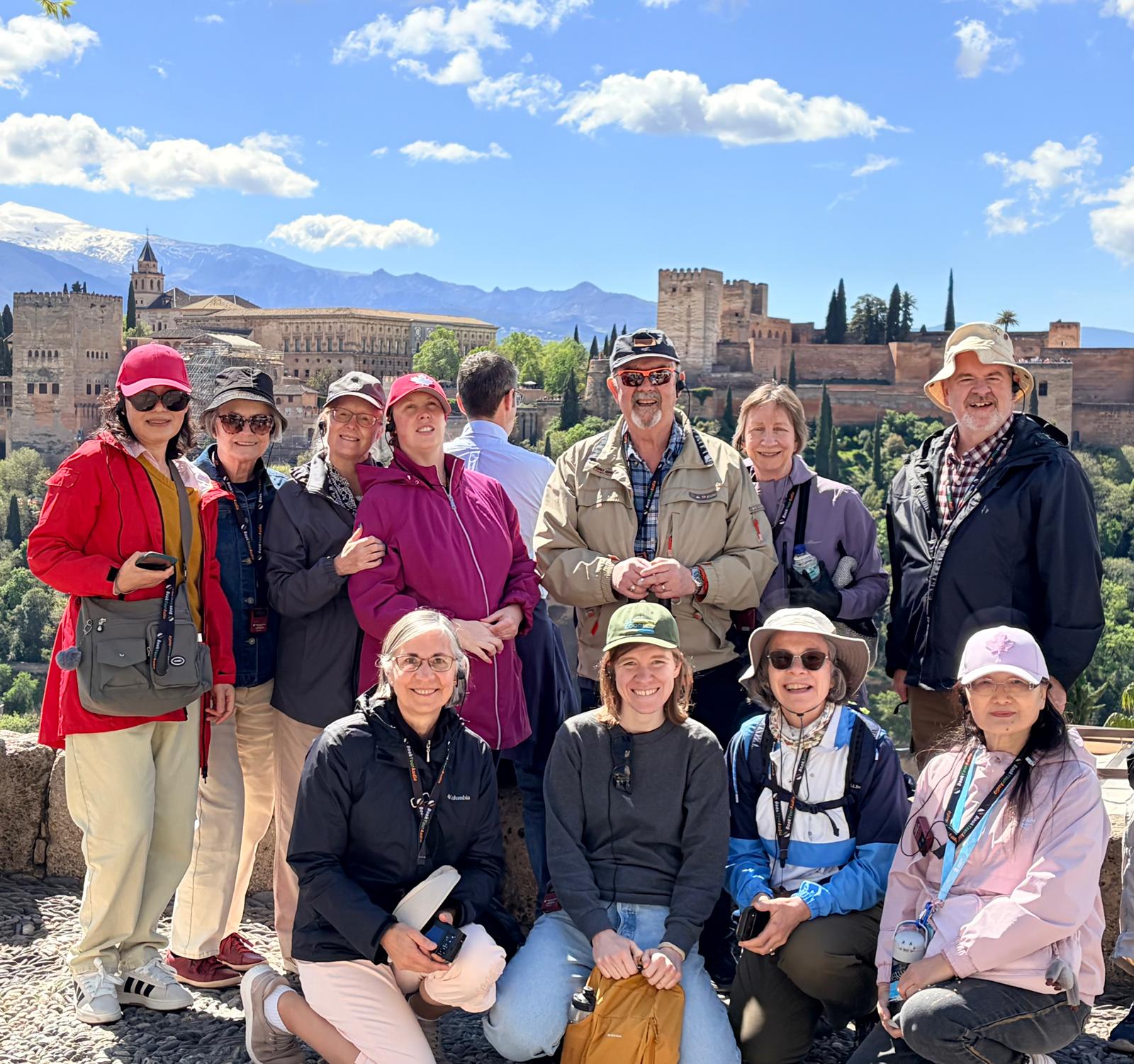
One of CURAC’s travel partners, Trip Merchant, organized the long stay for us. From April 11 to 28, we stayed in fully finished apartments in Fuengirola on the Costa del Sol (30 minutes by train west of Malaga), with excursions to Gibraltar, Granada, Ronda, and Setenil de las Bodegas.
The tour of Gibraltar was only so-so. (It’s a big rock.) The other tours were interesting and impressive! Be sure to Google them if they are new to you.
Six UWRA members took advantage of the offer, joining CURAC retirees from U Calgary and McGill, friends, and family, twelve people in all.
The best parts?
Our group: we all got along. Sometimes we did things together. Other times, we went our own ways.
The tour guides: yes, they were very knowledgeable, but even better – they were very nice! Just the sort of people you want to spend more time with.
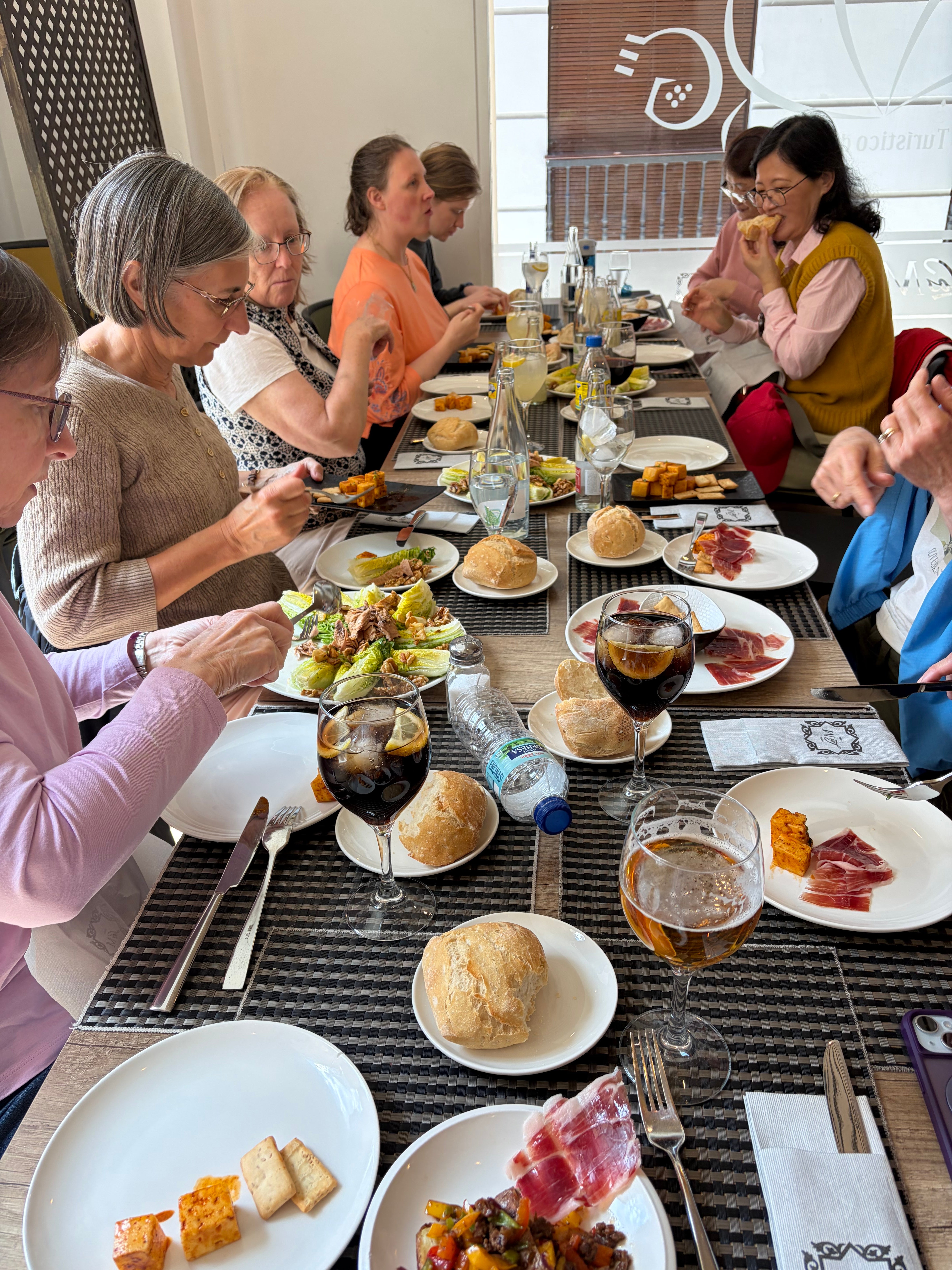
The food. The food! Our group meals were extraordinary, with more (and different) dishes than a novice traveller would ever know to order.
The weather. Sun and low to mid 20s during our stay, with one half day of showers.
Our location: Fuengirola, our home for eighteen days, was convenient to many attractions, nearby cities and towns, the sea, and more. I especially enjoyed the 8 km boardwalk that offered wonderful views of the Mediterranean.
Trip Merchant did an excellent job designing a long stay with just the right combination of tours and free time, along with well-furnished apartments in a residential neighbourhood that was still close to the train, beach, and dozens of restaurants.
I look forward to my next trip with Trip Merchant, and I anticipate another long stay in Spain.
From Cape to Cape To Cape: A Month Down Under
by Howard Armitage
Toward the end of August, my wife Phyllis and I left Toronto on a 33-day journey around the world, through the UAE, Australia, and New Zealand, then home again, more than 40,000 km in all. The official reason was the World Masters Squash Championships in Perth. Unofficially, we were looking forward to everything around it: first, a visit with our daughter in Abu Dhabi and, after the tournament, the thrill of exploring southwestern Australia and the far north of New Zealand.
The Competition
The 2026 World Masters Squash Championships were held in Western Australia, and I entered the over-80 division. Think of it as the Olympics for players 35 and over with age groupings. The week-long event takes place every two years, and this time there were more than a thousand players from 55 countries. Of about thirty Canadians, four came home with medals. Happily, I was one of them, earning a bronze, only a few points shy of gold.
Perth: Not Just a Place with Courts
With the competition behind us, Phyllis and I became serious tourists. Together in Perth, we walked through Kings Park, where the spring wildflowers were just coming into bloom, with sweeping views over the Swan River and the city skyline. We also shared what Phyllis and I agreed was the best fish and chips we have ever eaten, looking out over the beach and the Indian Ocean.

Nearby Fremantle is a heritage port town with lively markets and excellent museums. We toured Fremantle Prison, a UNESCO World Heritage convict site with a truly checkered history, and spent a happy afternoon at the Maritime Museum, whose displays include a model of the yacht the Aussies sailed to their 1983 America’s Cup victory. Its shipwreck exhibits were so compelling that we purchased and read some of the stunning accounts of wreckages off the western Australian coast. We also found places that housed top-notch exhibits of aboriginal art—of course we bought a book to learn more.

Rottnest Island, or Meeting the Locals
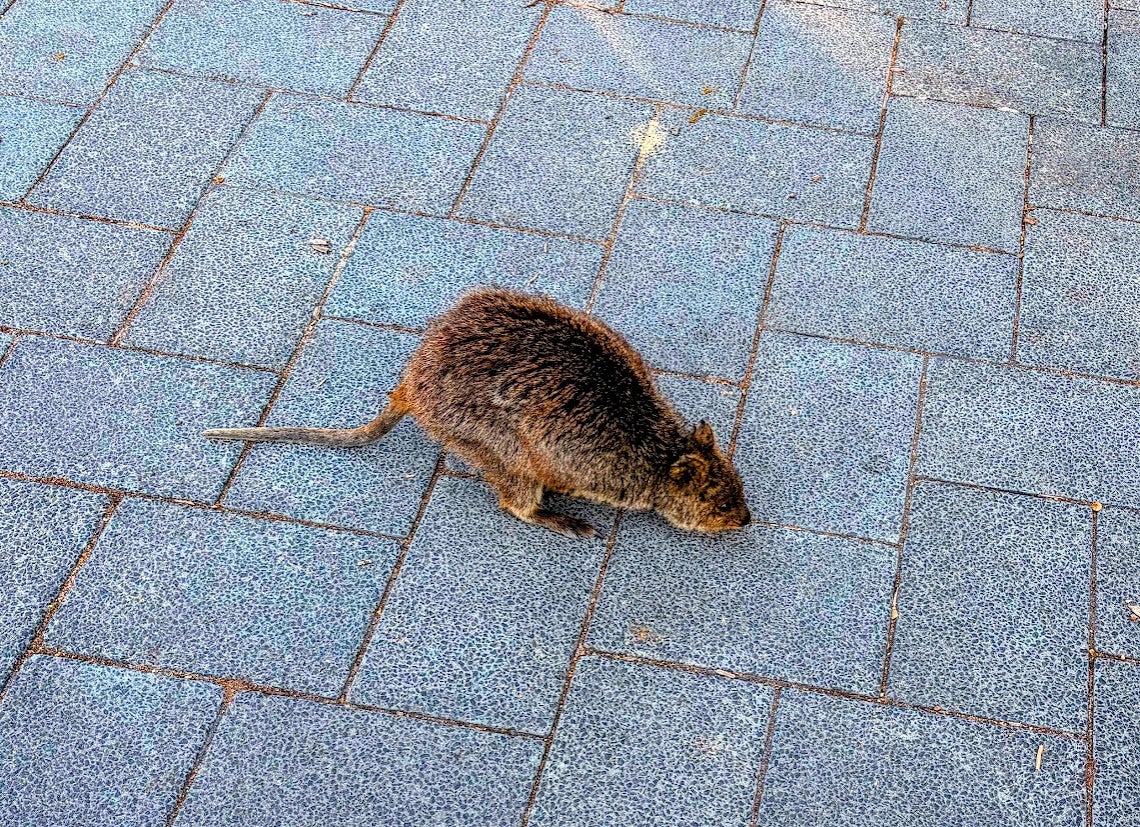
A half-hour ferry ride from Fremantle is Rottnest Island, home to the world’s largest population of quokkas. If you haven’t met one, imagine a small, round marsupial with a permanent smile and no fear of strangers. We discovered the island by hop-on, hop-off bus and on foot, taking in the lighthouse, beaches, and the wild surf at the West End, ending the day with friends over cold beer and glasses of chilled local wine.
South by Coach: Dolphins, Wine and Two Capes
We then headed south by public coach to Bunbury, a comfortable opportunity to see the countryside. We had expected dry, sparse terrain. That may be true 80 km inland, but the land along the coast was green and productive. At the Dolphin Discovery Centre, we saw wild bottlenose dolphins that live in the bay, and the live exhibits of the area’s marine life made it a must-see.
Phil and Marian, new friends we had made on an earlier trip to Europe, met our coach and drove us to their home in Busselton, our base for the next three days. Having spent only a limited time with them before, we hoped they wouldn’t regret committing so many days to us. But, as they say in Oz, no worries! Each day we travelled south along staggeringly beautiful coastlines, through picturesque towns, and finally to the capes at the corner of southwestern Australia.
A highlight was Margaret River, the region’s wine country. The town reminded us of St. Jacobs, with its small shops and river, and the wineries we visited had outstanding architecture and wine that was pretty good too. Our timing coincided with an Open Studios art exhibit, where we appreciated the breadth and quality of the local artists’ work.

The region is bookended by two capes: Naturaliste and Leeuwin. At Cape Leeuwin, the tallest lighthouse on mainland Australia stands where the Indian and Southern Oceans meet. We stood at the spot where two great oceans come together and felt an overwhelming sense of both beauty and solitude. Directly south of us lay Antarctica, still more than 3,500 km away.

Northland: The Top of New Zealand
Phil and Marian, who by now had far exceeded any reasonable definition of hospitality, then drove us back to Perth for an overnight flight to Auckland, where we picked up a rental car and drove to the home of Waterloo friends for a day of catching up before heading for almost a week up north on a peninsula that stretches about 430 km from Auckland. On earlier visits we had stuck mainly to the principal attractions of the North and South Islands. Northland is a different part of the country altogether and well worth the visit.

Based in Paihia, in the heart of the Bay of Islands, we visited Whangārei (with its fascinating Hundertwasser Art Centre and Wairau Māori Art Gallery). We took a full-day ferry trip around many of the bay’s 144 islands, with dolphins, island hikes, the Hole in the Rock and a stop in the picturesque town of Russell. We also visited the historic birthplace of modern New Zealand, where the Treaty of Waitangi was signed on February 6, 1840. The museum there tells the story of New Zealand from both Māori and settler perspectives, and it was one of the best museums we have ever visited.

From Paihia we took a bus to Cape Reinga, at the northern tip of the country and our third cape of the trip. The all-day journey took us along Ninety Mile Beach (actually only 55 miles long), where we transferred to an all-wheel-drive bus and drove for miles along a stunning deserted beach. The cape offered another remarkable view of colliding bodies of water, the Tasman Sea and the Pacific Ocean. In Māori tradition, this is the place from which the spirits of the dead begin their journey. The experience was profound.

The next day, we drove across the peninsula to see Tāne Mahuta, the spectacular kauri tree in Waipoua Forest, more than 2,000 years old. (It was disturbing to learn that a disease is threatening these magnificent trees.) Our last stop, much recommended for tourists, was the glow-worm caves in Waipu. We had worried that it might be a bit of a sideshow, but came away in awe of the tiny creatures that light up caves deep in the earth.
Home Again
Back in Auckland, we explored the “City of Sails” by hop-on, hop-off bus, which made it easy to visit galleries, the university, and historic sites. Then, grateful to all our hosts, we flew to Vancouver for precious time with our granddaughter, before heading back to Toronto. Thirty-three days and more than 40,000 km after leaving, we landed at Pearson on September 27, totally aware we had just experienced the trip of a lifetime.

In Memoriam
A message from the Faculty of Engineering
Remembering Dr. Bruce Hutchinson

Distinguished Professor Emeritus Bruce Hutchinson, a respected teacher and early builder of the civil engineering program passed away on December 23, 2025, at the age of 91.
Born in Kogarah, New South Wales, Australia, Prof. Hutchinson grew up in a family that prized work ethic, ambition, and adventure. He graduated from Canterbury Boys’ High School and earned his civil engineering degree from the University of Sydney in 1956. Early in his career, he worked as a soils engineer with the New South Wales Department of Public Works, including work connected to the Eucumbene Dam in the Snowy Mountains.
Bruce came to Canada in 1957 to pursue an MSc in civil engineering at Queen’s University, travelling across the country by ship and train before settling in Kingston. During this period, he met his future wife Mary, a medical illustrator, beginning a partnership that would span 66 years.
Canada became the place where Bruce found his vocation as a lecturer and researcher. He completed his PhD at the University of Waterloo in 1965 and became instrumental in the development of Waterloo’s civil engineering school. Over a 32-year career at the University, he held several leadership roles within the Department of Civil and Environmental Engineering, including associate dean and chair. Following his retirement in 1996, he was named Distinguished Professor Emeritus.
While his academic and administrative contributions were significant, Prof. Hutchinson’s enduring legacy was his impact on students. In 1990, he received Waterloo’s Distinguished Teacher Award, a recognition he regarded as his most cherished accolade. Former students consistently described a professor who challenged them to meet high expectations while remaining deeply invested in their growth and professionalism.
“Many of Bruce’s former students and colleagues remembered the same qualities year after year: he pushed his students as hard as he pushed himself and his willingness to help and talk with students had no boundaries,” said Dr. Carl Haas, former chair of the department. “He led by example and instilled honesty, dedication, responsibility, and professionalism. For many of us, that’s what made him an exceptional role model and why his influence at Waterloo stayed with people long after they left campus.”
Prof Hutchinson’s influence at Waterloo ultimately extended beyond the classroom in a particularly personal way. His children and grandchildren went on to become alumni of the department and Faculty he loved, a family legacy shaped by the same commitment to learning and community he brought to campus.
Beyond his work in academia, he and Mary built a rich life in Waterloo, centred on their restored yellow brick home, where family, friends, and colleagues gathered. In retirement, they devoted their energy to a rural property in Grey County, cultivating gardens, tending forests, and continuing creative pursuits in woodworking, painting, and illustration.
A message from the Faculty of Engineering.
Rememberting Dr. Brian Le Lievre
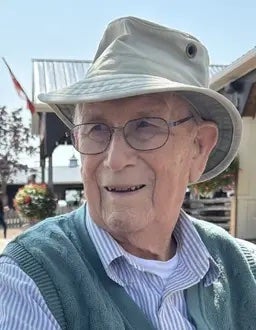
Dr. Brian Le Lievre, professor emeritus in civil and environmental engineering, died on January 2, 2026, at the age of 98.
Le Lievre was part of the University of Waterloo’s earliest generation of scholars in soil mechanics and geotechnical engineering, helping shape the department in its founding years. Across more than 25 years at Waterloo, he taught, mentored, and led with a steady focus on students and the discipline.
Born in 1927 in Western Australia, Le Lievre developed an early interest in mathematics, physics, and problem-solving. He earned a civil engineering degree from the University of Western Australia and began his career in Tasmania, where he worked on major infrastructure projects.
Drawn by the scale of hydroelectric development in North America, he travelled west, a journey that included time in London, England. There he met Marie, who would be travelling to Canada on the same transatlantic ship. They married shortly after arriving in Canada and shared a 70-year partnership centred on curiosity and a deep commitment to family.
Le Lievre later pursued doctoral studies in civil engineering and joined Waterloo, where he served as associate chair for civil undergraduate studies. Colleagues remembered him for his steady leadership and genuine care for students, staff and faculty.
They also pointed to the intellectual roots that shaped his approach. In Waterloo’s early soil mechanics community—strongly influenced by Cambridge-trained leaders in civil engineering, including Waterloo Engineering deans Dr. Douglas Wright and Dr. Archie Sherbourne—Le Lievre was known for bringing rigour and clarity to complex ideas, grounded in careful observation and evidence.
“Brian helped set the tone for soil mechanics at Waterloo in the early days: clear and practical, always anchored in evidence,” said Dr. Leo Rothenburg, distinguished professor emeritus and colleague of Le Lievre.
“When I arrived in 1983, he welcomed me with steady guidance and a generosity that showed up in small, daily ways. He cared about students, staff, and colleagues, and he cared about doing the work well.”
A message from the School of Optometry & Vision Science.
Remembering Karen Kawawada
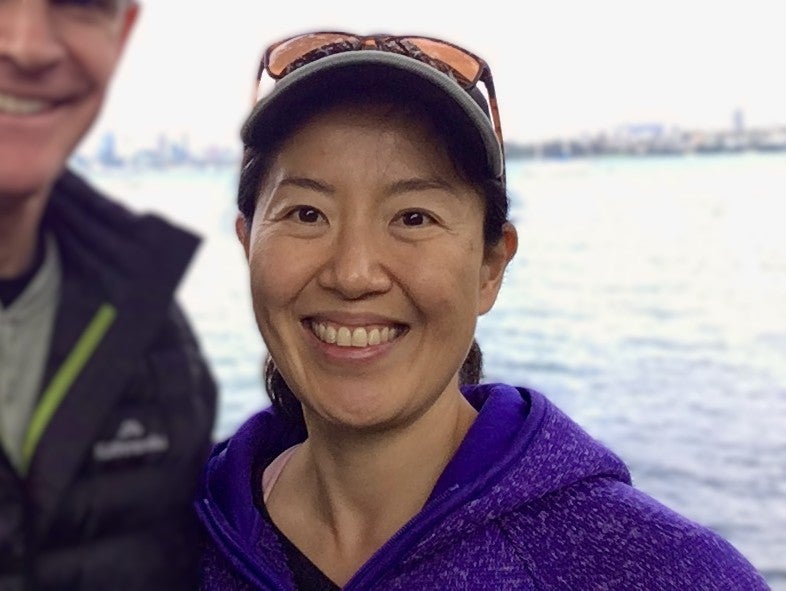
Karen Kawawada, communications manager for the School of Optometry & Vision Science, passed away on February 13, 2026. She was a valued colleague whose dedication, creativity, and generosity touched many in the community.
Karen joined the University of Waterloo in 2010, working for Communications and Public Affairs and the Faculty of Environment. In 2013, she gained extensive experience in senior communications roles across Canada, England, and New Zealand, before returning to Waterloo in 2024 to join the School of Optometry & Vision Science. In her role, she led the School’s strategic communications efforts with exceptional skill and care, strengthening the visibility of our teaching, research, and clinical initiatives.
Colleagues remember Karen for the passion and dedication she brought to all aspects of her work. Quietly and without seeking recognition, she championed stories of groundbreaking research, highlighted our students’ achievements, and helped share the School’s impact with audiences across Canada and beyond.
One of Karen’s most significant contributions was leading communications during the ambitious and ongoing campaign to support the new Waterloo Eye Institute. She also played a central role in guiding communications throughout the complex process of relocating the School’s public-facing clinics during the construction phase, work that required clarity, patience, and steady leadership.
“Beyond her many professional accomplishments, Karen will be remembered for her kindness, thoughtfulness, and the way she made people feel heard and supported,” said Dr. Ben Thompson, director of the School. “She approached every challenge with calm determination and every story with genuine curiosity and respect. Her work stands as a testament to the grace with which she lived and the passion she shared.”
A message from the Faculty of Mathematics.
Remembering Dr. Ronald Mullin
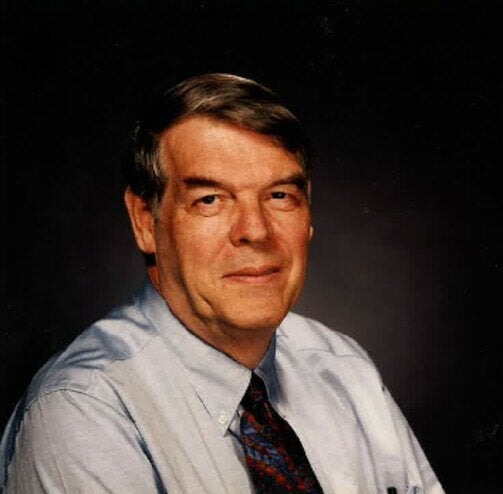
Dr. Ronald Mullin, the first graduate of the University of Waterloo and a pioneering member of the Faculty of Mathematics, passed away on Friday, March 6, 2026, in Cambridge, Ontario. He was 89.
“Ron Mullin’s connection to the University of Waterloo spanned more than six decades, beginning as the first graduate of its mathematics program and continuing as a distinguished scholar, mentor, and leader,” says Dr. Jochen Koenemann, dean of the Faculty of Mathematics. “His contributions to combinatorics and cryptography, and the many students and colleagues he inspired, form a legacy that will continue to shape our community for generations.”
Mullin earned an undergraduate degree at the University of Western Ontario and began graduate work before being recruited to the brand-new University of Waterloo in 1959 to lecture while completing his Master of Arts. On June 18, 1960, he received an MA in Mathematics, the first degree ever awarded at Waterloo.
Mullin stayed at Waterloo for his PhD. He was an extremely promising mathematician and cryptographer, so much so that math professor Dr. Ralph Stanton used the prospect of working with him to convince Dr. William Tutte to take a job at the university. Tutte, a celebrated cryptographer and WWII hero featured in last Fall’s WATtimes, came to Waterloo, and supervised the remainder of Mullin’s graduate work. Mullin graduated with his PhD in 1964 and stayed at the university as a mathematics professor. An early member of the Department of Combinatorics and Optimization, he served as chair from 1975 to 1979.
“Ron taught my first computer science class,” recalls Dr. Alfred Menezes, Distinguished Professor Emeritus in C&O. “To him, the little details didn’t matter. He thinks about the big stuff—the important stuff . . . he realized the value of ideas.”
“Ron Mullin played a major role in establishing both combinatorics and cryptography as areas of research excellence within C&O,” says David Jao, chair of the Department of Combinatorics and Optimization. “As a co-founder of a leading journal (Designs, Codes and Cryptography), a major conference (SEICCGTC), and a successful company (Certicom), Ron’s work has positively touched all aspects of department life. Among his academic progeny are five C&O professors (Stinson, Vanstone, Menezes, Furino, Schellenberg), 20 students, and 220 descendants. His influence in the Canadian Research landscape is massive.”
After retiring from the University of Waterloo, Mullin moved to Florida and enjoyed a second career at Florida Atlantic University in Boca Raton. There he established a Cryptography Group and worked actively until his “second retirement” in 2011.
In 2001, Mullin was awarded an honorary doctorate from the University of Rostock in Germany. In 2017, he became the first recipient of the Stanton Medal, which is awarded by the Institute for Combinatorics and its Applications to “honour significant lifetime contributions to promoting the discipline of combinatorics through advocacy, outreach, service, teaching and/or mentoring.”
Mullin is remembered as an exceptional husband and father as well as a nurturing and patient teacher with a great sense of humour.
Published in the Daily Bulletin
Remembering Shell Zagada
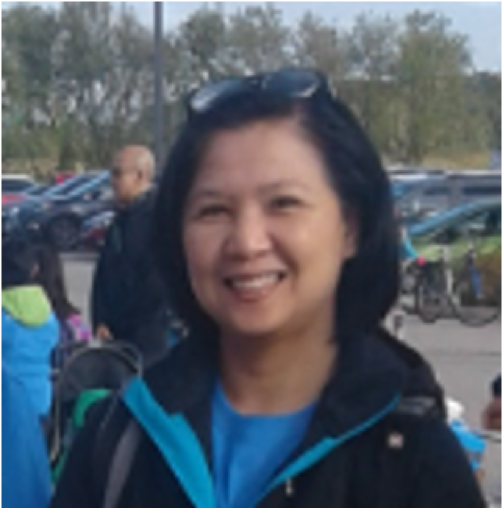
Shella Zagada, manager for the MSW Program at Renison University College, passed away March 20, 2026, after a brief battle with cancer.
Shella joined Renison in December 2013. With a background in psychology, sociology, and social work and an MSW degree from Wilfrid Laurier University, she was in the process of completing a PhD in Adult Education & Community Development at the University of Toronto’s Ontario Institute for Studies in Education. Her research looked at Filipino social, community, and education service leaders in Canada.
“Shella was a Filipina immigrant who lived and worked in Korea and Hong Kong before moving to Canada,” wrote Dr. Trish Van Katwyk, director of the School of Social Work. “Over her career, she served diverse roles across academic administration, field education, family and children's services, migrants' rights training, youth and gender justice, international development work, and human resource development. Most recently, Shella played a key role in our School of Social Work overseeing our MSW field education program.”
Featured in a recent podcast about Social Work Field Education, Shella was asked for advice to Filipino youth or emerging Filipino social workers. She responded: "Having Filipino roots, we can continue to learn deeply about and practise the tools and worldviews that are indigenous to us. We have the tools that do not belong to the master. We need to sharpen them. Our Kapwa philosophy, for example, assumes our shared identity, allowing us to see the humanity of the other and to respect and value one another’s ways of being and knowing, including those who are nonhuman beings. Just like me, you have a place in this world and deserve to have the space to discover yourself in relation with others, always mindful of this connectedness. And because you are a part of me, I wish you well, and I trust that you will hold your piece of our collective future in your hands, with care, compassion, and justice."
"Her answer is just such an inspiring reflection of who Shella is/was and why she is/was such a cherished friend and colleague,” writes Dr. Van Katwyk.
Taken from The Globe and Mail April 10, 2026
Remembering Dr. Doreen Brisbin

Dr. Doreen Amy Brisbin (nee Ockenden) passed away in Kitchener-Waterloo on April 3, 2026 in her 99th year.
Born in Edmonton, Alberta, on December 19, 1926, Doreen was by definition an "over achiever." By the age of 30, she was not only a young mother of three but an accomplished scientist, having completed both a Master's degree from the University of Alberta and a PhD in Chemistry from the University of Toronto, where she was the only woman in her class.
Being the "only" or the "first" were adjectives that would follow Doreen throughout her life. She began her career as a research associate and the first female faculty member of the University of Waterloo's Science Department, where she flourished and rose to tenured Professor, researcher, and ultimately Associate Dean of Science.
At a time when most women were struggling to achieve gender equity, Doreen was appointed Senior Advisor to the Vice-President on Women's Academic Affairs. She was a natural and very visible role model for women both on and off campus through her involvement with UW's Board of Governors, Senate, countless university-level committees, the Clay and Glass Museum, and Conestoga College's Board of Governors. In 1989, Doreen was named Kitchener Waterloo's Professional "Woman of the Year" in 1989.
In 1998, Doreen was awarded the highest honorific designation the University confers: Honorary Member of the University. Her dedication to helping qualified women students realize their potential at the University is acknowledged to have fostered an important part of the culture of the University.
Among her many passions, which included bird-watching, music, and art, was her affection for fine cars. After her third Volkswagen failed on her daily commute from Hamilton to Waterloo, she decided automobiles needed to be not only reliable but fashionable. From that day forward, her parking spot at the University was home to a series of Jaguars, Mustangs, Citroens, and ultimately, her beloved Citroën Maserati.
Retirement rekindled Doreen’s love for the arts—she renewed her keyboard skills on the piano, enrolled in jewelry making classes and returned to her love for producing elegant woodblock prints and greeting cards. Doreen will be remembered for her passionate dedication to people, but she was most proud of her role in helping to improve the status of women. In her memory, donations can be made to the University’s Doreen Brisbin Award, a bursary fund for young women studying in underrepresented fields.
Published in the Daily Bulletin
Remembering Palmina De Leo
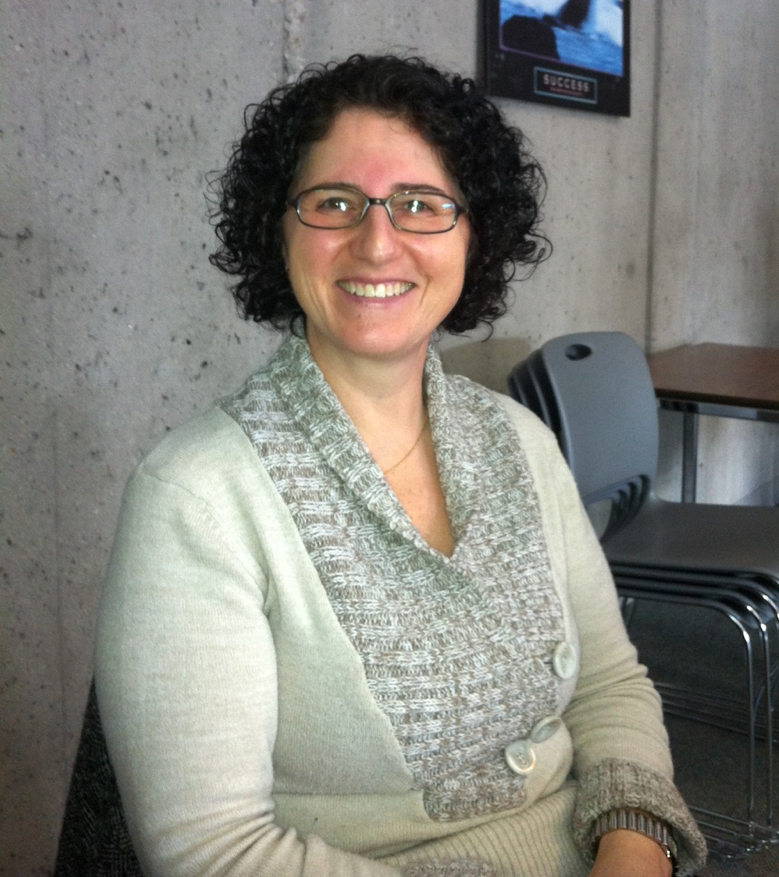
Palmina “Pam” De Leo, Residence Life Coordinator for Columbia Lake Village passed away on Saturday, April 11, 2026.
Palmina’s journey began in a small town in Italy, but her heart found its home in Canada in 1974. A woman of remarkable work ethic, her career took her from Electronic Craftsmen and Ontario Glove to the University of Waterloo all while raising a family with laughter, grace and love. During her time at the University, beginning in 1986, she took on many roles, from housekeeping to the Conference Centre at Ron Eydt Village, eventually retiring as the Resident Life Coordinator of the Columbia Lake Townhouses. In this role, the University became her second family; she was a "mother away from home" to many students and treated her colleagues with the same kindness and devotion she showed her own family.
Those who worked with Pam closely know that she devoted her career to supporting students (particularly graduate students and student families), and that she approached her work and community building with extraordinary compassion, patience, and care. She brought people together through thoughtful and inclusive community programming that fostered belonging across cultures, ages, and life circumstances. She was deeply respected for her empathy and humanity, approaching even the most complex or difficult situations with calm, fairness, and kindness.
Pam believed strongly that residence is more than housing—it is home, and she worked tirelessly to ensure that academic, family, and personal needs were met with dignity and care. She played a transformative role in shaping the Columbia Lake Village community, helping build it into a safe, welcoming, and connected place for families from around the world. Her legendary early-morning pancake breakfasts (preparation often beginning at 5 or 6 am!) regularly drew hundreds of graduate students together on Fridays in the CLV Community Centre and became cherished traditions until she retired. Many colleagues also fondly remember Pam shuttling her teams around in the “Pam Mobile,” her dedication to the United Way lunches, her readiness to help at a moment’s notice, and the countless family/child-focused programs she passionately championed.
Pam also brought her whole self to work. She openly shared stories of her children and grandchildren, welcomed and hosted team socials in her own home, taught colleagues how to make her famous lasagna, and regularly volunteered to bring homemade zucchini fritters to work (alongside her husband Tony), which became a beloved staple at team socials. Her warmth, hospitality, collaborative spirit, and work ethic left a lasting impression on those she worked with, strengthening teams and modelling what it means to lead with heart.
Published in the Daily Bulletin
Remembering Dr. Paul Guild
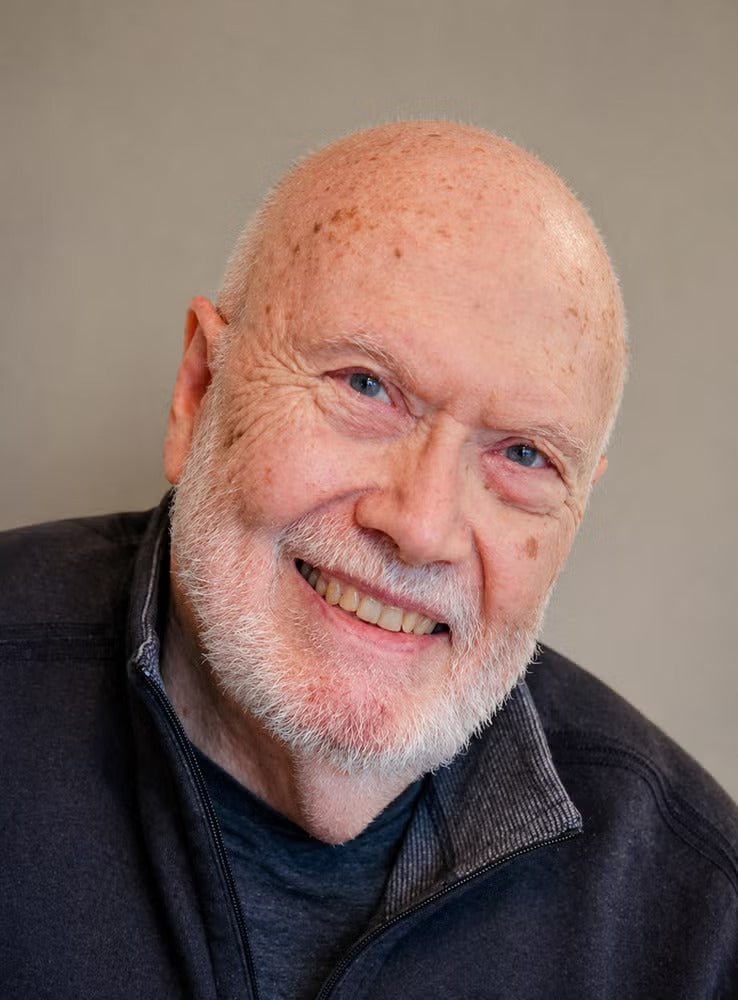
Dr. Paul Guild, professor emeritus in the Department of Management Science and Engineering, passed away on April 24, 2026, at the age of 80. An alum of the University of Waterloo, Guild spent more than three decades at the University he had once studied at, leaving a lasting mark on research, innovation, and the careers of countless students.
Guild joined Waterloo as a professor in 1990, bringing with him extensive senior management experience from Bell Northern Research. He quickly established himself as a leading voice on the management of technological innovation and entrepreneurship, holding the CIBC/Nortel/NSERC-SSHRC Chair in Management of Technology Change and serving as director of the Institute for Innovation Research from 1996 to 2015. He also served as vice-president, university research from 2001 to 2005. His research focused on managing technology for product differentiation in global markets and understanding what future users will want, value, and accept from new products and services.
Outside his academic life, Guild was known for his warmth and enjoyment of the company of others— whether spending weekends with his grandchildren, watching football, or restoring his Morgan car.
"Paul meant a great deal to our department and the broader Waterloo community,” said Dr. Mark Hancock, chair of the Department of Management Science and Engineering. “I first got to know Paul when I started at Waterloo in 2010, and he was always very supportive of me; he exemplified what it means to be a kind and caring colleague."
Guild's influence extended well beyond his own research. Among the many students he mentored was the current chancellor of the University of Waterloo, Jagdeep Singh Bachher, who completed his PhD under Guild's supervision.
"Paul Guild changed the direction of my life with a single piece of paper on the day I met him,” said Bachher. “This tall, stately gentleman—always calm, always inspiring, always innovating—handed me a column from Harvard Business Review about a new kind of investor. He asked if I'd be interested in studying their entrepreneurial way of sizing up the world. That question morphed into my life's work.
"I came to Waterloo for one degree and stayed for three because of Paul. I'm chancellor today because of Paul. A great teacher can set you off in a direction you never knew you had in you. He did that for me, and for so many others."
Passings
|
Name |
Passed |
Hired |
|---|---|---|
| Bruce G Hutchinson | 24-12-2025 | 01-09-1962 |
| Vicky Lawrence | 29-12-2025 | 01-07-1984 |
| Raj Kumar Pathria | 07-01-2026 | 01-09-1969 |
| Randy Klawitter | 08-01-2026 | 12-10-1970 |
| Jovanka Gavrilovic | 16-01-2026 | 29-07-1984 |
| Keith Middleton | 29-01-2026 | 09-07-1996 |
| Ronald A Bullock | 03-02-2026 | 01-07-1969 |
| Ronald C. Mullin | 06-03-2026 | 01-10-1959 |
| Dominik Gratzer | 03-04-2026 | 12-08-1996 |
| Alice Ventura | 06-04-2026 | 23-05-1989 |
| John Sauve | 08-04-2026 | 07-12-1998 |
| Palmina De Leo | 11-04-2026 | 16-11-1986 |
| John Shortreed | 15-04-2026 | 01-01-1965 |
| Howard John Treweek Smith | 24-04-2026 | 19-10-1964 |
| Paul Guild | 24-04-2026 | 01-01-2016 |
| Olinpia Moise | 29-04-2026 | 23-07-1984 |
| A.Frank Thompson | 02-05-2026 | 01-07-1971 |
| Ana Aleksic | 07-05-2026 | 15-06-1987 |
| Leonard T Guelke | 08-05-2026 | 01-09-1975 |
| Amerik Richard Heemskerk | 12-05-2026 | 01-06-1982 |
| Philip Merikle | 12-05-2026 | 01-09-1966 |
| George Kolic | 23-05-2026 | 01-04-1984 |

Our newest retirees!
| Name | Retired | Hired | Department |
|---|---|---|---|
| Green, Louise | 01-01-26 | 09-11-93 | Faculty of Engineering - Management Science and Engineering |
| Henry, Edda | 01-01-26 | 12-09-22 | Print and Retail Solutions |
| Weinstein, Steven | 01-01-26 | 01-09-04 | Faculty of Arts - Philosophy (Ian Milligan (Inherited)) |
| Amorim, Isabel | 01-02-26 | 24-03-03 | Facilities |
| Bairos, Eugenia | 01-02-26 | 23-08-04 | Institute for Quantum Computing |
| Edwards, David | 01-02-26 | 01-06-11 | Faculty of Science - School of Pharmacy |
| Guterres, Aida M | 01-02-26 | 10-01-05 | Facilities |
| Keys, Sandra | 01-02-26 | 01-02-03 | Libraries |
| Logan-Dickie, Cathy | 01-02-26 | 02-12-13 | Faculty of Mathematics - Cheriton School of Computer Science |
| Mayorga, Ramon | 01-02-26 | 01-12-03 | Campus Housing |
| Panchaud, Heidi | 01-02-26 | 31-03-08 | Faculty of Science - School of Optometry and Vision Science |
| Ragde, Prabhakar | 01-02-26 | 08-01-88 | Faculty of Mathematics - Cheriton School of Computer Science |
| Schultz, Faye | 01-02-26 | 01-01-91 | Human Resources |
| Shen, Xuemin | 01-02-26 | 15-11-93 | Faculty of Engineering - Electrical and Computer Engineering |
| Szarka, Tracey | 01-02-26 | 18-06-18 | Faculty of Engineering - Dean of Engineering Office |
| Wagner, Gail | 01-02-26 | 01-02-16 | Campus Wellness |
| Albrecht, Lorraine | 01-03-26 | 08-12-80 | Faculty of Science - Earth and Environmental Sciences |
| Bates, Don | 01-03-26 | 02-11-15 | Facilities |
| Birkett, Stephen | 01-03-26 | 01-01-02 | Faculty of Engineering - Systems Design Engineering |
| Duguay, Patricia A | 01-03-26 | 26-11-01 | Advancement and External Relations |
| Duguay, Claude | 01-03-26 | 01-09-06 | Faculty of Environment - Geography |
| Feick, Robert | 01-03-26 | 01-05-04 | Faculty of Environment - School of Planning |
| Fowler, Michael | 01-03-26 | 01-01-04 | Faculty of Engineering - Chemical Engineering |
| Gostel, Yvonne | 01-03-26 | 05-01-87 | Office of the Vice-President, Research and International |
| Newell Kelly, Catherine | 01-03-26 | 15-08-94 | Office of the Vice-President, Academic and Provost |
| Rosenberg, Catherine | 01-03-26 | 01-09-04 | Faculty of Engineering - Electrical and Computer Engineering |
| Weigel, Jennifer | 01-03-26 | 11-02-08 | Co-operative and Experiential Education |
| Amis, Sidney | 01-04-26 | 06-02-17 | Human Resources |
| Dunne, Anthea | 01-04-26 | 03-09-08 | Faculty of Mathematics - Statistics and Actuarial Science |
| Hayes, Frank | 01-04-26 | 01-07-18 | Faculty of Arts - School of Accounting and Finance |
| Janigova, Helena | 01-04-26 | 09-04-01 | Human Resources |
| Jolley, Bill | 01-04-26 | 01-07-02 | Faculty of Engineering - Dean of Engineering Office |
| Morrow, Jeff | 01-04-26 | 30-11-15 | Facilities |
| Shantz, Denise | 01-04-26 | 06-07-15 | Faculty of Mathematics - Cheriton School of Computer Science |
| Sousa, Maria.Z | 01-04-26 | 24-03-03 | Facilities |
| Stumpf, Penny | 01-04-26 | 05-07-82 | Facilities |
| Andrighetti, Rick | 01-05-26 | 01-05-05 | Faculty of Engineering - School of Architecture |
| Doucette, Henry | 01-05-26 | 10-04-17 | Renison University College |
| El-Mugammar, Humam | 01-05-26 | 01-02-12 | Faculty of Science - Earth and Environmental Sciences |
| Hague, Wendy | 01-05-26 | 29-01-18 | Vice-President, Administration and Finance |
| Mann, Richard | 01-05-26 | 01-08-99 | Faculty of Mathematics - Cheriton School of Computer Science |
| Nairn, David | 01-05-26 | 01-08-06 | Faculty of Engineering - Electrical and Computer Engineering |
| Shankar, Lakshmi | 01-05-26 | 24-10-05 | Faculty of Mathematics - Dean of Mathematics Office |
| Williams, Julia | 01-05-26 | 01-09-04 | Renison University College |
| Chiasson, Diane | 01-06-26 | 11-03-13 | Office of the Registrar |
| MacLeod, Martin | 01-06-26 | 08-05-85 | Faculty of Engineering - Dean of Engineering Office |
| Sergovich, Lisa | 01-06-26 | 25-09-09 | Office of the Vice-President, Research and International |
| Tamcsu, Lisa | 01-06-26 | 01-04-91 | Human Resources |
| Thomas, Sean | 01-06-26 | 06-10-14 | Advancement and External Relations |
| Wey, Heather | 01-06-26 | 01-02-87 | Information Systems and Technology |
| Allen, Angelica | 01-07-26 | 01-09-14 | Conrad Grebel University College |
| Fisher, Jake | 01-07-26 | 01-09-85 | Faculty of Science - Chemistry |
| Hunsberger, Fred | 01-07-26 | 01-12-10 | Faculty of Engineering - Dean of Engineering Office |
| Park, Robert | 01-07-26 | 01-07-99 | Faculty of Arts - Anthropology (Ian Milligan (Inherited)) |
| Simcic, Matija | 01-07-26 | 04-07-05 | Facilities |
| Wilkinson, Tracie | 01-07-26 | 10-10-07 | Faculty of Engineering - Conrad School of Entrepreneurship and Business |
Stay in touch
Did You Know?
Useful weblinks
- Prior issues of WATtimes,
- CURAC/ARUCC affinity partners,
- Upcoming Travel Opportunities,
- Events and Activities,
- The Monthly Bulletin is emailed to retirees every month from September to June,
- Upcoming events and activities are posted in the Monthly Bulletin
- Back issues are saved on our website,
- UWRA Membership fees are changing,
- Holiday Reception: December 10,
- Puzzles and Hobbies,
- What do you think of WATtimes? Complete our reader survey for a chance to win a $50 giftcard!
Upcoming Travel Opportunities
Italy’s Treasures: Culinary and Wine Tour

Picture a long table in a Tuscan villa, a glass of local wine in hand, and a dinner made from dishes you cooked yourself that afternoon. That’s one highlight of Italy’s Treasures: Culinary and Wine Tour, an exclusive CURAC tour running from October 4–17, 2027.
Over 14 days from Milan to Rome, you’ll taste your way from Lake Como to Tuscany, with a Prosciutto di Parma production visit, a Parmigiano Reggiano tasting, a full day in Cinque Terre, a boat ride to Portofino, and a stay at a Tuscan villa. A hands-on cooking class with Mamma Paola brings it all together.
The tour is limited to 24 travelers and is open to UWRA members, family, and friends. Pricing includes a $300 savings for CURAC/ARUCC members (yes, as members of the UWRA, we enjoy these savings), 22 meals, 4-star accommodations, local English-speaking guides, and airport transfers. (Airfare and travel insurance are not included.)

Reserve your place with a $100 deposit before December 4, 2026; after that date, the deposit increases to $500. For details or to book, contact Jillian Bessette at Trip Merchant Journeys. More information about this tip can be found here.
For an even fuller picture of this tour and other trips Trip Merchant offers, claim your FREE CURAC/Trip Merchant portal account. Visit the CURAC website for details and instructions.
Questions or suggestions for future destinations? Contact Ron Champion, your representative on the CURAC Board.
Costa Rica! Save the date!
Like to get away in the winter to somewhere warm?
Watch for details of a CURAC/ARUCC tour to Costa Rica in February 2028!


Travel ZOOM presentations
Collete
Learn about Collette’s Black Friday sale, your $200 CURAC discount on any tour, new tours for 2027 and 2028, and enjoy a sneak peek at the CURAC-exclusive tour to Costa Rica in February/March 2028!
Click here for a presentation by Robert Pugliese of Collette.
When prompted, enter this code to view the recording aRR*g^Q5
Italy’s Treasures: Culinary & Wine Tour
October 2027
A small-group tour designed exclusively for CURAC member associations, their members, families, and friends. Eat, taste, and cook your way from Lake Como to Tuscany.
Click here for a presentation by Trip Merchant co-founder Tom MacLean.
Registration is now open!
For additional information about Trip Merchant and Collette, visit the CURAC Membership Benefits page.
Become a full member of the University of Waterloo Retirees Association
Fees will be increasing in January 2027. Consider becoming a lifetime member NOW to lock in the 2026 rate!
Membership benefits
-
Stay engaged with the University, connect with former colleagues, and meet fellow UWaterloo retirees.
-
Participate in discussions on University governance and operations, including pension and health benefits through the UWRA.
-
Participate in retiree-funded bursaries and scholarships for University of Waterloo students, as well as "let's get active" initiatives, such as local hikes, historical visits, neighbourhood walks, skating, and cross-country skiing.
-
Volunteer with the UWRA in your area of expertise.
-
Stay informed by experts on health, technology, art, hobbies, travel, gardening, and wellness.
-
Connect throughout the year through coffee klatches, luncheons, and the holiday reception.
-
Take advantage of special offers and discounts, saving you potentially hundreds or even thousands of dollars through the UWRA’s membership in CURAC — the College and University Retiree Associations of Canada.
Click here to fill out this form to become a member of UWRA.
Please contact Maureen Jones, our membership coordinator, at uwra.membership@uwaterloo.ca if you have any questions.
UWRA Holiday Reception
The UWRA invites you to join us for some holiday cheer at our annual Holiday Reception. Enjoy appetizers and a selection of hot hors d’oeuvre, meet members of the UWRA Board and old friends, and make new friends in a beautiful social space on campus. Our guest speaker will be Thomas Duever, Interim Vice-President, Academic and Provost.
Event details
- Date: Thursday, December 10, 2026
- Time: 3:00–6:00 p.m.
- Location: E7, second-floor event space (accessible by elevator or stairs)
- Parking: Complimentary parking will be provided by the University. Details will be sent to registrants before December 10.
Admission
- • $15 for a UWRA member
- • $30 for a UWRA member and one guest
- • $30 per non-UWRA member
A UWRA member is a holder of a lifetime membership, a 2026 annual membership, or a complimentary membership.
For non-UWRA members, $15 of the admission charge can be applied to activate a 2027 UWRA membership at the 2026 rate.
Admission includes appetizers and hot hors d’oeuvre. A pay-as-you-go bar will be available; credit and debit cards only.
Please register online by November 25, 2026.We look forward to celebrating with you!
The UWRA Brew Crew
Join Ron Champion, UWRA President and fellow retirees for a morning social.
It’s simple:
- Meet the second Thursday of each month, 10 AM
- Tim Hortons, Conestoga Mall
Why there?
- Lots of free parking right outside the door, or ride the Ion to Conestoga Mall
- Easy to find: Tim Hortons is right inside the SE door to the mall at the food court
- Ample seating next to Tim’s
- Waterloo Region Museum across from Tim’s
- Thursday! Drop by Shopper's for the seniors’ discount.
- Easy-peasy: no registration; coffee, tea, or whatever you want!
Puzzles and Hobbies
For jigsaw puzzle lovers...go digital. It's free on-line and you don't have to sign in to play.
WATtimes reader survey
Dear Fellow Retiree,
This is our second digital edition of WATtimes, and we are hoping that you are enjoying the experience more than you might have expected. Indeed, if you are still reading at this point, we’d like you to offer us some practical feedback. Our goal is not just to improve our magazine but to make sure it provides an accessible and satisfying experience.
For those of you who are newly retired, WATtimes comes out twice a year—in the spring and in the fall—offering photographs of past UWRA activities as well as articles of interest to Waterloo retirees. In contrast to the Monthly Bulletin, which announces upcoming lectures, activities, and events, WATtimes is designed to offer some leisurely reading and some nostalgia.
The survey should take no more than five minutes to complete. At the end, if you’d like to be entered in the draw for a $50 gift card, you’ll be asked for your email address, which will not be connected with your answers in any way.
The survey will be online from November 20 to December 9, 2026 with the draw for the gift card taking place at the holiday reception on December 10.
Thanks for your help!
Judi Jewinski, Rosemary Killeen, and Rose Vogt