It started with an invitation: come to campus, meet some people, and see what business education actually looks like up close.
On April 7, 15 students and five teachers representing five Waterloo Region District School Board (WRDSB) secondary schools made that trip to the School of Accounting and Finance (SAF) at the University of Waterloo. They arrived with their teachers, moved through a campus that most of them had never set foot on, and spent the day in a program designed around one core idea: that seeing a field up close changes how possible it feels.
The visit was organized through Black Brilliance, a WRDSB strategy created to support African, Caribbean and Black (ACB) students across Waterloo Region. The program emerged from a clear-eyed reckoning with what the data was showing: that anti-Black racism has measurable effects on student achievement and well-being, and on which futures students feel entitled to imagine.
"Historically, we know that the education system has engaged in practices that have held low expectations for Black students, streaming them out of spaces like business and commerce," says Teneile Warren, Equity and Inclusion Officer at WRDSB. "These are roles of influence and social value. It is important that Black students see themselves everywhere."
The collaboration between Black Brilliance and SAF took shape after a straightforward discovery: Black students were expressing growing interest in business, entrepreneurship and finance careers. What the conversation opened up was a question of how to make those pathways more visible and accessible.
For Warren, the belief is that barriers are often set early. "If you don't show a love for numbers early, you get steered on a different path," they say. "Those snap decisions limit a person's dreaming."
The day was built around contact with the field, the campus and the people already in it. After a territorial acknowledgement and welcome from Dr. Alexie Tcheuyap, Dean of Arts, and Dr. Blake Phillips, Director of SAF, students moved through a program that wove together mentorship, hands-on activity and conversation. Dr. Tisha King, Professor at SAF, led a mini mock lecture designed to give students a taste of what learning accounting actually feels like, and came prepared to clear something up first. "A common misconception is that students need to be exceptionally strong in advanced math," she says. "In reality, accounting and finance rely more on logical thinking and basic numeracy skills."


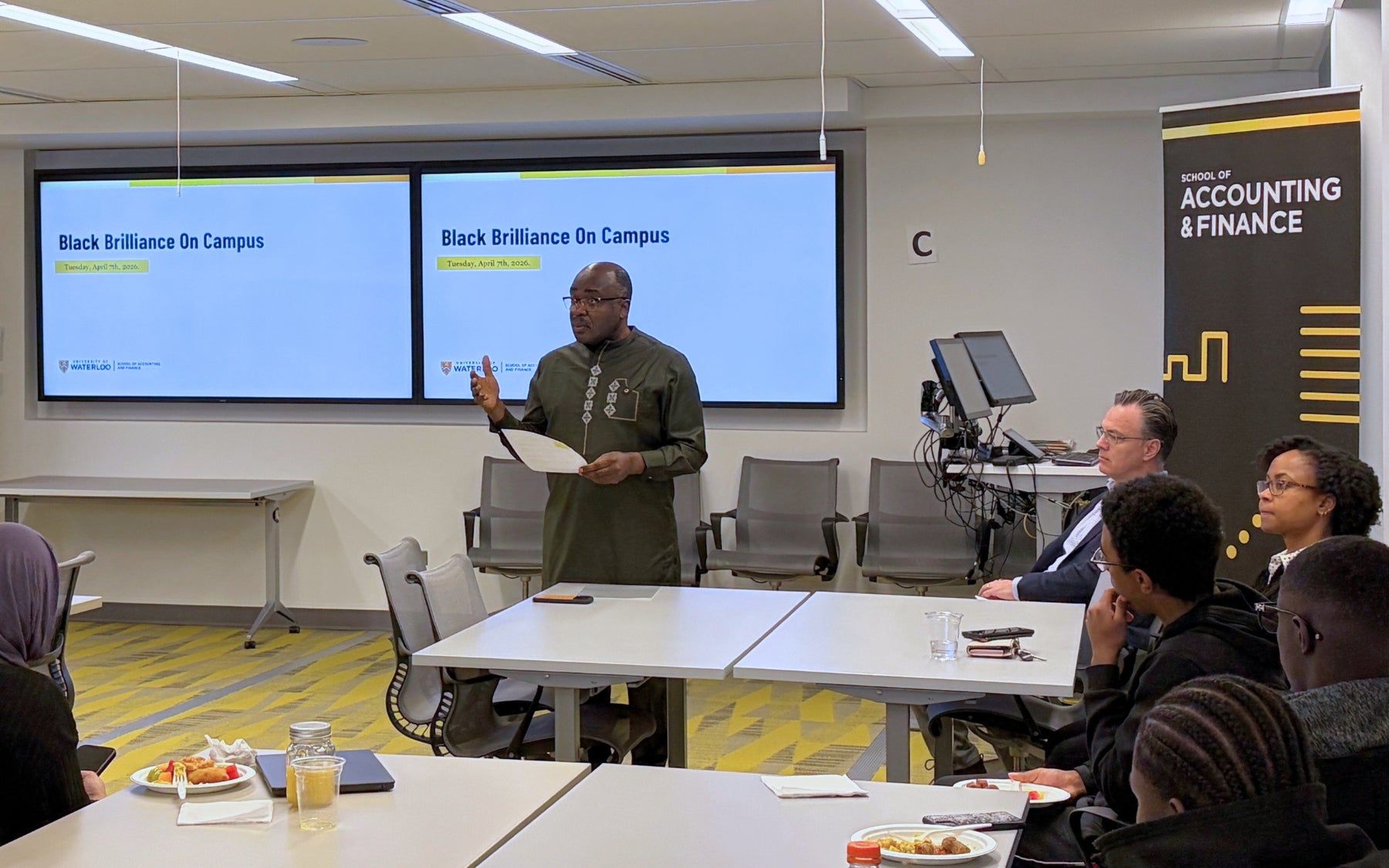
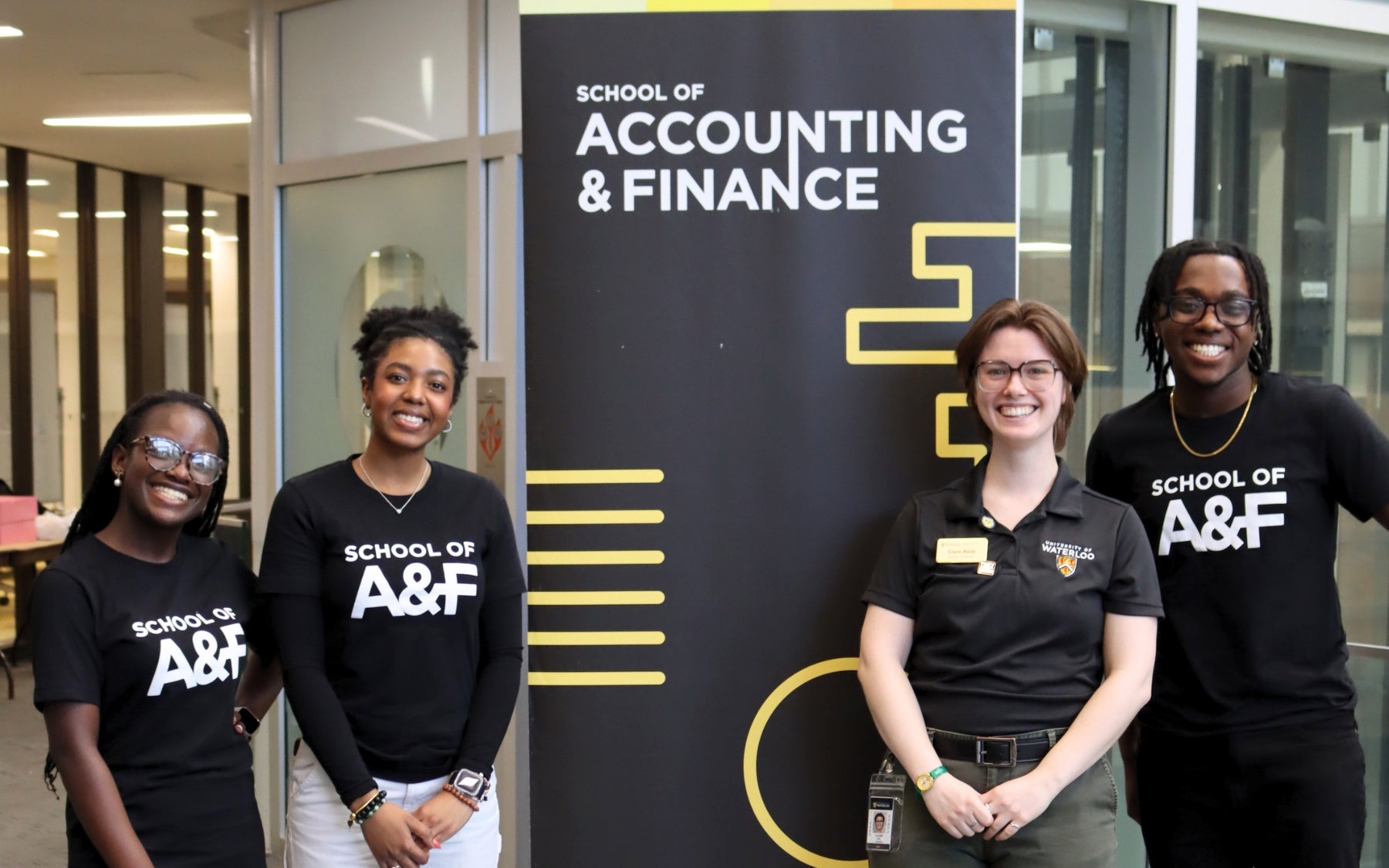
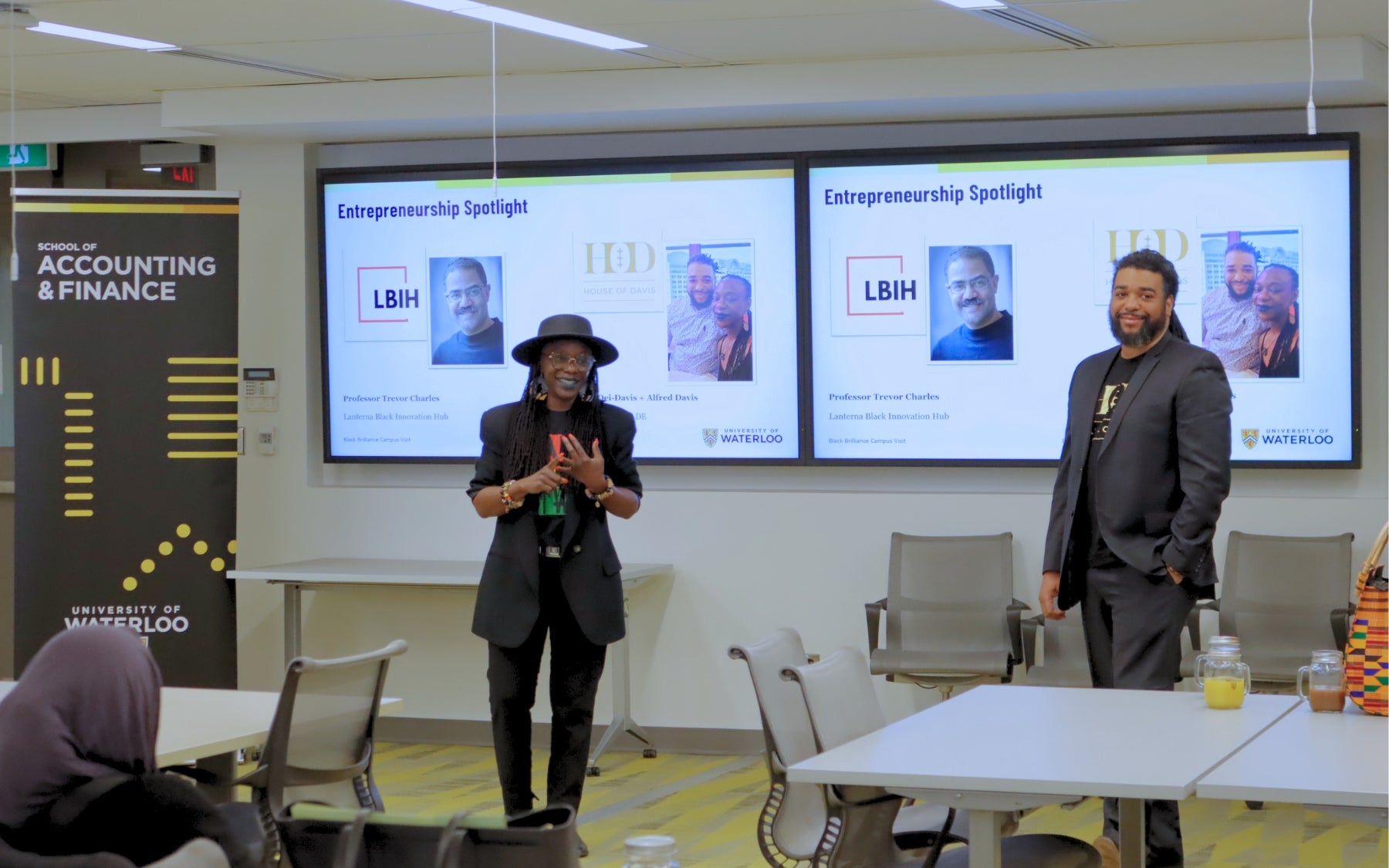
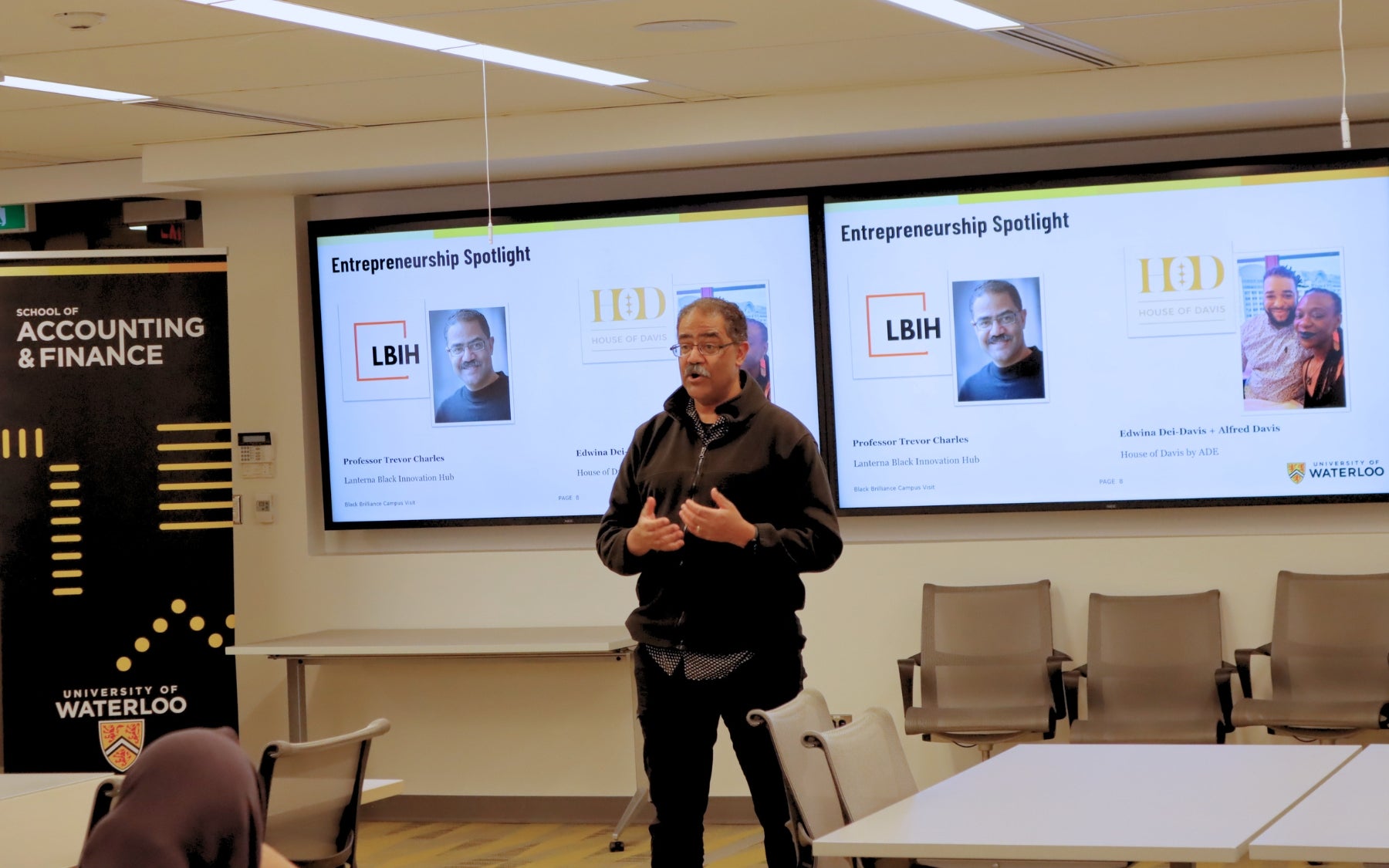
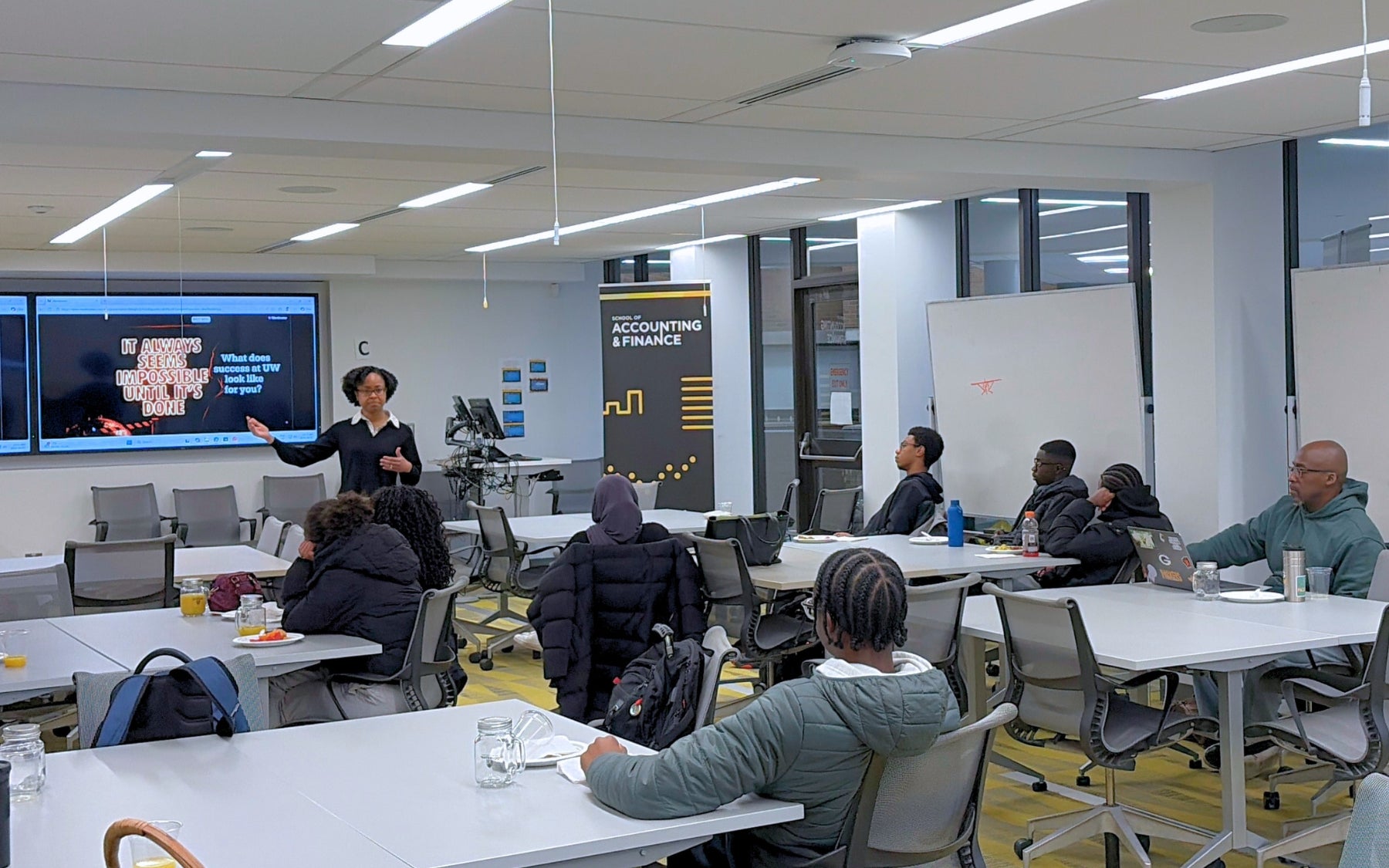
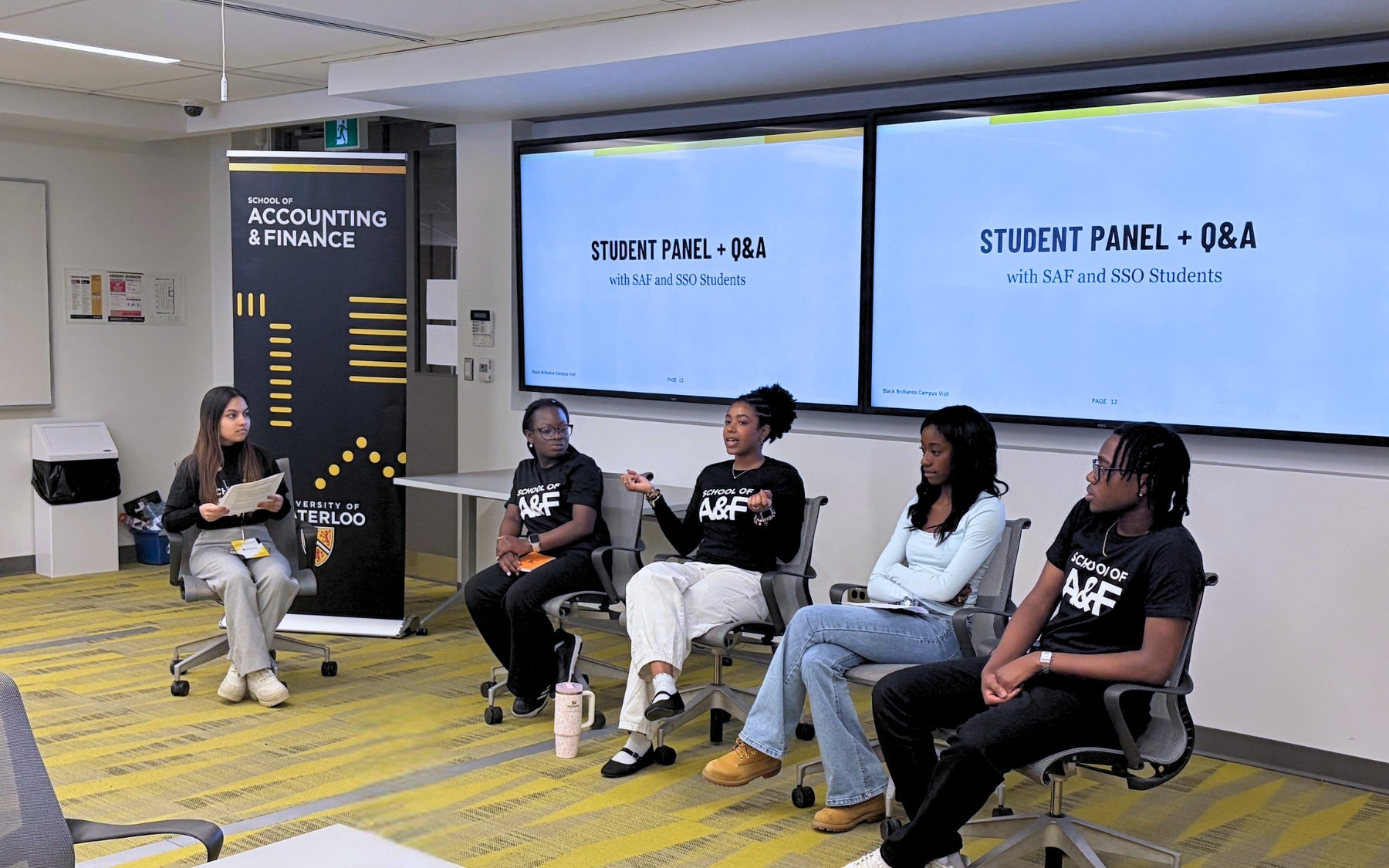
An entrepreneurship spotlight followed, featuring Edwina and Alfred of House of Davis by ADE, a Black-owned lifestyle and skincare brand rooted in Ghanaian Canadian heritage, alongside Dr. Trevor Charles, UWaterloo professor and Executive Director of the Lanterna Black Innovation Hub. A student panel then connected them directly with ACB students currently studying at SAF and participants in the Student Success Office’s Connection Collective, peers only a few years ahead, walking the same path.
The day closed with The Money Games, a hands-on financial literacy challenge, and a $1,500 team scholarship awarded to the winning group, applicable toward SAF tuition if they choose to attend Waterloo. Among the winners were Omar and Vedan, two Grade 10 students from Laurel Heights Secondary School.
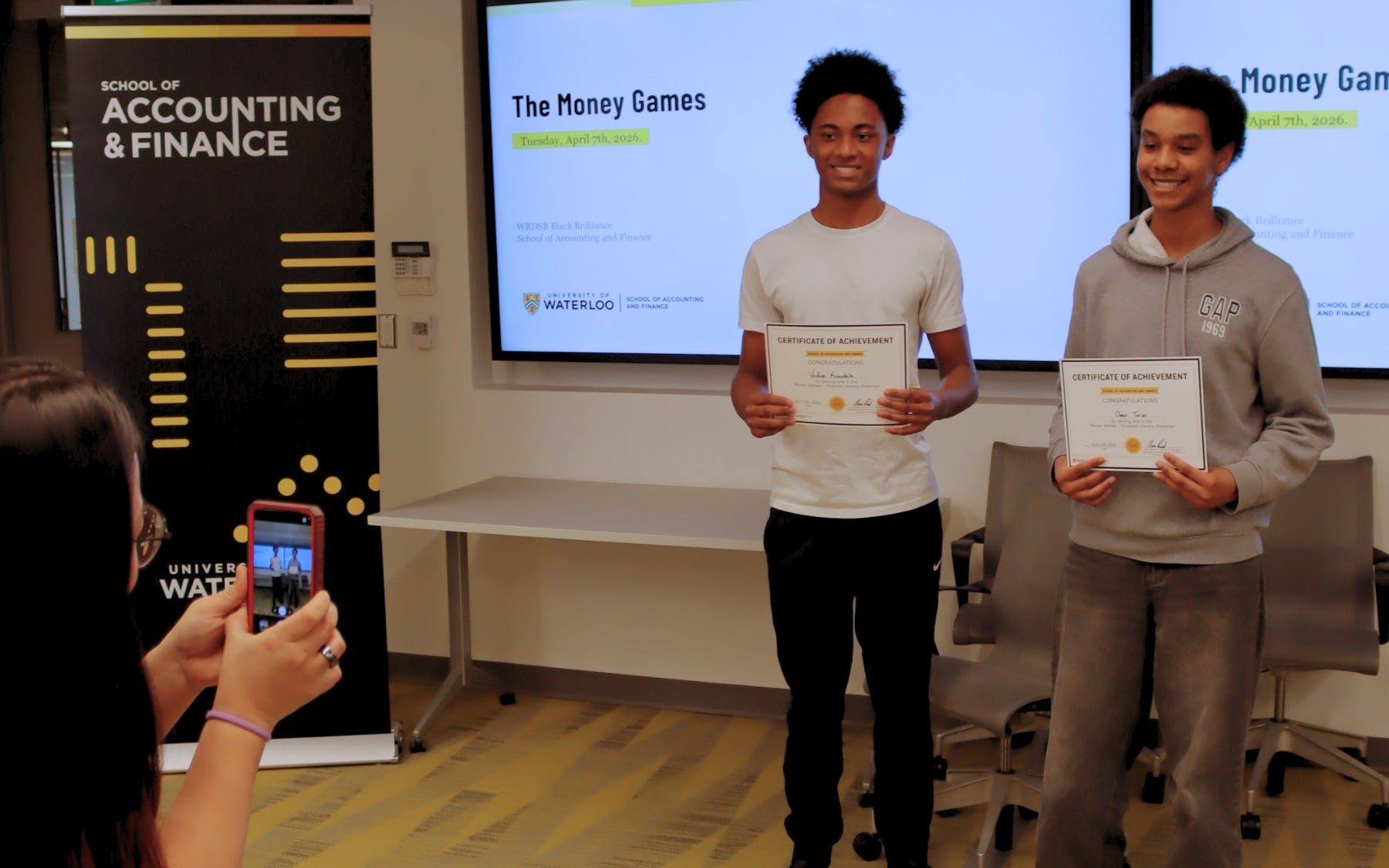
For them, the day felt different from what they might have expected. "The speakers made it their job to bring everyone together and allow for everyone to have chemistry," said Vedan. "Even though we had only known each other for a little bit, everyone felt at home and comfortable."
Omar noticed the same thing. "The speakers did a really good job engaging with the audience. It created a really positive environment where everyone was laughing, having fun and enjoying what they were doing."
Warren's measure of success is simple. "Meaningful impact means students see themselves at university," they say. "They are greeted by Black peers, taught by Black professors and know wholeheartedly that they belong."
For Omar and Vedan, that sense of possibility came through. "There are lots of doors you can open," Omar reflected, "and sometimes doors might close, but there'll be others that open. You don't just have one set path — you have lots of paths in life."
Vedan put it simply: "Never give yourself any walls. Always keep everything open."