Blog

Filter by:

Limit to posts where the title matches:
Limit to posts where the date of the blog post:
Date range
Limit to posts tagged with one or more of:
Limit to posts where the audience is one or more of:

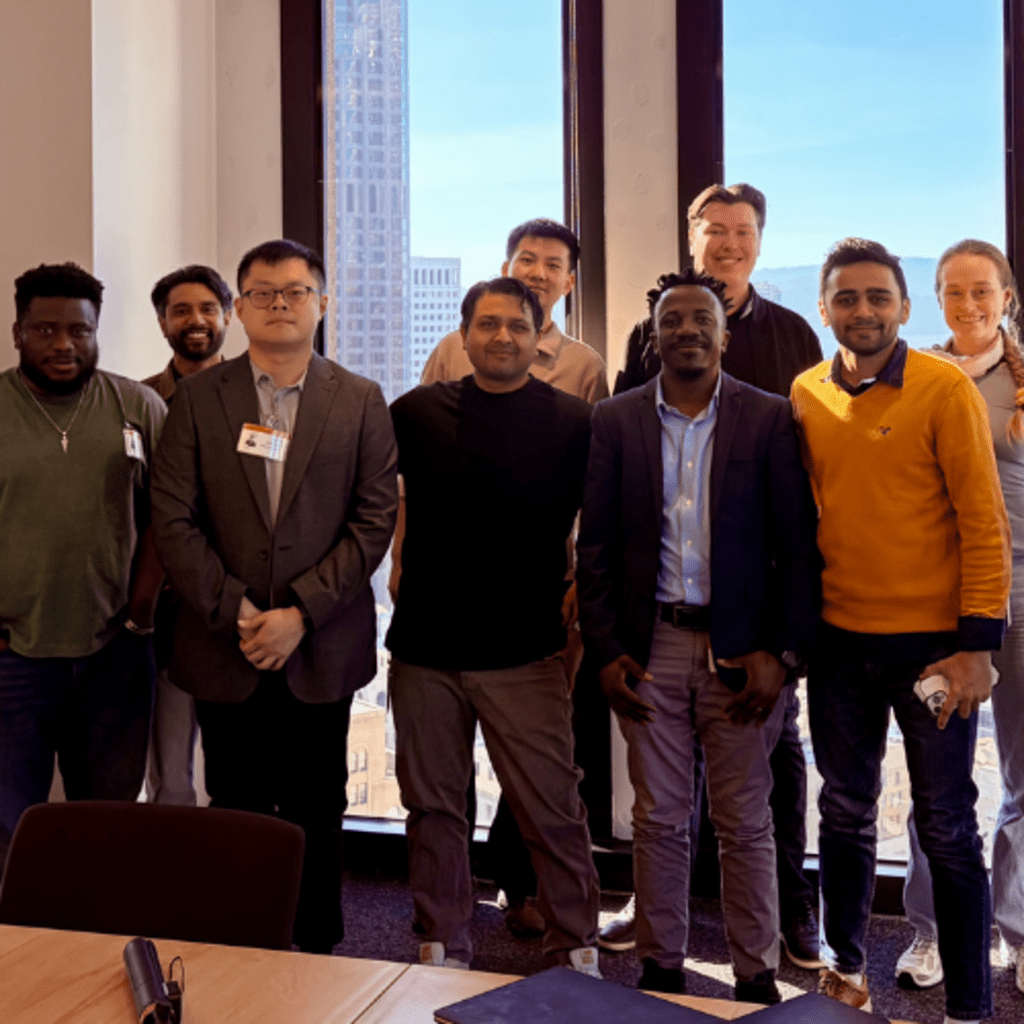
Charles Huxley, Tom Kizito, and Joshua Olonade, three MBET candidates, won the Experience Ventures Hackathon by building a fully functional zero-waste analytics tool in 36 hours. Their “constraint-first” approach, shaped by MBET’s focus on rapid prototyping, customer discovery, and problem-driven design, allowed them to deliver the only live product in the competition: the Zero-Waste Dashboard. The tool provides instant transaction processing, customer segmentation, product insights, and actionable recommendations that small retailers can implement immediately. Their win highlights how MBET equips students to build fast, validate assumptions, and create real-world impact. The team is now exploring opportunities to extend the platform to other retailers seeking simple, data-driven solutions.

When Hayley So, a Kinesiology student in the Faculty of Health, competed in the Spring 2025 Problem Pitch competition, she walked away with $7,500 in R&D funding to advance her startup,ClickNShare. The platform aims to make creative equipment like cameras and devices easier and more affordable to access, helping students and creators alike share their tools and talents. 

When Covid-19 hit and students started losing their co-op placements, two Conrad School BET 300 students and Problem Pitch alumni Holden Beggs and Jackson Mills teamed up to give their peers experience anyways.

That idea changed everything. It became The Zero Experience, an all-online program that has now reached over 5,000 learners worldwide and been recognized in Forbes 30 under 30 Class of 2025.

“Zero was born from our experiences with the Problem Lab, entrepreneurship at Conrad, research across national labs, and too many side projects to count,” says Holden. “We saw common threads in successful innovation, but also a big gap: there was no true first step for students who didn’t yet have ‘a great idea’ or didn’t feel like innovators.”

Meet Nikki McDonald, a student in the Master of Business, Entrepreneurship, and Technology (MBET) program at the University of Waterloo and a powerhouse on and off the ice.

In our latest blog, Nikki shares how her journey as a student-athlete shaped her path to entrepreneurship. From battling imposter syndrome to co-founding NextPlayNetwork, a platform that helps student-athletes transition into professional success, Nikki's story is all about clarity, persistence, and adaptability.

“Purpose goes beyond entrepreneurship and athletics; it’s the reason behind long hours and hard sacrifices.”

Read her full journey and what it takes to build a venture — and chase championships — at the same time.

Part-time MBET student Alex Salsali turned a personal story into a mission-driven venture. 

At the 2025 Consensus EasyA Hackathon, his team built Eunoia: a transparent giving platform powered by blockchain and AI and won the Polkadot Multichain Prize.
Learn how the MBET program helped shape his journey from idea to impact. 

"As a child, I believed in the magic of these words, certain that a sprinkle of pixie dust could make anything possible. As I grew, I traded wonder for realism and magic for logic. But somewhere along the way, I realized pixie dust is real, just not in the way I once imagined. 

On March 7, an email arrived in my inbox, my paper had been accepted at the Administrative Sciences Association of Canada (ASAC) 2025. A monumental milestone as a first-year PhD student. Yet, the real magic was not in that acceptance. It came later that evening. 

At 8:49 PM, another email arrived. My supervisor, Shavin Malhotra, the guiding force behind the paper submission, had shared the news with the entire department. Almost instantly, my inbox came alive, messages of joy, encouragement, and celebration poured in. What had started as a personal milestone transformed into a collective success 

In that moment, I realized pixie dust does exist, just not as a shimmer in the air, but as something far more powerful. It’s the unseen force of people who uplift you, the ecosystem that nurtures you, the mentors who guide you, the staff who support you, and the colleagues who walk beside you, celebrating, encouraging, and making your victories their own".  

Sarah Cestnick, a full-time MBET student, reflects on her recent experience at the VCIC Nationals.

"Walking into the Venture Capital Investment Competition (VCIC) Nationals, I wasn’t sure what to expect. It’s one thing to analyze startups in a classroom setting – but pitching investment decisions in front of seasoned venture capitalists? That’s a whole different ball game.

If there’s one thing the Master of Business, Entrepreneurship, and Technology (MBET) program does well, it’s this: it doesn’t just teach entrepreneurship – it immerses you in it.

Most students analyze businesses in a classroom through cases. MBET students sit down with founders and analyze businesses that could change industries. Most students read about venture capital. Student Venture Fund (SVF) students sit in the room with investors to make real investment decisions."

Meet Avery Kelly, a current Master of Business, Entrepreneurship, and Technology (MBET) student at the University of Waterloo. Avery graduated in June 2024 with an Honours Arts and Business degree, majoring in Legal Studies. 

"Transitioning from undergraduate studies to the graduate-level Conrad School of Entrepreneurship and Business has been an incredible experience, and I’m excited to share my journey and how it’s shaped my career path.

My introduction to the Conrad School and the MBET program began during my undergraduate years. I took BET 210, a course within the Arts and Business program that really opened my eyes to the world of entrepreneurship and business. The course connected the theoretical business concepts I was learning in the ARBUS program with real-world applications, which sparked my interest in pursuing more business-focused learning. 

As I began researching graduate programs at the University of Waterloo, I was drawn to the hands-on learning and the strong integration MBET has with the local KW community. I wanted to ensure that I wasn’t falling behind in terms of work experience, and the MBET program offered the perfect opportunity to develop and apply entrepreneurial skills in real-world settings. I found out more about the program online and even connected with members of the UW Athletics department, which helped me decide that MBET was the right choice for me."

The Master of Business, Entrepreneurship, and Technology (MBET) program at the University of Waterloo has been a transformative experience, blending my corporate and entrepreneurial background into a launchpad for growth. As someone with a Degree in Business Administration and a Graduate Diploma in Business Analytics, MBET has allowed me to build on these foundations and explore new avenues for growth and innovation.

My journey began with 9 years in the international airline industry, where I honed my leadership skills and strategic mindset as a Corporate Manager. Transitioning to entrepreneurship, I co-founded an eCommerce startup that grew to a $10M valuation in just four years and later launched Ross Hill Art, promoting Canadian art to global audiences.

MBET is much more than just academic rigour or venture building—it’s about the people. The faculty, staff, and peers have created an environment that’s collaborative, energizing, and endlessly motivating. Every single day, I look forward to stepping into class and being part of this dynamic community.

As we wrap up the Spring 2024 term, we’re thrilled to celebrate the achievements of our Enterprise Co-op (E Co-op) students in the recent Product Video Showcase Competition. This competition was designed to spotlight the incredible work done by our students during their work term, and the results were nothing short of spectacular.

The challenge was clear: create a compelling 90-second video that showcases a product or service developed during the work term. Unlike startup pitches, the focus was on illustrating the product’s features and how it can be used by potential customers. The goal was to produce a video that could serve as an ongoing piece of marketing content for social media campaigns and other promotional efforts.