Blog

Filter by:

Limit to posts where the title matches:
Limit to posts where the date of the blog post:
Date range
Limit to posts tagged with one or more of:
Limit to posts where the audience is one or more of:

Dr. David Hammond, a professor in the School of Public Health Sciences at the University of Waterloo, is currently leading two international studies on cannabis policy and tobacco control, respectively. In one of his recent articles, he outlines the increase in e-cigarette usage in England, which is also a similar trend in Canada.

There are close to 5 billion smartphone users worldwide (Statista, 2024). The average person spends 4 hours a day on their phone (Statista, 2023), and almost half of all smartphone users describe themselves as having a smartphone addiction (Ratan et al., 2022). Unsurprisingly, almost all university students have a smartphone (Huey & Giguere, 2023). In people aged 25 and under, 25% of them meet the criteria for problematic smartphone usage (Sohn et al., 2019).

It’s March and the sounds of Spring are in the air. By sounds of Spring, we mean the excessive honking of geese as they return from their winter vacays. Watch your step. 

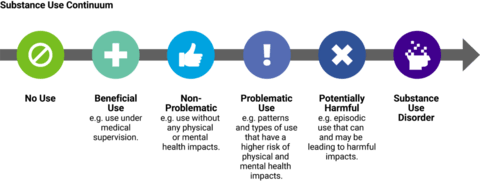
As we head into the weekend and one of the most celebrated holidays around the world (St Patrick’s Day), it is a great time to talk about substance use health. 

Whether it’s green beer, regular beer, tobacco, caffeine, cannabis, or illicit drugs, substances are a fact of life.  In Canada, it is estimated that 78% of people over the age of 15 regularly use substances of some kind. With substances playing a consistent role in our lives, it’s important that we develop healthy relationships with them.

Substance use and mental health concerns among graduate students has been growing for some time. Allen, et al. (2017) explored how mental health symptoms and substance use varies between professional doctoral (engineering and business), academic doctoral (arts and behavioral science), and master’s students.