News

Filter by:

Limit to news where the title matches:
Limit to items where the date of the news item:
Date range
Limit to news items tagged with one or more of:
Limit to news items where the audience is one or more of:

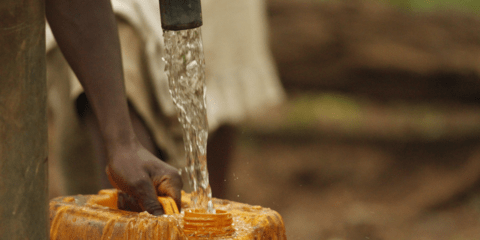
Access to Water, Sanitation and Hygiene (WASH) is an issue that disproportionately impacts women and girls as they are often responsible for finding and collecting water for their households. This issue has a greater impact in rural areas of Sub-Saharan Africa, where water access, solid waste receptacles and improved toilet facilities are not commonly present in households. Julius Jebuni, a Master of Arts graduate from the Department of Geography and Environmental Management, grew up in the Upper West Region of Ghana.  His research explored women’s experiences and empowerment through WASH and cash transfer programs post-COVID 19 in his home community.

A neighbourhood’s stores and restaurants can significantly influence the health and lifespan of its residents. This is due to the area’s retail food environment, which affects how convenient and affordable it is to access nutritious food. Patrycia Menko, a recent Master of Environmental Studies graduate from the School of Planning, identified food deserts and food mirages in Toronto and the cross-sectional links between these areas and gentrification, broken down by dissemination area.

Small-scale fisheries supply about two-thirds of the global fish for direct human consumption, and are facing increased vulnerability to climate change, biodiversity loss, and livelihood security. Farah El-shayeb, a Master of Environmental Studies student in the Department of Geography and Environmental Management, worked with Dr. Jeremy Pittman on an undergraduate research project to determine the role of family in adaptive capacity.

Corporations are major contributors to climate change and are under increasing pressure to disclose and reduce their carbon emissions. While many organizations claim to be decarbonizing their operations, it is difficult to differentiate between substantive effort and symbolic actions. This knowledge gap was the focus of Meijie Lin's research. 

We are thrilled to share that Natasha Serrao, PhD candidate in the School of Environment, Resources and Sustainability, was selected as a finalist in the 2025 SSHRC’s Storytellers Challenge! The SSHRC challenges postsecondary students nationwide to demonstrate, in up to three minutes or 300 words, how their research is positively impacting our lives, our world, and our future.