PhD Thesis Presentation
Candidate: Michael Mazurek
Title: Testing classical and quantum theory with single photons
Candidate: Michael Mazurek
Title: Testing classical and quantum theory with single photons
The Canadian Space Agency (CSA) is awarding $1.5 million to the Institute for Quantum Computing (IQC) to lead the science of a mission called the Quantum Encryption and Science Satellite (QEYSSat), which will protect the communications and data of Canadians on Earth and in space.
Transformative Quantum Technologies (TQT) invites the University of Waterloo community to explore the Research Advancement Centre 2 (RAC 2) building and see first-hand where groundbreaking research in quantum information and science technology happens.
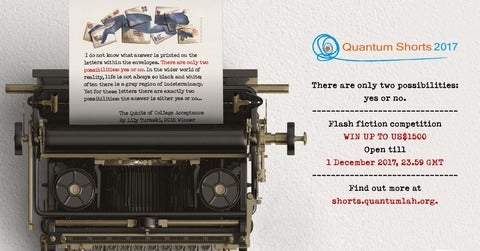
The Institute for Quantum Computing is pleased to announce a call for entries to the Quantum Shorts flash fiction competition. The competition is open to stories up to 1000 words long that take inspiration from quantum physics and include the phrase “There are only two possibilities: yes or no”. The competition is free to enter, offering prizes of up to US $1500.
I will report on dynamical magnetic susceptibility measurements of
both bulk and thin film samples of the spin glass Copper Manganese.
By studying the Thermoremanent Magnetization (TRM) of multi-layer thin
films of various thicknesses, we are able to show the maximum energy
barrier encountered during correlated spin flip transitions is cut off
by the thickness of the film and is independent of temperature. The
distribution of energy barriers is shown to follow from a hierarchical
Hear Raymond Laflamme, founding director of the Institute for Quantum Computing and John von Neumann Chair in Quantum Information and Edwin Outwater, Music Director Laureate of the Kitchener-Waterloo Symphony, as they have a conversation about the making of Does God Play Dice (Quantum Etude).
Radio host Mike Farwell will moderate this conversation about their collaboration that integrated quantum physics and music to create a surprisingly random performance piece. You’ll even have the to watch highlights of the April 20 performance.
Quantum machine learning and artificial intelligence, quantum-safe cryptography, and simulation of quantum systems all rely on the power of quantum computing.
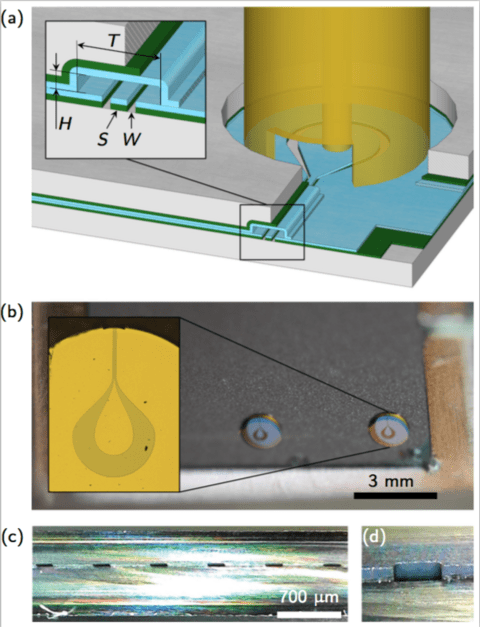
A team of researchers at the Institute for Quantum Computing (IQC) have taken a step closer to realizing the powerful possibilities of a universal quantum computer. The Laboratory for Digital Quantum Matter, led by faculty member Matteo Mariantoni, is developing technologies for extensible quantum computing architectures based on superconducting quantum devices.
New research chair in quantum error correction demonstrates continued leadership by IQC and Waterloo in the pursuit of a quantum computer and in the development of other quantum technologies.
WATERLOO, Ont. (Thursday, September 14) The University of Waterloo, in collaboration with Mike and Ophelia Lazaridis, has launched a new $8-million research chair to further solidify Waterloo’s leadership in quantum information research.
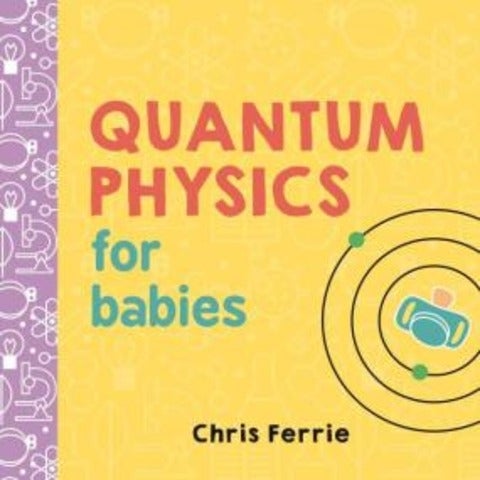
In a recent survey, nearly 1 in 3 Americans said they would rather clean a toilet than do a single math problem. Tell someone on the street that you are a physicist, or worse, a mathematician, and you’ll be acknowledged with a “I hated math in school” or “I was never any good at math.” Tell them you are a quantum physicist and you’ll be lucky if you get a response. Chris Ferrie plans to vanquish those doubts and fears by introducing children to quantum physics. But, how young is too young? Enter Quantum Physics for Babies.
Hear from author and quantum theorist Chris Ferrie, IQC and University of Waterloo, Faculty of Mathematics alumnus, about his experience in communicating quantum information science to a larger audience. This general talk is suitable for all audiences.
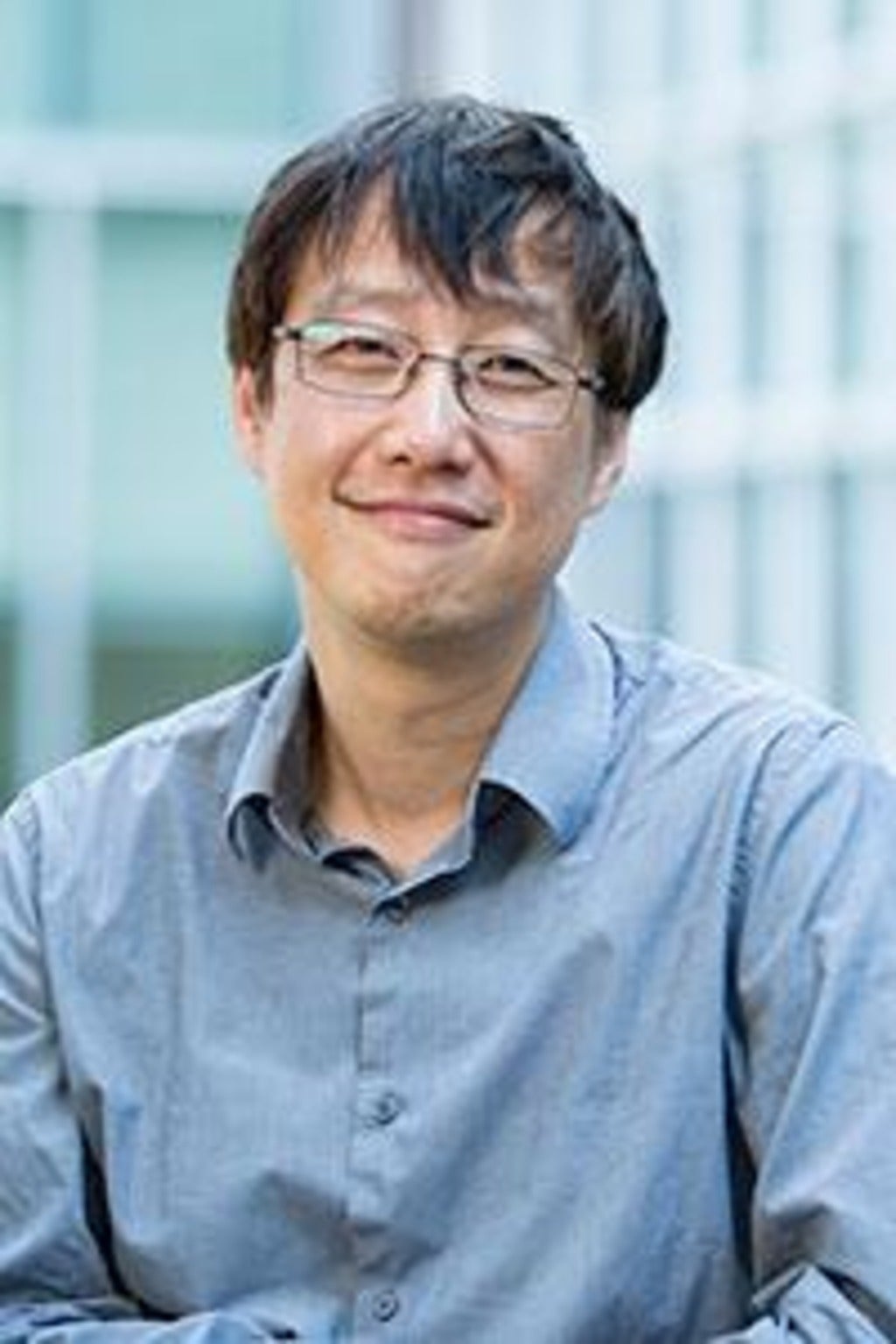
Philip Kim is an experimental condensed matter physicist. The focus of Kim’s group’s research is the mesoscopic investigation of various physical phenomena in low dimensional and nanostructured materials.