Donors | Friends | Supporters

En français

Three of Canada’s most recognized centres in quantum information and materials research are collaborating on five new joint research projects. The three centres are all recipients of funding from the Canada First Research Excellence Fund (CFREF).
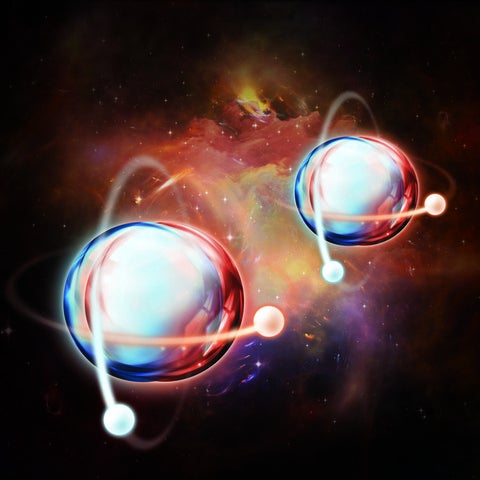
Researchers at the Institute for Quantum Computing (IQC), led by faculty member Michael Reimer, have developed a new quantum sensor based on semiconductor nanowires that can detect single particles of light with high speed, timing resolution and efficiency over an unparalleled wavelength range, from ultraviolet to near-infrared.

En français

Today, Institute for Quantum Computing (IQC) researcher Raymond Laflamme was invested into the Order of Canada by Her Excellency the Right Honourable Julie Payette, Governor General of Canada, at Rideau Hall.

Recognized as a pioneer in quantum information research and technology, Laflamme was appointed to the Order of Canada for his significant scientific and leadership contributions to the country.

Wednesday, February 13, 2019 7:00 pm - 7:00 pm EST (GMT -05:00)

Entangled: The series

QUANTUM + Film: A screening of 10 Quantum Shorts

A festival for quantum-inspired films

Quantum ShortsThe Quantum Shorts festival called for short films inspired by quantum physics and the universe answered. Filmmakers all over the world responded with their movies.

In his own words, Marc Morin is “addicted to the game.”

Morin is the CEO and co-founder at Auvik Networks, pronounced awe-vik, as in awesome. “It’s like having a child who does way better than you and it’s awesome,” Morin explained at the CryptoWorks21 Distinguished Lecture last fall. Elaborating on his evolving role as a CEO in a tech company, he shared lessons learned­—the mistakes he made and the things he got right—during his personal journey as a serial technology entrepreneur. 

Thursday, November 15, 2018 7:00 pm - 7:00 pm EST (GMT -05:00)

Entangled: The series

QUANTUM + Pop Culture

“Quantum physics” has taken its position with “rocket science” in pop culture as a shorthand for frighteningly complicated science. Quantum physics has also taken on a sort of magical connotation in fiction, with features like entanglement, superposition, and tunneling spurring imagination. But where does the science draw the line? How much is joyful speculation, and how much is disregard for reality? And if it’s always seen as either magical or scary, how does that affect the perception of quantum science?