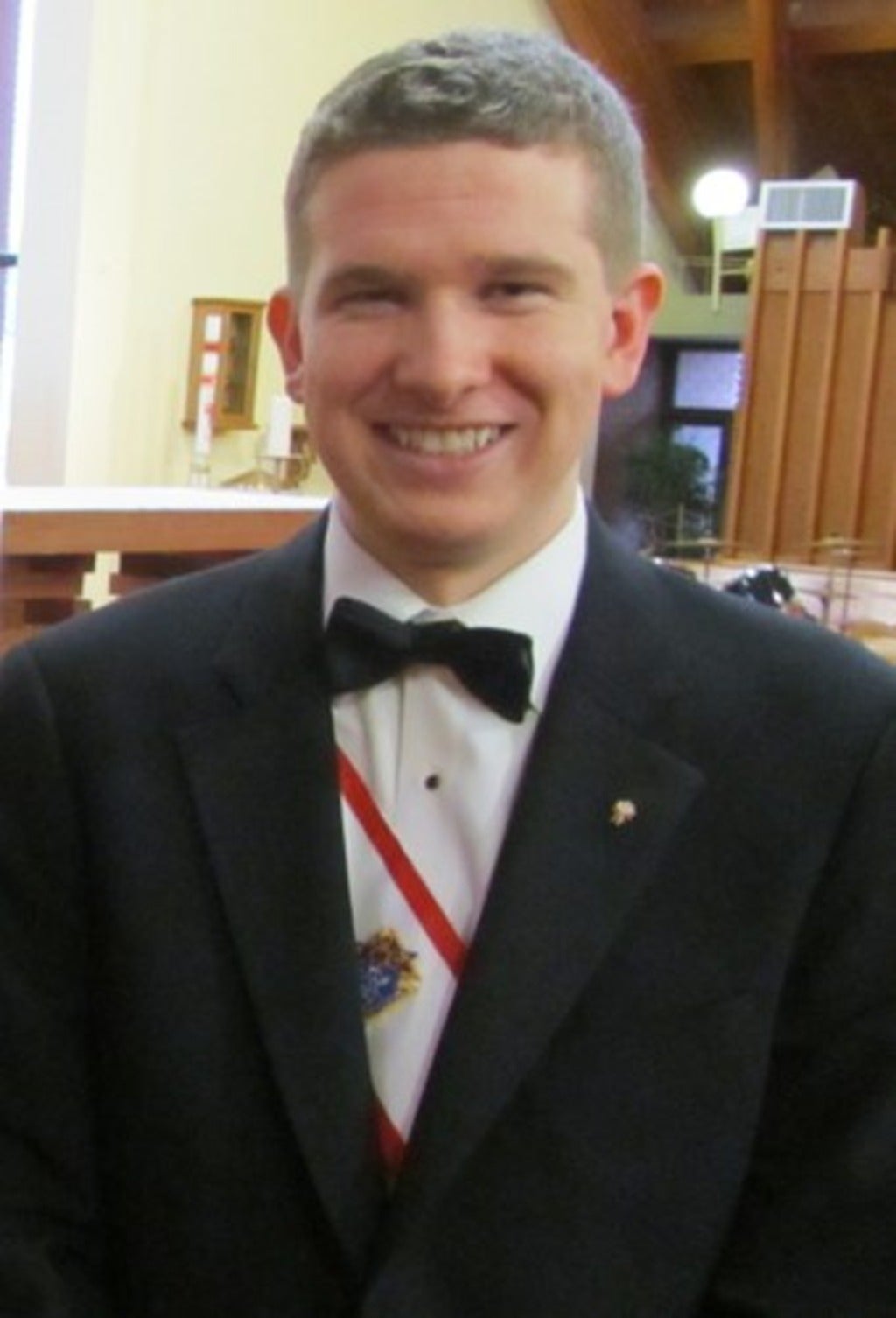
PhD Thesis - Christopher Pugh
Christopher Pugh of the Department of Physics and Astronomy is presenting his thesis:
Free Space Quantum Key Distribution to Moving Platforms
Christopher is supervised by IQC faculty member Thomas Jennewein.
Christopher Pugh of the Department of Physics and Astronomy is presenting his thesis:
Free Space Quantum Key Distribution to Moving Platforms
Christopher is supervised by IQC faculty member Thomas Jennewein.
Paulina Corona Ugalde of the Department of Physics and Astronomy is defending her thesis:
Experimental Prospects for Detecting the Quantum Nature of Spacetime
Paulina is supervised by IQC associate Robert Mann
Come play in The Quantum Mechanics Golf Tournament and join the fight against cancer
The Quantum Mechanics are asking for your support in the fight against cancer.
The team, made of University of Waterloo, Institute for Quantum Computing (IQC) and Perimeter Institute members, is participating in the Grand Ride in honour of Pearl Sullivan, Dean of Engineering and Raymond Laflamme, Executive Director of IQC at the University of Waterloo and all those in our communities who have been touched by cancer.
It is essential to benchmark and characterize real-world qubits in order to understand whether they are of sufficient quality for quantum information tasks, and if they are not, so that they can be debugged. Many techniques are designed for qubits that stay constant in time, but in reality almost all qubits suffer from some form of time-dependence.
The ability to map, store quantum states of light (e. g. single photon) to matter and later retrieve is one of the important building blocks of quantum information processing. Such a device is called a quantum memory for light.
I will discuss classical and quantum algorithms for simulation of quantum impurity models. Such models describe a bath of free fermions coupled to a small interacting subsystem called an impurity. Hamiltonians of this form were famously studied by Anderson, Kondo, Wilson and others in 1960s.
Constraint propagation games are simple extended nonlocal games that are motivated by the propagation checking of quantum computation and have found powerful applications in the study of quantum proof systems recently. In this talk, we will introduce their definitions and basic properties, demonstrate their uses in larger games as building blocks, and illustrate the method that turns them into nonlocal games.
The modern information era is built on silicon nanoelectronic devices. The future quantum information era might be built on silicon too, if we succeed in controlling the interactions between individual spins hosted in silicon nanostructures.
Spins in silicon constitute excellent solid-state qubits, because of the weak spin-orbit coupling and the possibility to remove nuclear spins from the environment through 28Si isotopic enrichment.
from IOP publishing
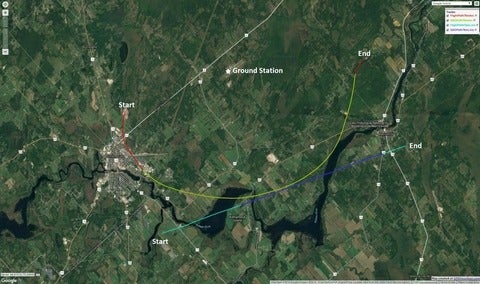
Researchers in Canada have taken a significant step towards enabling secure quantum communication via moving satellites, as announced by the Canadian Government in April 2017.
We describe two procedures which, given access to one copy of a quantum state and a sequence of two-outcome measurements, can distinguish between the case that at least one of the measurements accepts the state with high probability, and the case that all of the measurements have low probability of acceptance.