Faculty

Wednesday, May 31, 2017 2:00 pm - 2:00 pm EDT (GMT -04:00)

Special seminar: Edward Tang

Superconducting Resonator with Composite Film for Quantum Information

Edward Tang, IQC

The full manipulation of a quantum system can endow us with the power of computing in exponentially increased state space without exponential growth of physical resources. In this thesis, we are dedicated to the developments in superconducting devices and layout design for their future applications in large-scale quantum computation.

Thursday, June 1, 2017 2:00 pm - 2:00 pm EDT (GMT -04:00)

Special seminar: Joel Klassen

Existence and Uniqueness in the Quantum Marginal Problem

Joel Klassen, IQC

The quantum marginal problem asks whether a family of quantum marginals are compatible with a global quantum state. It is of central importance to a wide range of topics in both quantum many body physics and quantum information. Often it can be the case that when a family of quantum marginals are compatible with a global quantum state, that global state is unique.

Friday, June 2, 2017 11:45 am - 11:45 am EDT (GMT -04:00)

RAC1 Journal Club/Seminar Series

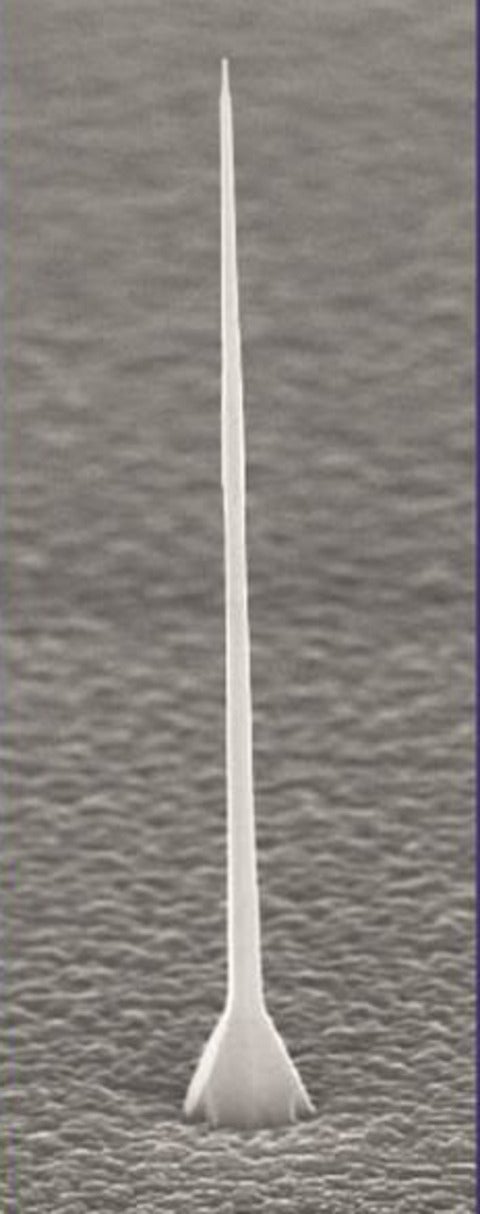
Simulation of III-V Nanowires for Infrared Photodetection

Khalifa M. Azizur-Rahman, McMaster University

The absorptance in vertical nanowire (nw) arrays is typically dominated by three optical phenomena: radial mode resonances, near-field evanescent wave coupling, and Fabry–Perot (F-P) mode resonances. The contribution of these optical phenomena to GaAs, InP and InAs nw absorptance was simulated using the finite element method. The study compared the absorptance between finite and semi-infinite nws with varying geometrical parameters, including the nw diameter (D), array period (P), and nw length (L).

Wednesday, May 24, 2017 2:30 pm - 2:30 pm EDT (GMT -04:00)

Seminar: Pranjal Bordia

Many-Body Localization Through the Lens of Ultracold Quantum Gases

Pranjal Bordia, Max Planck Institute, Munich

A fundamental assumption of quantum statistical mechanics is that closed isolated systems always thermalize under their own dynamics. Progress on the topic of many-body localization has challenged this vital assumption, describing a phase where thermalization, and with it, equilibrium thermodynamics, breaks down.

Wednesday, May 17, 2017 3:00 pm - 3:00 pm EDT (GMT -04:00)

Special Seminar: Julia Cramer

Quantum science and technology at QuTech (Delft, NL)

Julia Cramer, QuTech Delft

QuTech is an advanced research center for quantum computing and the quantum internet, addressing scientific and engineering challenges in collaboration with industrial partners. QuTech is striving to remain at the forefront in quantum information science and technology. I’ll give some info on the development of QuTech over the years. Furthermore, I will present what the goals and focusses are of our research teams, current work and latest milestones.