Faculty

Last year, research from the Institute for Quantum Computing (IQC) at the University of Waterloo and the Perimeter Institute for Theoretical Physics (PI) showed that in the quantum world, certain kinds of correlations do imply causation. This line of research has now expanded to the question of whether there are types of causal structures that exist in the quantum world but not in the classical world of our everyday lives.
Monday, June 12, 2017 2:30 pm - 2:30 pm EDT (GMT -04:00)

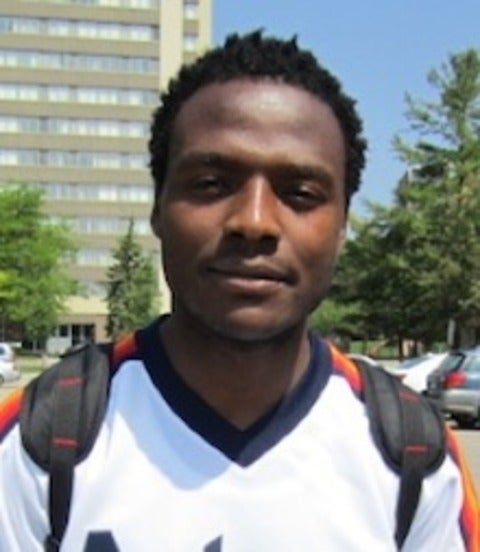
Colloquium: Nengkun Yu

Chernoff Bound for Quantum Operations is Faithful

Nengkun Yu, Tsinghua University & University of Technology, Sydney

We consider the problem of testing two quantum hypotheses of quantum operations in the setting of many uses where an arbitrary prior distribution is given. The concept of the Chernoff bound for quantum operations is investigated to track the minimal average probability of error of discriminating two quantum operations asymptotically.

Thursday, June 15, 2017 2:00 pm - 2:00 pm EDT (GMT -04:00)

Seminar: John Donohue

Mode-selection, purification, and ultrafast manipulation of quantum light with nonlinear waveguide devices

John Donohue, University of Paderborn

The temporal structure of quantum light offers an intrinsically high-dimensional and robust platform for encoding quantum information. In particular, the time-frequency degree of freedom can be explored in the frame of pulsed temporal modes, the ultrafast analogy to spatial Hermite-Gauss or orbital angular momentum modes. These overlapping temporal modes are naturally compatible with waveguide devices and fibre infrastructure, but present unique challenges to fully explore and exploit.

Canada is headed for the quantum space race with a project from the University of Waterloo.

Waterloo’s Quantum Encryption and Science Satellite (QEYSSat) initiative, announced as part of the federal government’s recent investment into space-related emerging technologies, joins a global race to quantum cybersecurity via satellites.

On behalf of the community here at the Institute for Quantum Computing (IQC), congratulations to the Government of Canada and the Canadian Space Agency on today’s announcement. The $80.9 million in funding to the Canadian Space Agency is an important investment in the development of new technologies that will benefit all Canadians for generations.

Monday, May 8, 2017 2:30 pm - 2:30 pm EDT (GMT -04:00)

Colloquium: Hakan Tureci

A platform to study many-body physics with photons

Hakan Tureci, Princeton University

The past decade has seen enormous experimental progress in building superconducting electrical circuits featuring artificial atoms subject to the quantized electromagnetic field of microwave photons. The fabrication and control of superconducting circuits has reached a stage where many such elements can be wired up into intricate networks, allowing the preparation and readout of complex quantum states of photons and atoms.

Monday, May 28, 2018 12:00 am - Friday, June 8, 2018 12:00 am EDT (GMT -04:00)

Undergraduate School on Experimental Quantum Information Processing

Join us at the Institute for Quantum Computing for a two-week introduction to the theoretical and experimental study of quantum information processing.

During the Undergraduate School on Experimental Quantum Information Processing (USEQIP) will be exposed to lectures and experiments on the following topics and more.

  • Quantum information processing
  • Implementation for quantum information processing
  • Experimental exploration
Tuesday, August 3, 2021 12:00 am - Friday, August 13, 2021 12:00 am EDT (GMT -04:00)

Quantum Cryptography School for Young Students (QCSYS)

Discover how mathematics, physics, computer science, engineering, and more combine into one of the most exciting topics in modern science – quantum information – at the Quantum Cryptography School for Young Students (QCSYS). QCSYS is a unique enrichment program for high school students that will run this August.

QCSYS will be a free, online program that offers a blend of expert lectures, small group discussions, problem solving, and opportunities for mentoring and networking with world-leading quantum researchers.

You will:

Tuesday, April 25, 2017 1:00 pm - 1:00 pm EDT (GMT -04:00)

Special seminar: Abel Molina

The optimality of projections for quantum state exclusion

Abel Molina, IQC

We will first motivate the problem of quantum state exclusion of pure states, through its connections with the PBR game and with compatibility conditions for quantum state assignments. Then, we will discuss our recent result regarding the optimality of projections for perfect state exclusion of 3 pure states in 3 dimensions (arXiv:1702.06449).