
PhD Thesis - Greg Holloway
Greg Holloway of the Department of Physics and Astronomy is defending his thesis:
Electron transport in semiconducting nanowires and quantum dots
Greg is supervised by Associate Professor Joanthan Baugh.
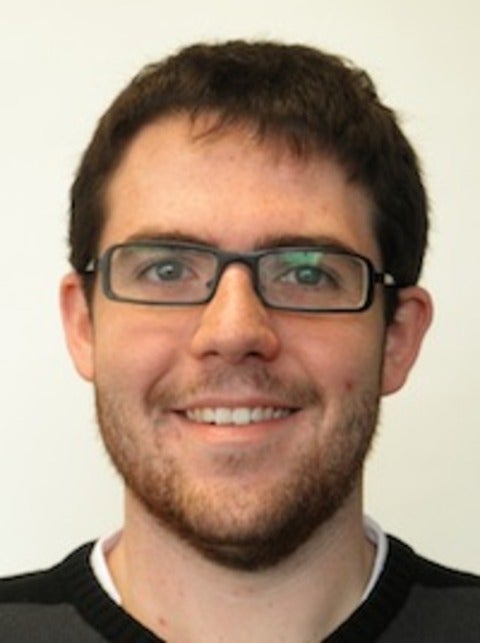
Greg Holloway of the Department of Physics and Astronomy is defending his thesis:
Electron transport in semiconducting nanowires and quantum dots
Greg is supervised by Associate Professor Joanthan Baugh.
John Donohue of the Department of Physics and Astronomy is defending his thesis:

Ultrafast manipulation of single photons using dispersion and sum-frequency generation
John is supervised by Associate Professor Kevin Resch.
Van Dam and Hayden introduced the concept of approximate embezzlement of entanglement. Even if one allows infinite dimensional resource spaces but requires a bipartite tensor product structure of the resource space, perfect embezzlement is still impossible. But in the commuting operator framework perfect embezzlement is possible. We then introduce unitary correlation sets and relate these ideas to the conjectures of Connes and Tsirelson.
I will review our recent activities in continuous variable QKD that aims for the deployment of QKD equipment compatible with current telecom standards and research in satellite QKD that will make it possible to bridge long distances. In optical fibre systems continuous variable quantum cryptography reaches GHz speed and offers efficient integration with known telecommunication techniques, especially in short inner-city or data center links. Sending and receiving components, including quantum random number generators, can be efficiently built in integrated components. Optical free space communication is a reliable means to transmit classical and quantum information. Free space links offer ad-hoc establishment in intra-city communication, air-to-ground or satellite-to-ground scenarios.
Superconducting qubits are coherent artificial atoms assembled from electrical circuit elements and microwave optical components. Their lithographic scalability, compatibility with microwave control, and operability at nanosecond time scales all converge to make the superconducting qubit a highly attractive candidate for the constituent logical elements of a quantum information processor.
Several variants of nonlocal games have been considered in the study of quantum entanglement and nonlocality. In this talk, we shall consider two such variants called quantum-classical games and extended nonlocal games. The players, Alice and Bob, may play the game according to various classes of strategies. An entangled strategy is one in which Alice and Bob use quantum resources in the form of a shared quantum state and sets of measurements. One may ask whether the dimension of the shared state makes a difference in how well the players can perform using an entangled strategy.
Electrostatically defined quantum dots provide a flexible implementation for scalable spin-based quantum information processing. Recently Si has emerged as a promising platform for these systems, due to its long electron spin coherence times, and its compatibility with numerous fabrication processes. In this talk I will give a detailed description of the device architecture, as well as a description of transport through Si quantum dots.
Much of what we understand about the world comes from our eyes, which sense the colors from red to violet that are expressed in the rainbow.
Join us at the Institute for Quantum Computing for a two-week introduction to the theoretical and experimental study of quantum information processing.
Quantum error correction presents some of the most significant and interesting challenges that must be resolved before building an efficient quantum computer. Quantum error correcting codes allow to successfully run quantum algorithms on unreliable quantum hardware. Because quantum hardware suffers from errors such as decoherence, leakage or qubit loss, and these errors corrupt delicate quantum states rather than binary information, the known error correction techniques are complex and have a high overhead.