Future students

Tuesday, July 14, 2015 2:00 pm - 3:00 pm EDT (GMT -04:00)

Fabian Furrer: Continuous-Variable Protocols in the Noisy-Quantum-Storage Model

Fabian Furrer, Nippon Telegraph and Telephone (NTT) Corporation Basic Research Laboratories, Japan

We present a protocol for oblivious-transfer that can be implemented with an optical continuous-variable system, and prove its security in the noisy-storage model. This model assumes that the malicious party has only limited capabilities to store quantum information at one point during the protocol. The security is quantified by a trade-off relation between
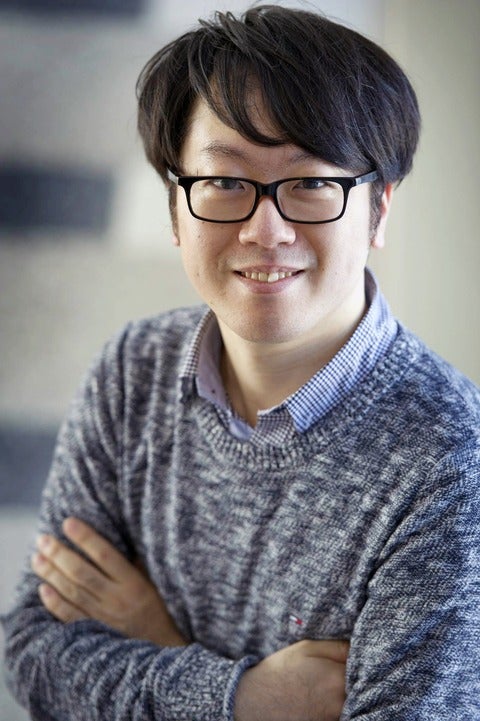
Marco Piani, University of Strathclyde, Glascow

Quantum correlations exhibit a variety of non-classical features, which include quantum entanglement, quantum steering, and quantum discord. Such richness and diversity of quantum features calls for meaningful and quantitative approaches to their study. In this talk I will illustrate how it is possible to exploit techniques and insight from convex optimization, especially from semidefinite programming, to provide an operational quantification and interpretation of all the above aspects of the quantumness of correlations.

Wednesday, August 5, 2015 10:00 am - 11:00 am EDT (GMT -04:00)

Britton Plourde: Superconducting metamaterials and asymmetric transmon qubits

Britton Plourde, University of Syracuse 

Low-loss resonators formed from lumped circuit elements or distributed transmission lines can be coupled to superconducting qubits. This is the basis for the numerous investigations of circuit-QED over the past decade. In this case, one is primarily interested in the coupling between the qubit and one or a few modes.

Tuesday, June 30, 2015 11:00 am - 12:00 pm EDT (GMT -04:00)

Dong Yang: Operational resource theory of coherence

Dong Yang, University of Barcelona

From the viewpoint of resource theory, we establish the coherence
theory in an operational way. Namely we introduce the two basic concepts
— “coherence distillation” and “coherence cost” in the coherence
transformation processing and show that the evaluations of them are
reduced to single-letter formula: the coherence distillation is given by
the relative entropy of coherence (or in other words, we give the
relative entropy of coherence its operational interpretation) and the

Thursday, July 30, 2015 2:30 pm - 3:30 pm EDT (GMT -04:00)

Christoph Simon: Extending the quantum domain with quantum optics

Christoph Simon, University of Calgary

Quantum optical systems are well suited for pushing the boundaries of quantum physics. Two big goals in this context are the creation of entanglement over long distances and the observation of quantum effects on macroscopic scales. I will describe various theoretical and some experimental work in these directions.

Monday, July 27, 2009 12:00 am - Friday, July 31, 2009 12:00 am EDT (GMT -04:00)

Quantum Cryptography School for Young Students 2009 (QCSYS)

Apply for QCSYS and discover how the physics and mathematics of quantum mechanics and cryptography merge into one of the most exciting topics in contemporary science – quantum cryptography.

  • Engage in hands-on experiments and attend lectures
  • Collaborate with renowned researchers
  • Participate in group work and social activities
  • Stay in a university residence with QCSYS counsellor

Frank Wilhelm-Mauch, Universität des Saarlandes, Germany

Readout plays a central role in most quantum information protocols, notably in fault tolerance. While the readout of supercondcuting qubits operating in the microwave regime has reached exquisite performance using Josephson Parametric Amplifiers, these ask for large technological overhead that is difficult to scale down. We will show how a recently introduced microwave photon counter, the Josephson Photomultiplier JPM can be used for qubit readout with much less overhead and even elementary data processing on chip.

Wednesday, June 24, 2015 12:00 pm - 1:00 pm EDT (GMT -04:00)

Quantum Frontiers Distinguished Lecture: Immanuel Bloch

Immanuel Bloch, Max Planck Institute of Quantum Optics

From Topological Bloch Bands to Long-Range Interacting Rydberg Gases - New Frontiers for Ultracold Atoms

Ultracold atoms in optical lattices have enabled to probe strongly interacting many-body phases in new parameter regimes and with powerful new observation techniques.

The province of Ontario announced that Kyung Choi and Vadim Makarov of the Institute for Quantum Computing (IQC) were two of the award winners.

Local MPPs Daiene Vernille and Kathryn McGarry presented announced the awards to University of Waterloo recipients this morning at Waterloo and Lin Tan, assistant professor in the Department of Electrical and Computing Engineering, made some remarks on behalf of the university.

Tuesday, June 9, 2015 2:00 pm - 3:00 pm EDT (GMT -04:00)

Erik Woodhead: Prepare-and-measure quantum key distribution

Erik Woodhead, The Institute of Photonic Sciences, Spain

Quantum key distribution (QKD) can be implemented in both so-called
entanglement-based (EB) and prepare-and-measure (PM) configurations. There is a certain degree of equivalence between EB and PM schemes from the point of view of security analysis that has been heavily exploited in the literature over the last fifteen years or so, where a given PM protocol is reduced to an equivalent EB protocol (following the BBM92 argument) whose security is then proved.