Quantum physics just got less complicated
by Jenny Hogan, Centre for Quantum Technologies, National University of Singapore
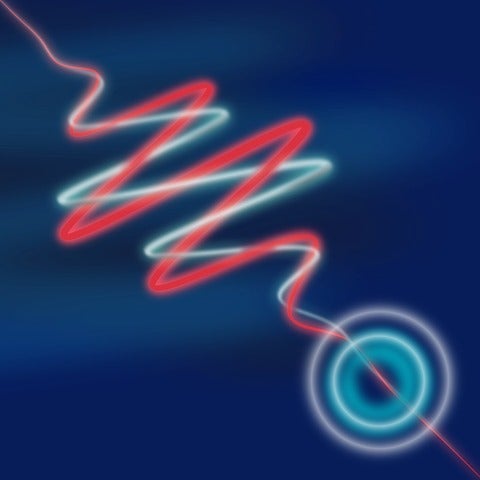
Researchers show that wave-particle duality and quantum uncertainty are the same thing, reducing two mysteries to one.
by Jenny Hogan, Centre for Quantum Technologies, National University of Singapore
Researchers show that wave-particle duality and quantum uncertainty are the same thing, reducing two mysteries to one.
IQC researcher wins COU Polanyi Prize for his work in Relativistic Quantum Information
Quantum technologies currently under development will eventually hit a limit, just as today’s computing devices are about to reach their classical limits. Eduardo Martin-Martinez is one of a handful of researchers already investigating what’s beyond non-relativistic quantum science and technologies.
The Institute for Quantum Computing (IQC) Advisory Board reconvened this week with a new chair and two new directors.
Mike Lazaridis takes on the chair role from founding chair, Tom Brzustowski. Lazaridis was instrumental in establishing IQC and has been a member of the IQC Advisory Board since its inception in 2005.
Institute for Quantum Computing (IQC) student Tomas Jochym-O’Connor (Department of Physics) earned a Vanier Canada Graduate Scholarship. The prestigious Vanier Canada Graduate Scholarship awards $50,000 per year over the next three years.
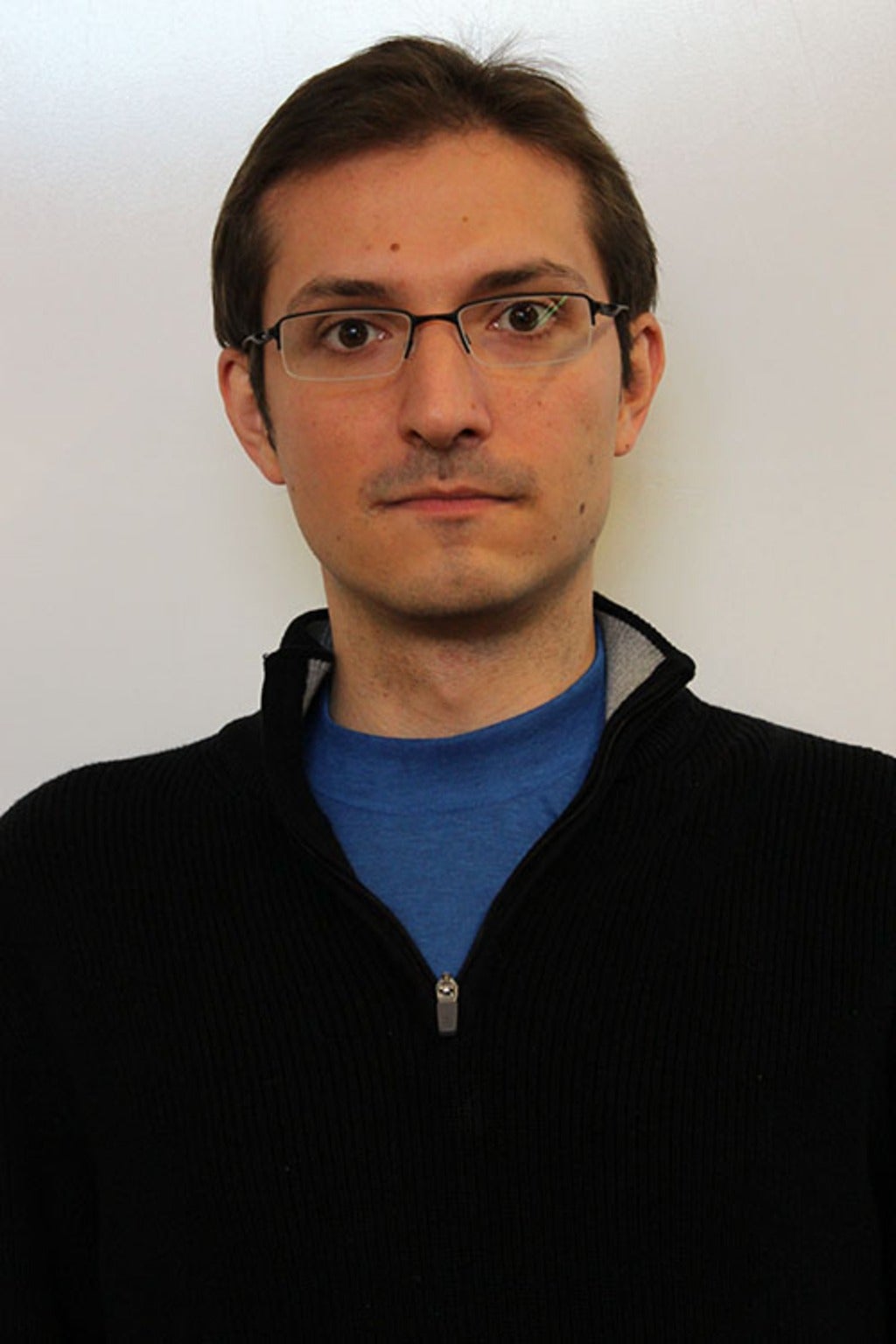
IQC hires former postdoctoral fellow Eduardo Martin-Martinez as a Research Assistant Professor.
Experts from around the world will gather in Ottawa this week to discuss cybersecurity in a quantum world.
New work asserts that a key technique used to probe quantum systems may not be so quantum after all, according to postdoctoral researcher Joshua Combes and his colleague Christopher Ferrie.
Over the past 20 years, a strange idea called a “weak value” has taken root in quantum information science.
Today the Institute for Quantum Computing signed a new agreement with the Korea Institute of Science and Technology (KIST) to expand research partnerships in the field of quantum information science.
From NIST Tech Beat: September 15, 2014
Researchers at the Institute for Quantum Computing at the University of Waterloo in Canada have directly entangled three photons in the most technologically useful state for the first time, thanks in part to superfast, super-efficient single-photon detectors developed by the National Institute of Standards and Technology (NIST).
Raffi Budakian has invented a new way to examine microscopic phenomena. He designs and builds ultra-sensitive detection instruments that allow us to look at nature in fundamentally new ways.