News

Filter by:

Limit to news where the title matches:
Limit to items where the date of the news item:
Date range
Limit to news items tagged with one or more of:
Limit to news items where the audience is one or more of:

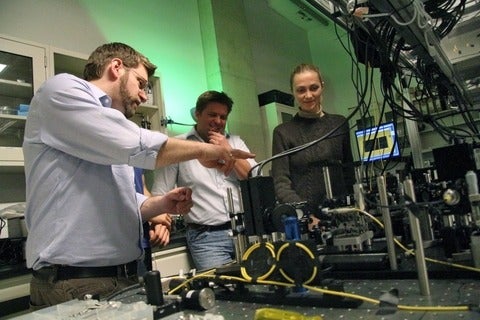
A form of quantum weirdness is a key ingredient for building quantum computers according to new research from a team at the University of Waterloo’s Institute for Quantum Computing (IQC).

In a new study published in the journal Nature today researchers have shown that a weird aspect of quantum theory called contextuality is a necessary resource to achieve the so-called magic required for universal quantum computation.

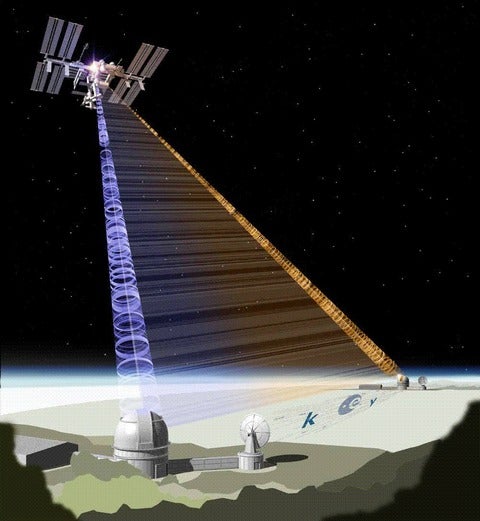
IQC researchers, led by Thomas Jennewein, have been awarded $250,000 by the Canadian Space Agency to train and develop Canadian grad students through a space science and technology project.

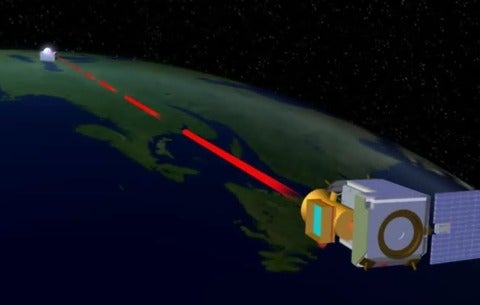
The Canadian Space Agency (CSA) funding will support Thomas Jennewein (Physics and Astronomy) and his QEYSSat team in conducting a demonstration of Quantum Key Distribution (QKD) between a receiver payload on an airborne platform and a transmitter on the ground.

WATERLOO, Ont. (Thursday, May 1, 2014) – The Province of Ontario renewed its investment in world leading quantum technology research today allotting $25 million to the Institute for Quantum Computing at the University of Waterloo over five years.

“We are extremely grateful that the Province of Ontario continues to create the conditions for Ontario, and Canada, to lead the world in quantum information research," said Feridun Hamdullahpur, president and vice-chancellor of Waterloo.

The quantum revolution is poised to move out of the laboratory and into the marketplace. Technologies that exploit the laws of quantum mechanics will outperform their classical counterparts providing advantages we are only beginning to capitalize on. These technologies will be one step closer with the development of a new method for linking small quantum processors.

Audience received an insider’s view of space from astronaut and former president of the Canadian Space Agency, Steve MacLean, following Gravity screening.

The Institute for Quantum Computing (IQC) Graduate Student Associate (GSA) presented a screening of the Oscar-winning film Gravity for IQC and University of Waterloo students.

In the world of quantum science, Alice and Bob have been talking to one another for years. Charlie joined the conversation a few years ago, but now by enforcing the space-like separation of the three parties, scientists have demonstrated full quantum nonlocality with more than two entangled photons.  

The Institute for Quantum Computing (IQC) held its first Quantum Frontiers Distinguished Lecture of the year on Thursday, March 20. John R. Kirtley, physical research science associate at the Center for Probing the Nanoscale in the Department of Applied Physics at Stanford University, was the guest speaker at this event.

The way we secure digital transactions could soon change. An international team has demonstrated a form of quantum cryptography that can protect people doing business with others they may not know or trust –  a situation encountered often on the internet and in everyday life, for example at a bank’s ATM.