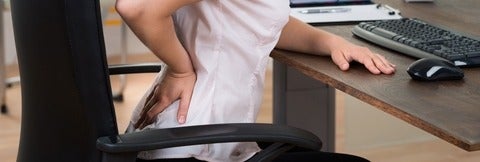
Is your work chair hurting your back?
A new study finds that dynamic sitting (involving movement in a chair with a rotating seat pan) increases lower spine movement without negatively impacting posture or evoking pain.
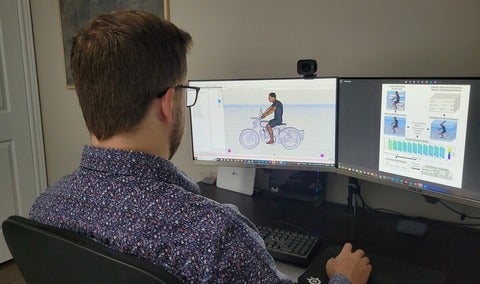
A new study predicts motorcycle riding postures using digital human software, finding that shorter and taller statured individuals are more vulnerable to discomfort.
Kinesiology and Health Sciences associate professor Dr. Paolo Dominelli has received an Early Researcher Award, valued at $100,000.
Dr. Kaylena Ehgoetz Martenshas received both a Canada Research Chair, Tier 2, in Gait and Neurodegeneration, as well a Canada Foundation for Innovation John R. Evans Leaders Fund (JELF) grant.
The grant will allow for evaluating and spreading the impact of the healthy lifestyle program, designed for people living with dementia and their care partners.
Dr. Kaylena Ehgoetz Martens receives a portion of $1.35 million USD for research in Parkinson’s freezing of gait symptom.
Kinesiology professor Nikolas Knowles receives a Canada Foundation for Innovation John R. Evans Leaders Fund for his project to help slow or prevent joint deterioration from osteoarthritis.
A leading biomechanics researcher, Clark Dickerson uses mathematical algorithms to study shoulder movement and reduce injuries in the workplace—a specialized field that has high profile clients, including North America’s leading automotive manufacturers, lining up for consultation.
If your workspace is not optimized, chances are that you may experience at least one of the following issues: sore shoulders, neck pain, back pain, eye strain, or repetitive wrist strain.
A team of Waterloo researchers found that applying artificial intelligence to the right combination of data retrieved from wearable technology may detect whether your health is failing.