Kinesiology brings research to life at Ontario Science Centre
Two new studies are part of the Biomechanics: The Machine Inside exhibit, which gives visitors a hands-on look at the marvels of natural engineering that drive human and animal movement.
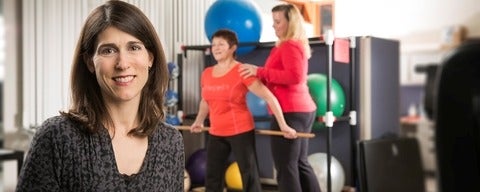
A researcher at the University of Waterloo who authored new exercise recommendations for people living with osteoporosis has won the prestigious Bloomberg Manulife Prize for the Promotion of Active Health.
To uncover just what makes Kilganon such an athletic outlier, Cannon is using state-of-the-art motion capture and electromyography technology to measure muscle activation and joint angles where he suspects they matter the most—not in the legs, but around the spine and hips.
Using advanced ergonomic and health risk calculations, Jack Callaghan, a professor in Waterloo’s Department of Kinesiology, has found that the ideal sit-stand ratio lies somewhere between 1:1 and 1:3 – a vast departure from traditional wisdom.
The study, published in Psychosomatic Medicine: Journal of Biobehavioral Medicine, is the first to conclusively link reduced activity in the dorsolateral prefrontal cortex with weakened self-control around tasty but unhealthy snacks.
Poor nutrition is rampant is Canada’s long term care homes—and inadequate food and liquid intake is often to blame.
Waterloo researchers have used cell phones equipped with a GPS to prove there is a link between the geographical area a person covers in daily life and dementia in older adults.
Osteoporosis Canada recently launched Too Fit to Fracture, a set of exercise recommendations aimed at managing the progression and symptoms of osteoporosis.
Kristin Marks, a researcher who looks into ways that estrogen affects different fats, has become an advocate for the misunderstood molecule that has been vilified for North America’s growing obesity crisis.
Andrew Laing, an assistant professor in the Department of Kinesiology, has spent the last 10 years pioneering ways to minimize fall-related injuries among older adults.