Storytelling can reduce VR cybersickness
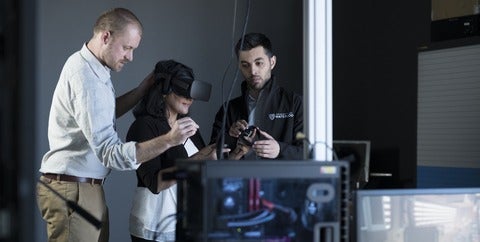
A storyline with emotionally evocative details can reduce virtual reality cybersickness for some people, according to a new study.
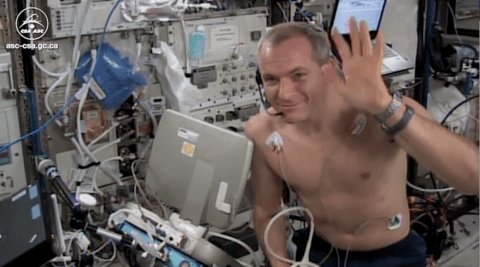
Canadian Space Agency (CSA) astronaut David Saint-Jacques will return to Earth in a few days after more than six months in space.
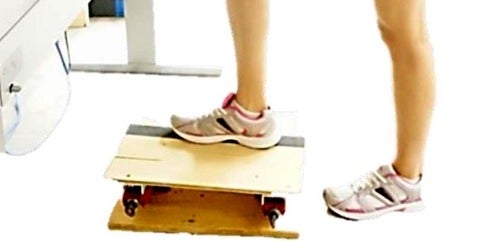
People who stand at work for long periods of time might be able to avoid lower back pain by intermittently using a footrest, says a new study by researchers at the University of Waterloo.
Playing games in virtual reality (VR) could be a key tool in treating people with neurological disorders such as autism, schizophrenia and Parkinson’s disease.
The researchers examined whether mindfulness meditation could be used in large classrooms to ease the anxiety first-year university students tend to experience around written assignments.
The pushup is a highly adaptable exercise that can be tailored to help individuals with specific needs, say a team of UWaterloo researchers who studied a modified pushup, called a ‘pushup plus.’
Researchers at the University of Waterloo have made progress toward predicting who is likely to feel sick from virtual reality technology.
Nearly half of people who use a standing desk are at risk of developing lower back pain, according to a study at the University of Waterloo.
Seniors need twice as long as young adults to realize they are falling, a delay that puts them at increased risk for serious injury, according to a new study from the University of Waterloo.
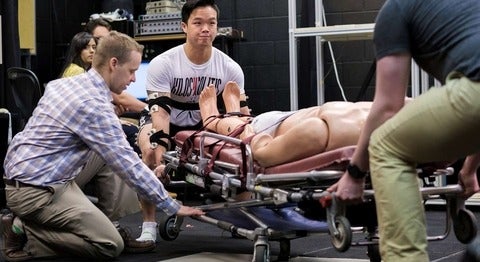
University of Waterloo study finds moving from manual to powered stretchers could reduce the number of injuries to paramedics by 78 per cent.