New tools and resources available for persons living with dementia
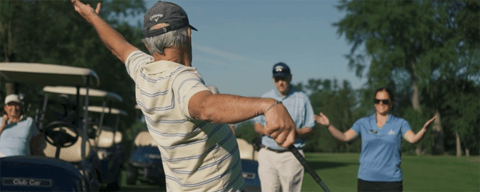
Many things change when a person is diagnosed with dementia, but one thing that doesn’t have to is the ability to exercise.
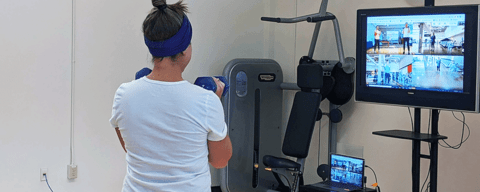
Marina Mourtzakis, a Kinesiology professor who leads Waterloo’s Centre for Community, Clinical and Applied Research Excellence, examines how to exercise safely as a cancer survivor during or after treatment.
Persons with neurodegenerative diseases can monitor at home
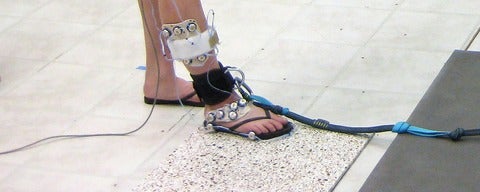
Flip-flops have a tendency to come off the foot entirely during slips in dry and wet conditions, contributing to a greater risk of injury, says a University of Waterloo study.
We talked to sports mental performance consultant Wade Wilson in the Department of Kinesiology to help us understand some of the risks of convening the major leagues to play again.
The study, conducted by the Brain and Body Lab at the University of Waterloo, is asking people of different age groups how vulnerable they believe they are to COVID-19.
The human body is a complicated, intertwined network of systems that miraculously allows us to walk, breathe, talk and understand others, normally without any thought as to how we do it.
Sex differences in airway size are not innate, but likely develop because of hormonal changes around puberty, reports a new study.
A storyline with emotionally evocative details can reduce virtual reality cybersickness for some people, according to a new study.
Canadian Space Agency (CSA) astronaut David Saint-Jacques will return to Earth in a few days after more than six months in space.