Master of Kinesiology graduate uses the power of exercise as medicine
Hands-on experiences during her studies showed Jasmine Nitsotolis how exercise can help people recover, rebuild confidence and reclaim everyday activities.
This past fall, a conversation about changing snow tires helped Jasmine Nitsotolis realize she was exactly where she was meant to be.
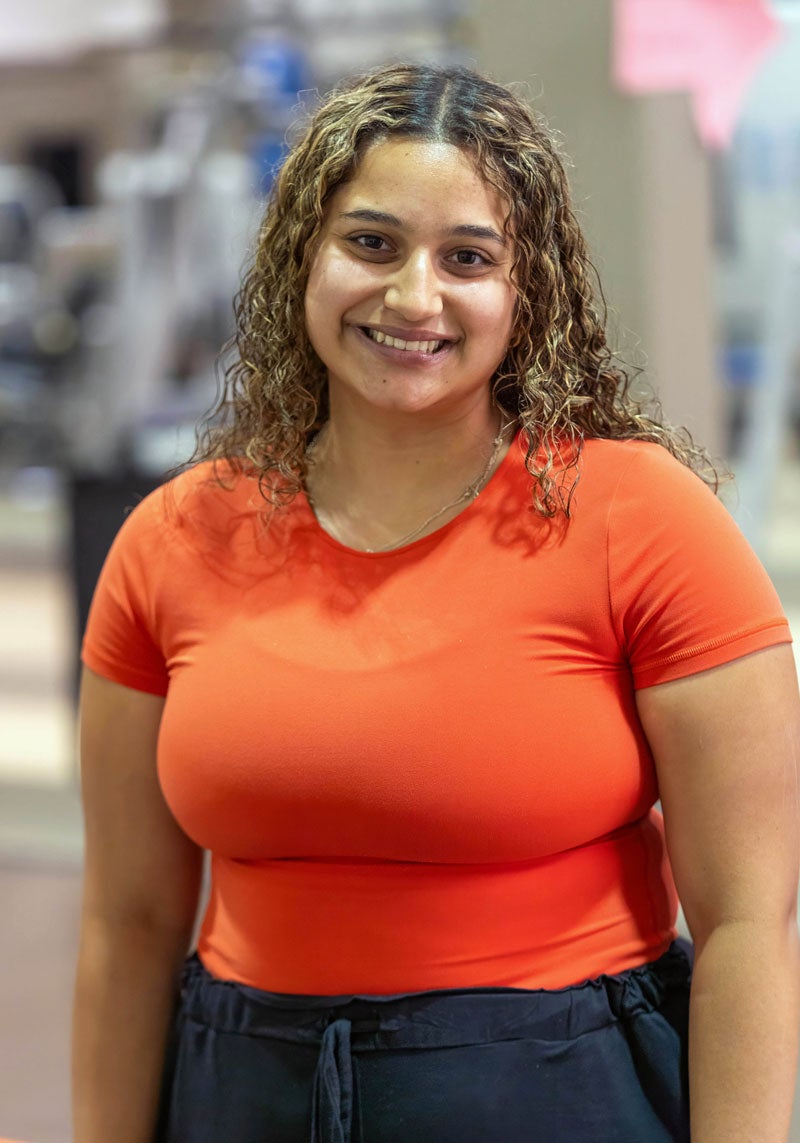
During her placement at the University of Waterloo's Centre for Community, Clinical and Applied Research Excellence (CCCARE), Nitsotolis was working with a participant recovering from cancer. After several weeks in the program, he shared that he had changed his own snow tires for the first time since his diagnosis and was able to play with his young kids. Before joining the program, he hadn't been strong enough to do those activities himself.
"He said it was thanks to the program and the work we do here that he felt strong enough to do it again," Nitsotolis says. "That's when I really felt like I was in the right field. This is why I do what I do."
As she prepares to graduate from the University of Waterloo's Master of Kinesiology program this summer, Nitsotolis is completing a work term with CCCARE, where she is gaining hands-on experience supporting community members living with a range of health conditions.
Nitsotolis works alongside researchers, clinicians and exercise specialists at CCCARE, supporting participants living with conditions including cancer, stroke and cognitive impairment. The experience has strengthened her belief in exercise as a tool for improving health, quality of life and recovery.
Her passion for the field developed gradually. During her undergraduate studies, Nitsotolis explored physiotherapy and occupational therapy but discovered those areas were not the right fit. A summer position with York Region Police introduced her to exercise physiology and occupational fitness, changing the direction of her career.
"Before my undergrad, I was pretty sure I’d pursue medicine, but then I fell in love with the whole idea of exercise as a form of medicine," she says.
The decision to pursue graduate studies eventually brought her to Waterloo, a university with deep family roots. Her mother and one of her aunts are Waterloo alumni and encouraged her to consider the institution when she began exploring master's programs.
Waterloo's emphasis on experiential learning ultimately sealed the decision. The program's 420-hour internship and opportunities to work directly with clients offered the practical training she was looking for.
Throughout her degree, Nitsotolis built clinical skills through coursework, hands-on assessments and placements at CCCARE. Instructors Madeleine Noble and Tyson Beach played important roles in her learning, helping connect cardiovascular exercise, movement assessment and evidence-based practice into a comprehensive understanding of patient care.
Rather than waiting until graduation to apply her knowledge, she began working with participants early in the program, allowing classroom concepts to become real-world skills.
"It's one thing to learn about exercise prescription in class. It's another thing entirely to work with real people, understand their goals and challenges, and see how evidence-based exercise can improve their lives."
As she prepares to graduate, Nitsotolis is studying for the final exam required to become a clinical exercise physiologist. Looking ahead, she hopes to build a career in occupational fitness while remaining open to clinical rehabilitation settings such as cardiac, cancer and stroke care.
What motivates her most is the opportunity to make a lasting difference."You get to join people on their journey and see the difference over time," she says.
For Nitsotolis, helping someone regain the strength to complete an everyday task can be just as meaningful as any athletic achievement. It is a reminder that movement is about more than exercise. It's about helping people reclaim the parts of life that matter most.