Meet our MSE graduates
Meet our Management Science and Engineering graduate students
Arden Song
Arden Song (PhD)
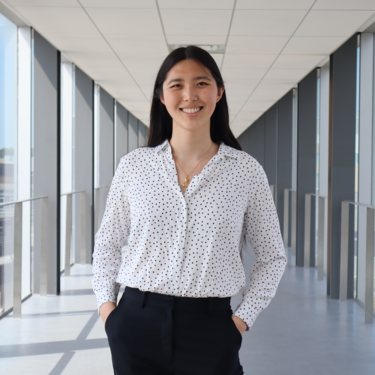
What was your previous degree and research work on?
I completed my BASc in Management Engineering in 2023 at Waterloo and decided to stay here for my PhD! During my bachelor’s, I assisted with research about the vanlife movement (people living in converted cars, vans, or buses) and helped create and test a deck made of electronic ink displays that allows people to play card games when they are in different locations.
Why did you choose the University of Waterloo?
I initially came to Waterloo for my undergraduate degree because of the co-op program, but I stayed here for grad school because of the people I met. The professors in MS&E are very kind and helpful, and I found and helped foster a vibrant student community as well. I didn’t expect it when I came here in 2018, but Waterloo has become a second home for me.
What is your research focus?
My research focuses on how people create data visualizations with different tools. I’m currently running a study comparing how people can use arts and craft supplies, Minecraft, and Tableau to create visualizations. The goal is to use the findings of this study to create data visualization tools that are easy for people to use, and that allow people to make visualizations the way they want to. Data visualization and analytics can be intimidating for people who are not data experts. In a world where we are collecting more and more information about ourselves with each passing year, I think people should have access to tools that are accessible to them, regardless of their background in mathematics or statistics. I hope my research can help make visualization tools more accessible, intuitive, and creative.
What are your future aspirations?
I’d like to continue doing research once I’m finished my PhD. Companies like Microsoft, Google, Adobe, and Autodesk all have research divisions that do research in the field I’m in (information visualization and human-computer interaction), so industry research is one option for me. I’m also open to going further into academia and becoming a professor, as I also enjoy being a TA and running tutorials for my students.
How has your experience in the program been so far?
It’s been amazing! I’m incredibly grateful to have a supportive, understanding supervisor and a great lab space with wonderful colleagues. I spend most of my research time at my desk in the Games Institute, which is an interdisciplinary research centre in East Campus. When I’m there, I’m surrounded by professors, postdocs, and other graduate students. It’s a very supportive environment and reminds me that I’m not alone in my research.
Sean Rose
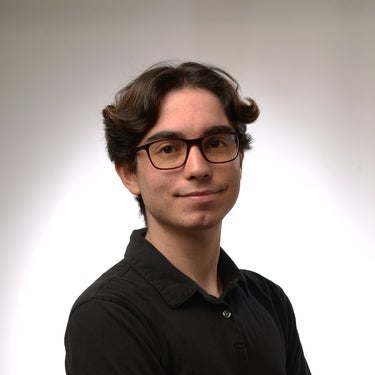
Sean Rose (MASc)
What was your previous degree?
I completed my undergrad in Biomedical Engineering at the University of Waterloo (2020-2025). My dream is to improve people’s lives through health and technology innovations, and completing my undergrad in BME was a perfect fit.
Why did you choose the University of Waterloo?
It’s no secret that Waterloo has the reputation for one of the best co-op programs worldwide. The co-op program plus scholarships swayed me to studying at UW for my undergrad. I ended up loving the KW region and had such a positive experience in undergrad, so I decided to continue with grad school at UW without applying elsewhere. Now, Waterloo truly feels like home.
What is your research focus?
My research focus is using AI to automate the lengthy process of radiation therapy treatment planning for cancer patients. The treatment planning phase of cancer treatment is complex and time-consuming, since clinicians must ensure an adequate radiation dose is delivered to the tumour while avoiding particular organs-at-risk and balancing a variety of trade-offs. My goal is to automate this process so that treatment planners can spend more time focusing on plan quality and optimization, rather than investing most of their resources into developing an acceptable plan.
What are your future aspirations?
My goal is to become an engineering professor. I have always loved teaching and have been told that it would be a great fit for me, but I had never committed to it since I was uncertain exactly what role teaching would play in my career. Since starting grad school, I have had the clarity that pursuing my own research while inspiring future engineers is exactly the mark I want to leave in this world.
How has your experience in the program been so far?
To summarize my experience so far in just one word, I think the word ‘busy’ would be a good descriptor. The act of balancing courses, research, teaching assistantships, student associations, and personal life is difficult – but not impossible! Starting in an entirely new program is scary, but I was able to forge my own path by exploring opportunities to meet new people and become involved within the MSE department. Looking ahead with my role as the President of the Management Sciences Student Association, I hope to better connect the graduate students in our department by offering opportunities for interaction and socialization, especially with new students.
Rana Shiravi
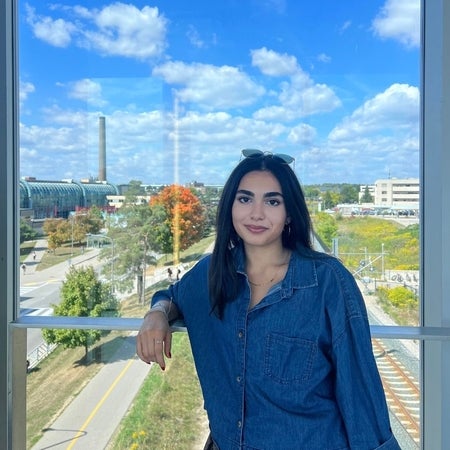
Rana Shiravi (MASc)
What was your previous degree?
I completed my bachelor’s degree in industrial engineering at Amirkabir University of Technology in Tehran, Iran. During my undergraduate studies, I developed a strong foundation in optimization, decision-making, and operations research. I became particularly interested in solving real-world healthcare problems using optimization and machine learning through coursework and my role as a research assistant in digital health and AI. My bachelor’s thesis focused on risk assessment in the new product development process, employing machine learning algorithms, particularly clustering methods for risk classification.
Why did you choose the University of Waterloo?
I chose the University of Waterloo because of its strong reputation in engineering, analytics, and applied research, as well as its focus on solving practical problems with real-world impact. I was particularly interested in the Management Sciences and Engineering program because it combines operations research, data-driven decision-making, and systems thinking in ways that closely align with my interests, especially in applications across different domains such as healthcare. The health AI and Analytics Lab, which I am a part of, offers opportunities to work with real-world problems and collaborate closely with healthcare providers and hospitals to make a meaningful difference. Waterloo also gave me the opportunity to work with a supervisor whose research and expertise align closely with my goals and guide me towards them very well. Her contribution to my research is highly valuable.
What is your research focus?
My research focuses on improving the design of radiation therapy guidelines by learning directly from historical patient data. I combine inverse optimization and machine learning to identify patterns in how clinicians balance delivering sufficient radiation to treat tumors while minimizing harm to healthy organs. By analyzing historical treatment plans, I aim to translate these complex decisions into clear, interpretable guidelines that can support future planning.
A key motivation behind my work is the observation that, in practice, treatment decisions can vary across patients, clinicians, and institutions, even when guidelines exist. By analyzing real-world data, I aim to better understand these variations and contribute to more consistent, data-driven decision-making. I am particularly interested in developing approaches that remain interpretable and can be trusted by clinicians, so that the insights can be meaningfully integrated into practice rather than remaining purely theoretical.
More broadly, I am interested in making healthcare decision-making more transparent, consistent, and data-driven by integrating analytical methods with practical clinical insights. I am especially motivated by the opportunity to bridge the gap between theoretical models and real-world clinical practice and to contribute to tools that not only advance research but also have a tangible impact on decision-making in clinical settings.
What are your future aspirations?
In the future, I aim to continue working in the fields of optimization, machine learning, and healthcare analytics, with a focus on making a real-world impact. I am particularly interested in research-focused roles in industry, such as R&D positions in health and technology companies, where I can apply these methods to develop practical decision-support tools that improve decisions and outcomes. Over time, I also want to deepen my expertise through further research and potentially pursue a PhD in a related area. Ultimately, my goal is to build a career that combines research and practice, using analytical techniques to address meaningful, real-world challenges.
How has your experience in the program been so far?
My experience in the program has been both challenging and highly rewarding. I’ve had the chance to take courses closely aligned with my interests, especially in optimization and machine learning. While some of these courses were challenging, they encouraged me to think more deeply and helped me realize how much I enjoy learning and exploring these areas in greater depth. That’s why I plan to take extra courses as well. My research experience has also been very positive. Working closely with my supervisor and collaborating with WRHN hospital has enabled me to make meaningful progress. I’ve had the opportunity to present part of my research at the Healthcare Operational Research Summer School 2025 (HOpeR), and I am also looking forward to presenting at the upcoming Canadian Operational Research Society 2026 (CORS) Conference. Additionally, I have had opportunities to work towards publishing my research, which has been an exciting aspect of the process. Beyond academics, I’ve really enjoyed being part of the university environment. There is always something interesting happening, whether it’s workshops, talks from industry and academic speakers, or the innovative work of other motivated students. Being surrounded by such an active and inspiring community has made the experience even more meaningful.
Srikarthi Srihari
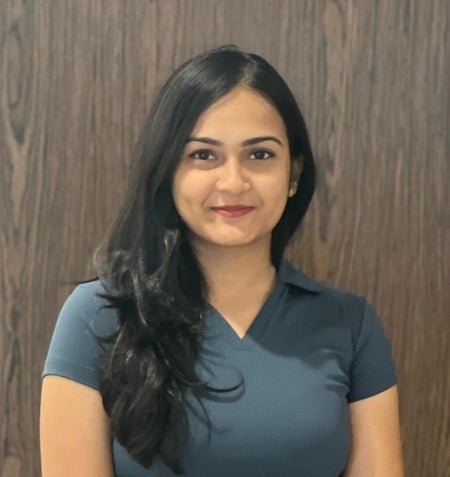
Srikirthi Srihari (MMSc)
What was your previous degree?
I completed my undergraduate degree in Electrical and Electronics Engineering, where I developed a strong foundation in power electronics and circuit design. Through my studies, I had the opportunity to apply these concepts to real-world problems, gaining hands-on experience in designing and simulating power conversion systems.
Why did you choose the University of Waterloo?
As an international student, the University of Waterloo stood out for its global reputation and its one-of-a-kind co-op program, making it a clear choice for me. Having worked as a Business Analyst at Deloitte, I was drawn to Management Sciences and Engineering at Waterloo as the perfect program to deepen my analytical thinking and complement my professional experience.
What are your future aspirations?
I aspire to grow into a leadership role where I can drive meaningful change at the intersection of technology and business strategy. My goal is to leverage the analytical rigor from this program alongside my industry experience to tackle complex, real-world organizational challenges.
How has your experience in the program been so far?
The program has been incredibly rewarding, deepening my analytical skills while exposing me to concepts that directly translate to real-world challenges I have encountered in my career. Beyond the curriculum, the collaborative peer community has been a highlight, bringing together diverse perspectives that have enriched my overall learning.