One of the world’s most selective programs — and why it matters
The University of Waterloo’s Faculty of Engineering receives over 13,000 applications annually ranked #1 in Canada and top 50 worldwide by QS World University Rankings 2025, Canada’s “Ivy League of the North.” Within that pool, Management Engineering is a smaller, specialized program with a roughly 38% acceptance rate and a graduating class of only 70 to 75 students. Admission to the program is, by itself, a signal of exceptional ability.
Management Engineering sits at the intersection of engineering rigor, systems thinking, operations research, and organizational design — the exact foundation of one of the most in-demand careers in technology: Technical Program Management. A TPM owns the delivery of complex, cross-functional programs end to end, requiring technical credibility and organizational range in equal measure. That is Management Engineering’s graduate profile, almost word for word. What makes graduates of the program genuinely irreplaceable is malleability — trained to see the structure of systems rather than the surface of any one industry, they can enter any domain and lead.
Patel spent five years running between back-to-back co-op interviews — blazer, dress heels — straight into midterm exam halls. Sleepless nights were not the exception; they were the curriculum. She learned the single most important skill in program management before her career even started: rank priorities, protect energy, deliver on what actually matters. She earned her CAPM while still a student — to her knowledge, the only one in her cohort to do so. Six co-op placements across oil and gas, transit, insurance, consulting, finance, and technology meant she graduated with real outcomes in six industries before her first full-time role.
From Waterloo to Google, Dolby, and NVIDIA
In 2019, Patel became the first Waterloo Management Engineering graduate to join Google directly as a Technical Program Manager. She secured the offer on her own merit — a cold application with no internal referral and no campus placement pipeline — advancing through 14 rounds of interviews and earning the role despite not having a co-op return offer. The hire was, in effect, Google validating an outside candidate against its highest TPM bar.
At Google, Patel built the Site Reliability Engineering convergence workflow spanning 19 global product areas, a program contributing to approximately $5 billion in annual operating-cost savings. She also authored the “How We Work” OKR planning framework that was adopted as the standard across Google, reaching more than 1,000 adopters across Google through training sessions she personally delivered. Her work earned formal peer recognition across organizations — a meaningful signal inside a company where cross-org recognition is awarded sparingly. Of the convergence work, Patel is direct about what she believes the job actually is: “Programs do not fail at launch. They fail in the months of small decisions before launch, when no one is watching closely. My job is to watch closely.”
At Dolby Laboratories, Patel was the first and only Technical Program Manager embedded in the Advanced Research and Technology organization, reporting directly to the Senior Vice President and influencing the work of more than 200 researchers and engineers globally. She designed a business-enablement process — adopted by 80+ teams as the corporate standard — for evaluating incubatory research against market viability. The framework is reflected in technology now visible in Apple Vision Pro and NASA’s Artemis II mission, among others. She rebuilt the relationship of mutual confidence between research and executive management: more proposals flowed upward, more decisions flowed downstream with clarity. That throughput — the kind that turns research investment into commercial and mission outcomes — is the value Management Engineering brings.
At NVIDIA, within her first two months, Patel delivered the global launch of the first-in-industry LLM Benchmarking tool to 300,000+ attendees live at GTC 2025. She then took on TPM ownership of the Lepton AI acquisition — a Priority Zero initiative under direct CEO visibility — driving 8 major releases over six months at approximately 3.5× planned scope, 93.5% bug resolution, and SOC 2 readiness. The platform scaled to 25,000 GPUs — power equivalent to roughly 80,000 homes — deployed across AWS, Azure, GCP, and five independent providers including Yotta, serving Sarvam, India’s first sovereign AI program. Patel frames the stakes plainly: “Every release I ship at NVIDIA carries consequences at an enterprise and geopolitical scale. The work of a senior TPM is to make sure those consequences are the ones we intended.”
From Waterloo to Google






Giving back — the true identity of a program manager
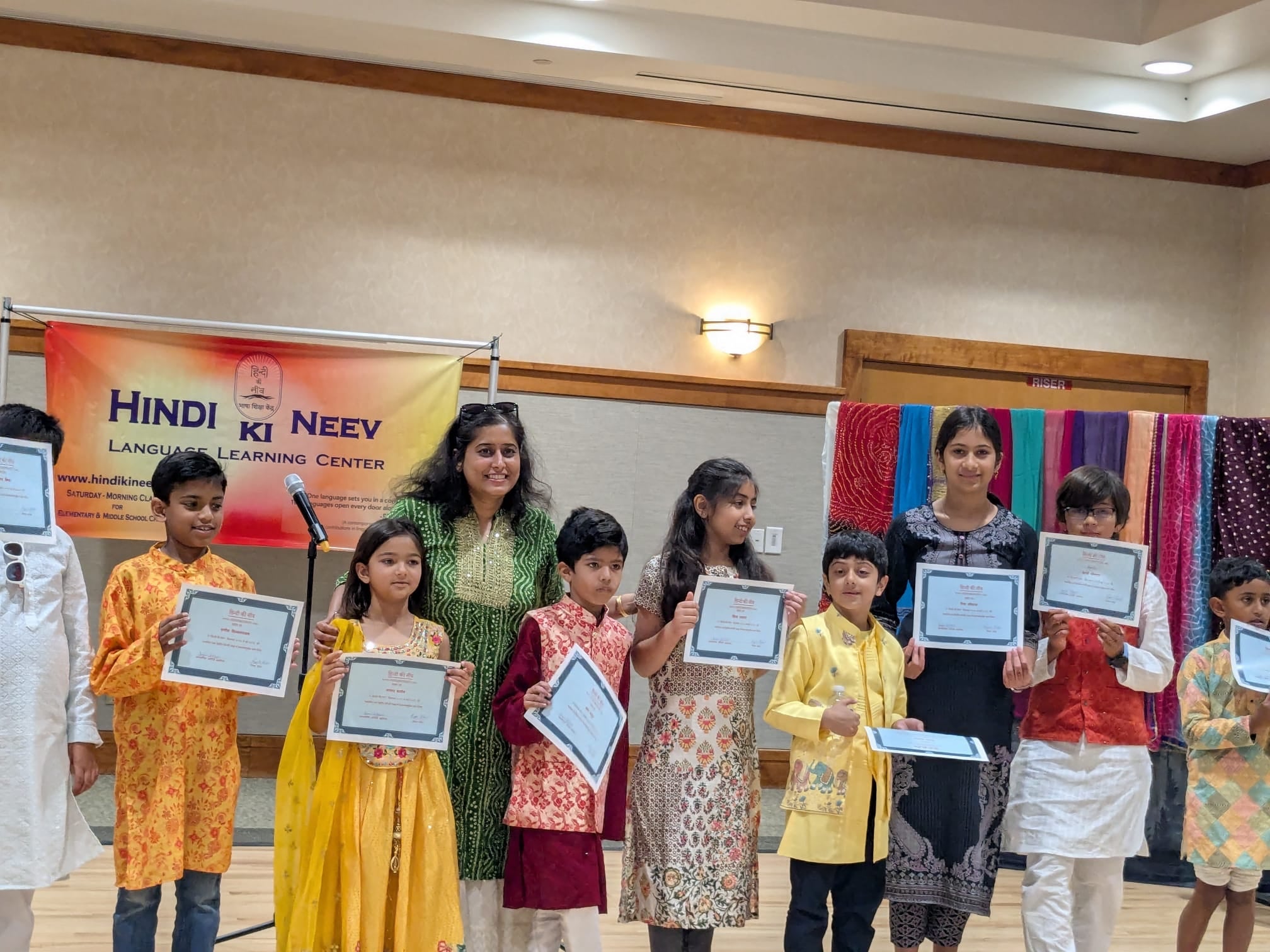
Career milestones are not the whole story. Patel has mentored dozens of students, fourteen of whom are now enrolled in Management Engineering and several more in other disciplines at Waterloo. She speaks at Women in Tech and engineering conferences on using AI to govern the ungoverned, reaching 200+ engineers and leaders. While at Google, she spent nights and weekends securing an $80,000 annual Google sponsorship — funding four underrepresented high school students per year since 2021.
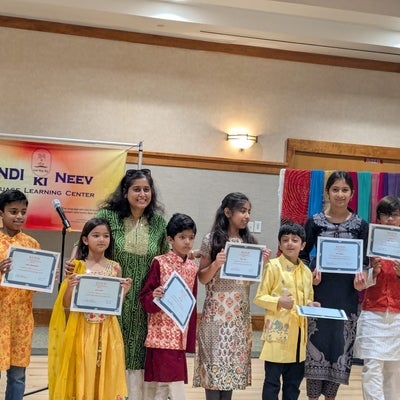
She also serves as Director of Community Engagement and Youth at the Sanatan Mandir Cultural Society of Fort McMurray, where she designed a grants pipeline that has brought in approximately $150,000 since 2024, led planning and execution of a 5,000+ person multicultural festival that received a Letter of Support from the Government of Alberta, and lobbied the Mayor of Wood Buffalo to establish dedicated transit lines so seniors and international students could access community support — finishing what her father started when he used to drive students home himself.
Technical credibility gets you into the room. Organizational range keeps you there. Most program leaders optimize for one. The job requires both.
To current students — and their parents
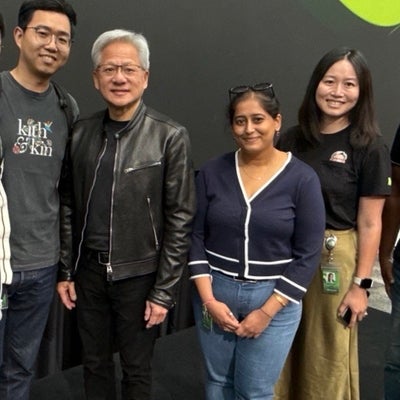
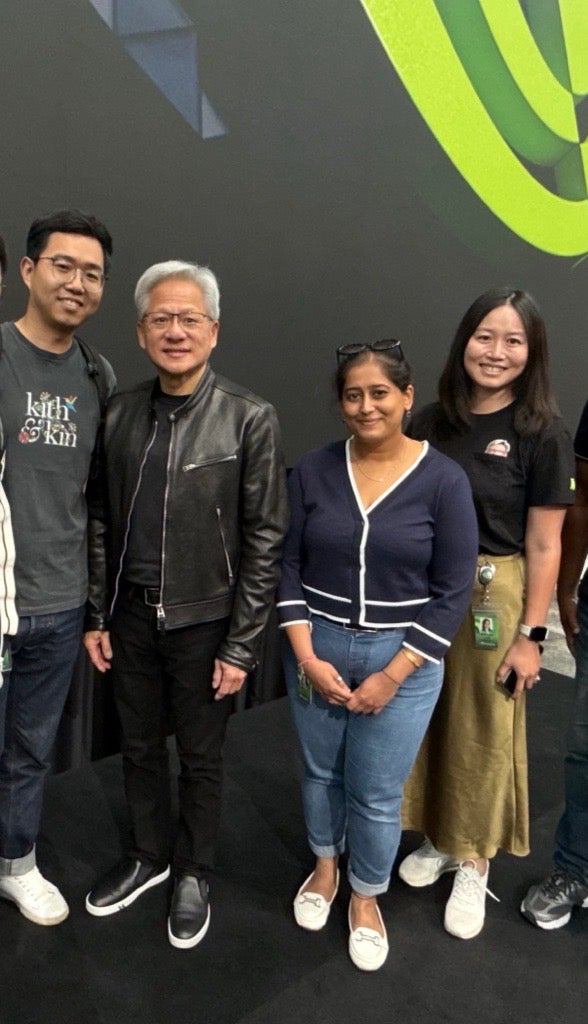
Patel’s advice to those following the path she walked is practical and unsentimental. Use your co-ops with intention. Earn your CAPM before you graduate. Say yes to the scope that feels too large. Mentor others when you get there. And bow your head to whoever made this possible for you — a parent, a mentor, a manager who took a chance. She has rehearsed what she wants to say the day she meets Jensen Huang: “Just — thank you. You don’t understand what you did for me by trusting in me.”
To every immigrant parent, her message is direct: Management Engineering promises to make your investment worth it. Thank you for placing your bets on us.