In the Arami Research Lab, researchers are developing next-generation exoskeletons that better align with natural human movement, rather than forcing patients to adapt to the device.
Exoskeletons are wearable robotic devices designed to assist people with walking, standing or other physical tasks in the context of both daily living and rehabilitation after injury, illness, or other mobility impairments. By providing reliable and repeatable physical support, these devices can reduce effort, increase exercise dosage, and support recovery. However, despite their promise, many existing systems still require users to conform to predefined motion patterns or fixed speeds. This mismatch between human intention and device behaviour can make walking with an exoskeleton feel unnatural, increase resistance, reduce user engagement, and ultimately limit clinical effectiveness. Instead of seamlessly assisting movement, some systems unintentionally interfere with it.
To address this challenge, researchers in the Arami Lab have developed adaptive control strategies that allow exoskeletons to better synchronize with a user’s natural gait. Two recent studies explore different approaches to improving human-exoskeleton interaction.
In the first study, the team developed an online adaptation framework that adjusts desired exoskeleton trajectories to optimize interaction torque and kinematic error. The controller leverages an AI-based real-time gait phase estimator, along with data-driven interaction torque estimation methods developed in the lab, enabling effective control even in the absence of direct torque sensing. This adaptive controller was tested on 16 participants walking on the treadmill and overground at different speeds and compared against fixed trajectory controllers.
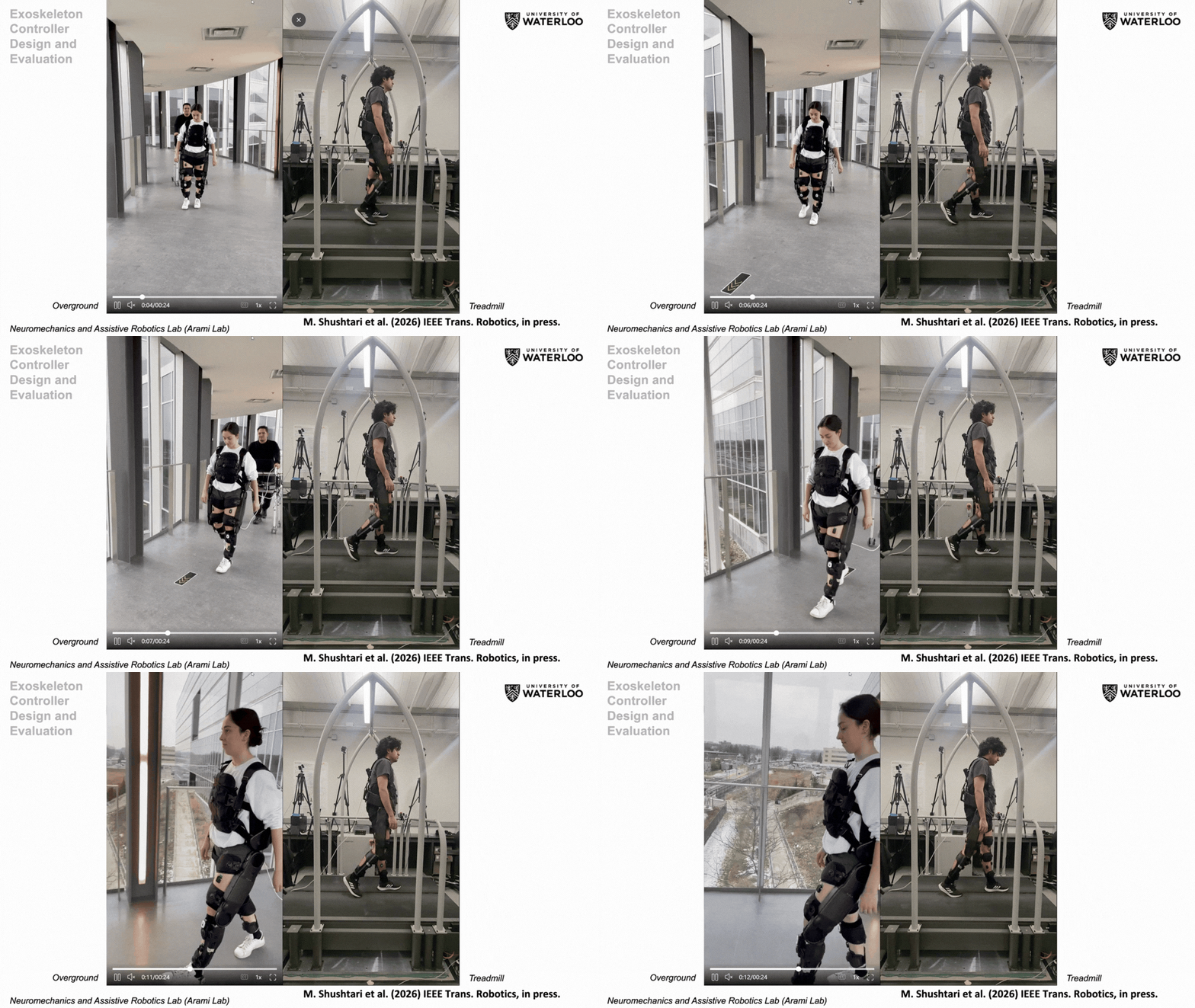
The results showed that the adaptive controller significantly improved human-robot interaction. Interaction torques at the hip and knee were reduced by over 50%, while muscular effort in key lower-limb muscles decreased by 21-34%. Participants were able to walk more naturally with the exoskeleton and, in many cases, at higher speeds with less effort. Overall, this controller improved synchronization between human intent and exoskeleton motion, reducing the sensation of resistance or disagreement commonly reported in conventional systems.
In the second study, the researchers investigated an adaptive, modified Velocity Flow Field (VFF) controller. The original flow-based controller, inspired by the concept of moving within a flow field, is widely used in exoskeletons. While it can assist movement, more active users—particularly those attempting to walk faster than the preset speed—often experience increased resistance, similar to moving through a viscus medium.
To address this, the proposed method dynamically adjusts flow control parameters to match the user’s walking speed by regulating the system’s energy. This approach was tested on 12 participants walking at different speeds and compared against the original flow controller.
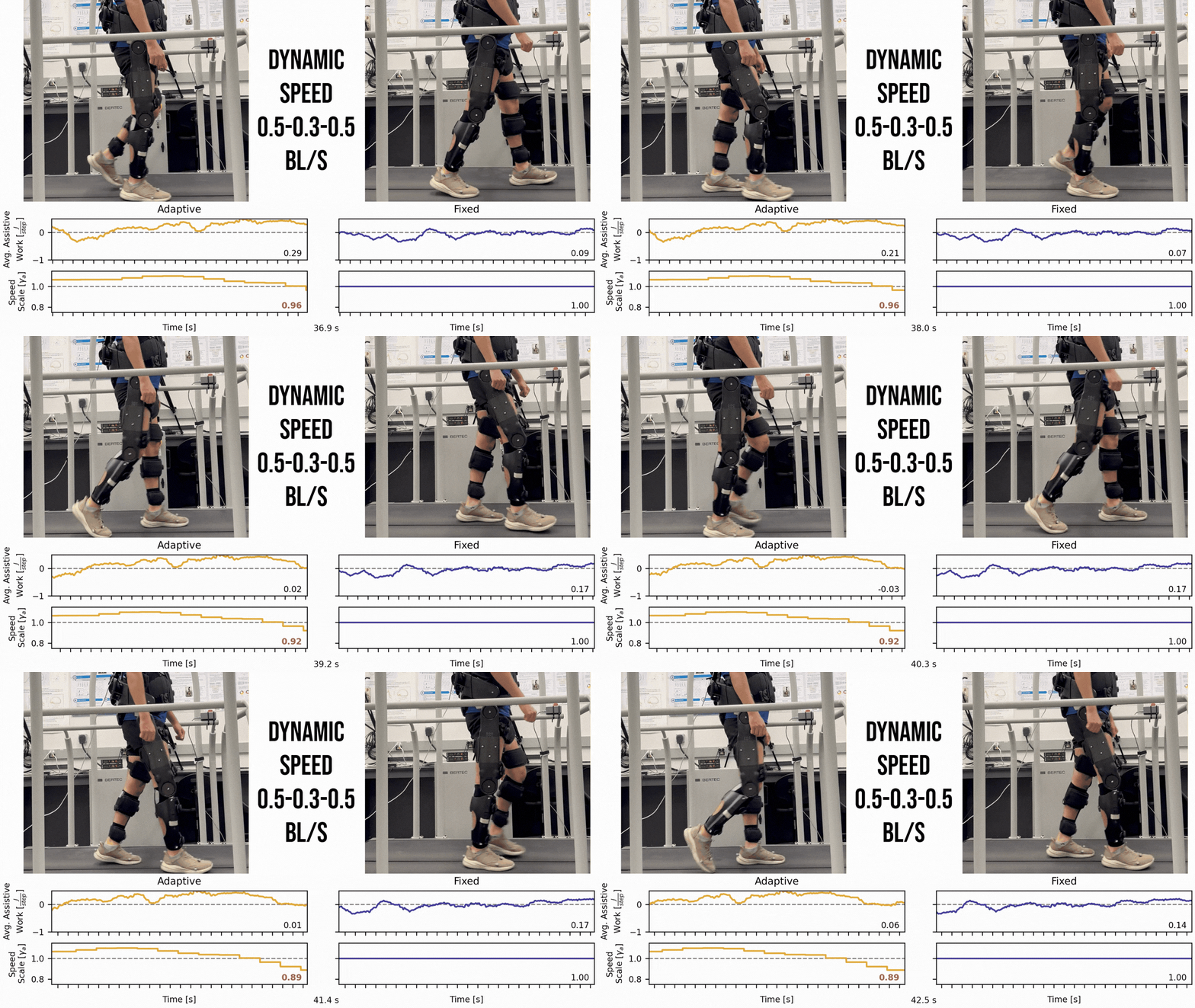
Results indicated that the adaptive VFF controller reduced effort and improved movement consistency between the user and the exoskeleton. Participants reported smoother interaction and greater ability to influence the exoskeleton through their own movement, particularly at higher walking speeds. While fixed flow controllers remain useful in certain low-speed settings, the adaptive approach demonstrated clear advantages in comfort and efficiency.
Taken together, these studies show that optimizing energy and interaction dynamics between humans and exoskeletons can substantially improve walking performance and user experience. Importantly, this work demonstrates that meaningful improvements can be achieved not only through hardware changes, but also through intelligent, adaptive control strategies.
Exoskeletons will continue to play an important role in the future of health care by helping patients move comfortably while maintaining agency and engagement during rehabilitation. Ongoing work in the Arami Research Lab focuses on advancing personalized and adaptive control strategies that better align these robots with natural human movement, with the goal of making exoskeletons more intuitive, responsive and comfortable for a wide range of users.
For more information on the two studies in this article, you can find the papers linked here:
Optimizing Human-Exoskeleton Physical Interaction Through Spatial Trajectory Adaptation (IEEE Transaction on Robotics, 2026)
Role of Speed Regulation and Speed Modulation in Velocity-Field Based Control
Energy-based Auto-Tuning of Velocity Flow Controller for Exoskeleton-User Speed Synchronization (accepted in ICRA 2026)