Partnering for FAIR data
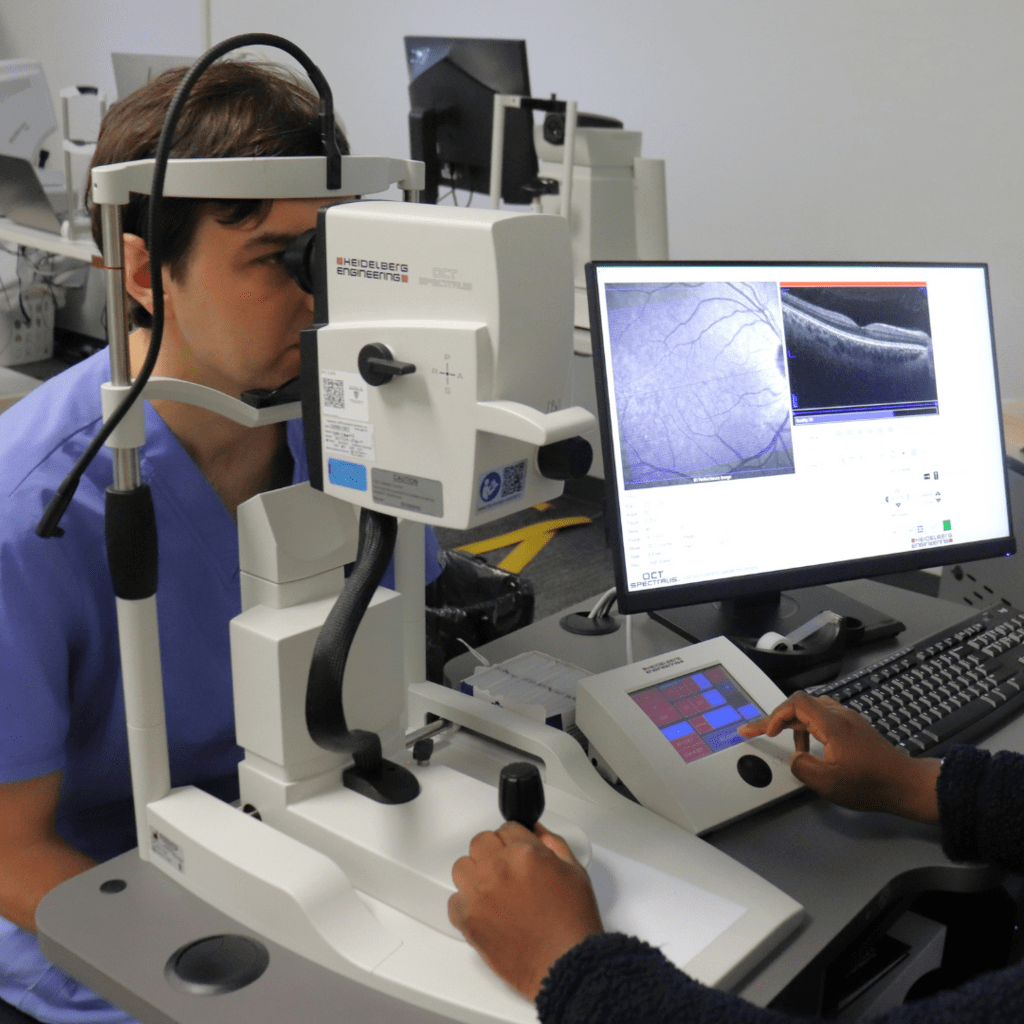
The University of Waterloo is working with the Southern Chiefs’ Organization and Manitoba Association of Optometrists to co-develop data governance policies for eye data.
Our Waterloo Optometry Clinic has moved to the nearby location of 419 Phillip St., Unit C, as of October 21, 2024. This location will be open until late 2026 while the Waterloo Eye Institute is under construction. Our downtown Kitchener location (Health Sciences Optometry Clinic) remains open with no change to service.
The University of Waterloo is working with the Southern Chiefs’ Organization and Manitoba Association of Optometrists to co-develop data governance policies for eye data.
Diabetic eye disease refers to a group of vision problems caused by diabetes, including diabetic retinopathy, diabetic macular edema, cataracts, and glaucoma. These conditions can lead to vision loss or blindness if left untreated.
Dr. Lyndon Jones received the Carel C. Koch Memorial Medal, which celebrates outstanding contributions to the enhancement and development of relationships between optometry and other professions.
A new bill has passed that will pave the way for a national strategy on eye care to support the prevention and treatment of eye disease. The School is among the organizations that advocated for Bill C-284.
Dr. Paul Murphy is leading researchers from vision science, engineering and psychology in projects to deepen the science behind an oft debilitating condition.
Dr. Elizabeth Irving’s research has increased scientific understanding in areas ranging from the development of nearsightedness to vision in aviation
Over his career, Trefford Simpson’s vision science research has included work in retinal aging, binocular vision, multiple sclerosis, contact lenses, ocular pain and more.
Dr. Murchison Callender, one of the first Black faculty members at the University of Waterloo, is finally taking a step back after his official retirement nearly 30 years ago.
Amblyopia, also known as lazy eye, is a condition where one or both eyes have impaired vision because the eyes and brain aren’t working together properly. Learn what causes amblyopia and how the condition can be diagnosed and treated.
Dr. Daphne McCulloch is retiring nearly 50 years after she first came to Waterloo to start a Bachelor of Science degree. Over the course of her career, she has done extensive work in clinical electrophysiology and travelled all over the globe.