Pharmacy professor named Canadian Pharmacist of the Year
Kelly Grindrod never was your traditional neighbourhood pharmacist.
A DPP4 inhibitor bound to Covid-19 protein called SARS-CoV-2 Mpro, which is involved in its replication
Being a grad student is tough – there’s course work, comprehensive exams and research to balance on top of managing personal commitments and teaching duties. When you add working at a pharmacy during a global pandemic into the mix, the days only get busier.
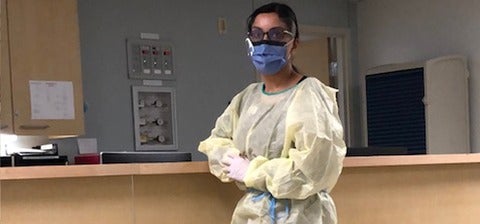
Dani Thomas (Rx2018) stands a good distance from a car in the parking lot of Two Rivers Family Health Team in Cambridge. The person inside has their window rolled down and Dani’s wearing a mask, asking them questions. It’s mid-May and still snowing.
The person in the car is one of family health team’s patients on warfarin, a blood thinning medication that requires regular and careful monitoring by a pharmacist. Dani, a pharmacist on the team, jots down notes from the discussion and takes a drop of blood from the patient’s finger to test their levels.
As the COVID-19 pandemic continues, pharmacists are reporting a spike in drug shortages.
Professor Kelly Grindrod, a pharmacist and professor at the School of Pharmacy, explains why drug shortages are occurring, which medications are affected, and how Canadians can access medications at this time.
In between studying for his classes and winter term exams, pharmacy student Mayur Tailor has been closely following news related to COVID-19.
Noticing that pharmacists weren’t often being included in discussions involving frontline health-care providers, the first-year student jumped into action, rallying a team of University students from across Ontario on two overarching initiatives.
Andrea Edginton (BSc and PhD, University of Guelph) has been named the next Hallman Director of the School of Pharmacy. Professor Edginton is a globally recognized leader in physiologically-based pharmacokinetic (PBPK) modeling and simulation, specializing in dose-exposure extrapolation to special populations.
Since 2009, Professor Nardine Nakhla has inspired students as a key member of the School of Pharmacy’s professional practice team, providing experienced-based lectures and lessons in clinical pharmacy. The Excellence in Science Teaching Award recognizes her exceptional educational delivery, innovative methodology and enthusiasm for teaching.
It was mid-March when Narsineni first heard that the University of Waterloo was transitioning courses online to help prevent the spread of COVID-19 on campus.
Researchers at the University of Waterloo are developing a DNA-based vaccine that can be delivered through a nasal spray.
The vaccine will work by using engineered bacteriophage, a process that will allow the vaccine to stimulate an immune response in the nasal cavity and target tissues in the lower respiratory tract.