New discovery could slow Alzheimer’s in its tracks
A new breakthrough is offering hope to people living with Alzheimer’s disease and their families.
36.9 million people worldwide were living with HIV in 2017. In the same year, 1.8 million people became infected and 940,000 people died from AIDS-related illnesses. Despite the existence of antiretroviral therapy to treat HIV, the disease continues to exact a staggering cost on human life, so much so that combatting HIV and AIDS is one of the United Nations Sustainable Development goals for health.
In April 2019, the second Remedy’sRx Legacy award was presented to Maria Anton, a first year pharmacy student.
Kaitlin Bynkoski (BScPhm ’13, PharmD ’17) graduated from the University of Waterloo School of Pharmacy in 2013, receiving the honour of the Ontario Pharmacists Association Student of the Year Award. In 2017, she earned her PharmD from Waterloo Pharmacy through the PharmD bridging program.
Giving pharmacists an incentive to talk with their patients about vaccines could prevent thousands of influenza cases each year.
Researchers at the University of Waterloo found that, in Ontario, Canada, introducing a $15 consultation fee for pharmacists who consult patients over 65-years-old and over could prevent approximately 2,400 influenza cases, which result in three deaths, per year.
Life expectancy in Canada is increasing and so is the prevalence of chronic diseases and Canadians who take multiple medications to manage those diseases. For Canadians who take three to four medications each day, remembering when and how to take each one can be challenging.
Waterloo Pharmacy scores OPA cup after a highly competitive match
Attitudes and beliefs about influenza vaccination are unlikely to change when discussed in online forums, found a new study from researchers at the University of Waterloo.
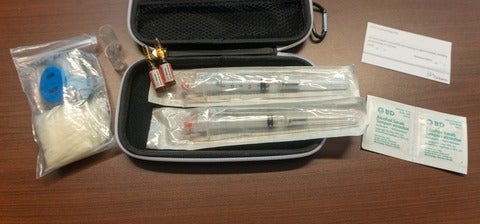
Researchers at the University of Waterloo have determined that naloxone, the medication used to reverse the effects of an opioid overdose, is stable and safe to use at least 28 days after being stored in conditions where temperatures vary.
Treatment for cancer is rigorous and often requires multiple strategies. Cancer drugs are among the most expensive medications in the world. The high treatment costs, prevalence, and severity of cancer mean that any new forms of treatment are met with equal parts excitement and suspicion. Will this novel treatment be effective or affordable?