
SIN Bin: 2014, Problem 4
Can you solve it? The Sir Isaac Newton Exam, as we all know and love it, continues to offer challenging problems to high school students around the world. Flex your Physics brains with this problem from a past Sir Isaac Newton Exam!
Chair's message: Winter 2021
The Winter 2021 edition of The Entangler will update you on exciting research developments and accomplishments by our students, faculty, and alumni. Enjoy, and stay well.
Jake Malliaros
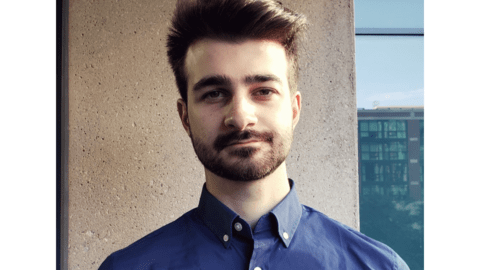
University Convocation was a little different this year due to COVID-19 and the global pandemic. The Class of 2020 shared this important milestone with the Faculty, fellow graduates, friends and family at a live virtual celebration with Jake Malliaros, BSc ’20 (Honours Physics) as the first virtual Convocation host for the Faculty of Science.
Students take on physics problems with first annual Schrodinger’s Hack
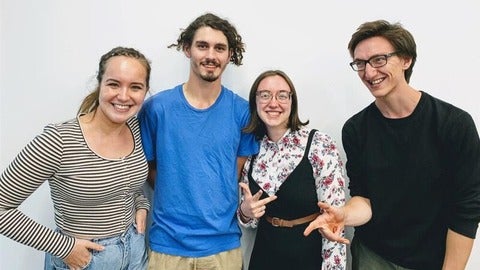
Exploring physics in a way that hasn’t been done before…The Schrodinger’s Hack hackathon will provide students with an opportunity to experience collaboration, gain new connections, test problem solving, and have fun doing physics. It will also encourage meaningful connections between industry and research leaders in physics and the students outside of the classroom environment.
Ria Chakraborty
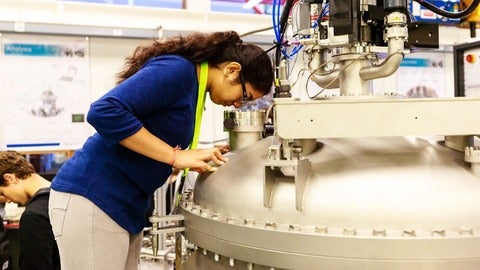
Ria Chakraborty, a 2A Mathematical Physics student, has a wide range of talents and interests ranging from the traditional and digital arts to quantum computing. Ria has been taking full advantage of the opportunities offered in Waterloo in research and in quantum startup culture.
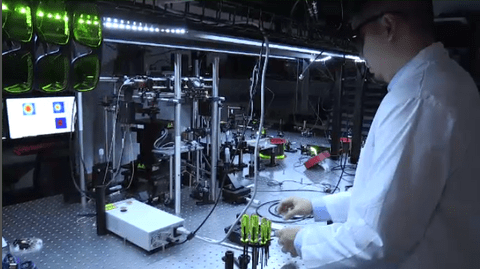
Martin Le
Martin has had quite the accomplished undergraduate career as he reflects on his experience in the Life Physics (Medical Physics Specialization) program at UWaterloo. Read about his contributions to groundbreaking research in real-time imaging of cancer cells during a tumour resection surgery, and his interests in the field of quantum optics.
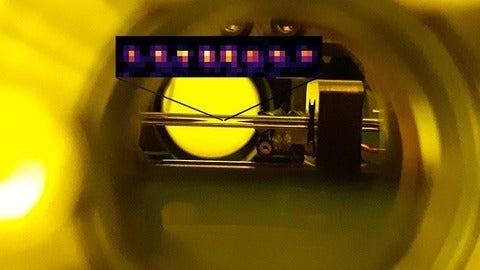
Machine learning to empower quantum information processing
Scientists at the Department of Physics and Astronomy at the University of Waterloo and the Perimeter Institute Quantum Intelligence Laboratory (PIQuIL) are combining two powerful research tools – machine learning and quantum information processing — to solve problems that are hard and sometimes intractable on classical computers. A major goal is to make an efficient quantum information processor for experimentally simulating quantum many-particle systems.
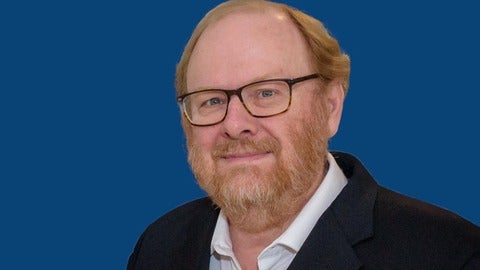
Dr. Michel Fich
Astronomer Dr. Michel Fich didn't always know that he wanted to study Physics, but always loved problem solving. Today, Dr. Fich's is one of the leading researchers in his field, and his work aims to solve some of the biggest problems facing contemporary Physics.
Searching for quantum effects in neuroscience
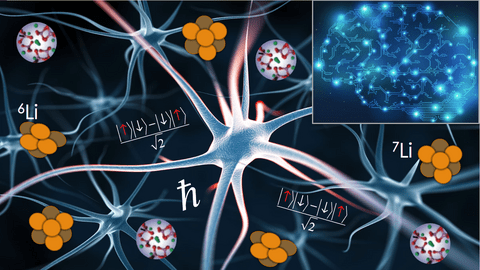
What is consciousness and why does it disappear when we sleep? Has the brain found ways to harness quantum mechanics for information processing? And if so, can we mimic the pertinent biological processes in the quantum realm? Unravelling fundamental quantum effects in the field of quantum biology may provide groundbreaking advancement in knowledge, provide insight into long standing puzzles in biology and may guide the development of novel quantum technologies.
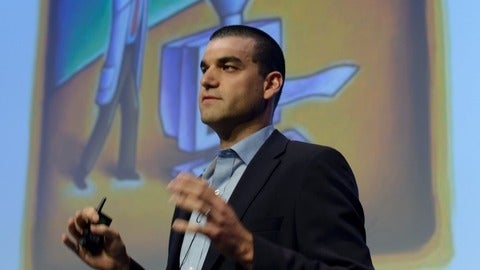
Farnoud Kazemzadeh
Farnoud Kazemzadeh, BSc ’08, wended his way from an undergraduate “love for extragalactic astrophysics”, through a PhD in system design engineering, to become VP Engineering at Vital Bio – the second of the two startups he co-founded – where the techniques they are developing may one day allow your physician to replace an entire slate of tests at Labcorps with a 20-minute in-house test.
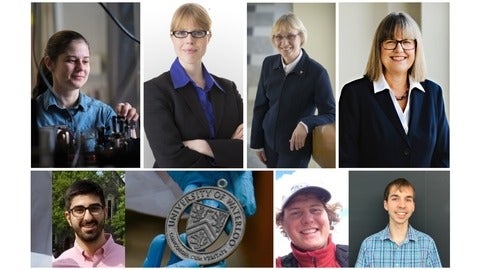
Honours and Awards: Winter 2021
Members of the Department of Physics and Astronomy have been recognized worldwide for their great research, outstanding teaching, and scientific community work.