Snow Clearing Priorities and Procedures
During snow and ice events, snow-clearing efforts prioritize maintaining main road routes to ensure emergency access, followed by primary pedestrian walkways. During and immediately after winter weather events, these primary routes may be serviced multiple times. Members of the campus community are encouraged to use primary routes whenever possible.
Snow-clearing operations are conducted using a combination of in-house and contracted operators and equipment. Due to varying weather conditions, some walkways and parking lots may not be cleared until at least 24 hours after a storm has ended. Each weather event is unique, requiring crews to respond quickly and remain on campus for extended periods.
To keep vehicles, cyclists, and pedestrians moving safely, snow-clearing requires a strategic, priority-based approach. Parking lots, streets, sidewalks, and building entrances are prioritized based on several factors, including:
- Roadways: Prioritized according to frequency of use, including transit and emergency vehicle routes.
- Pedestrian Areas: Primary building entrances are serviced first, along with barrier free entrances, ramps, and main sidewalks.
- Weather Conditions: The volume and duration of snowfall influence operations. During weather events, main entrances and the most heavily used roads and sidewalks may be cleared multiple times prior to secondary routes. During these periods, the campus community is encouraged to use primary routes.
The Campus Wayfinding Project has identified primary, secondary, and tertiary routes. Visit our live map that identifies these routes and their service timeframes.
At times, certain campus areas may be temporarily restricted during winter months. These signed and roped-off sections may pose hazards during icy conditions and/or may be used as designated spaces for managing excessive accumulations of snow.
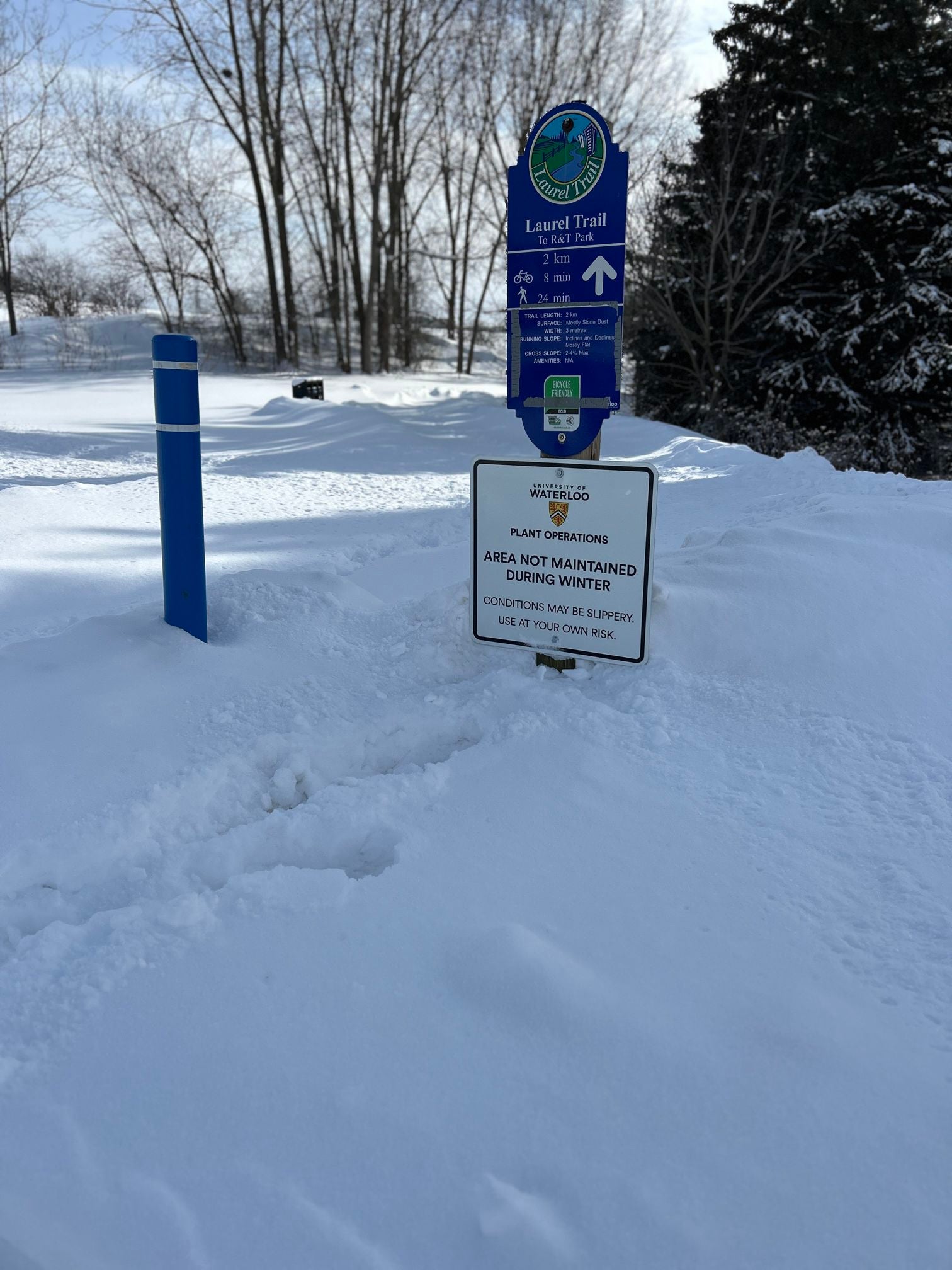
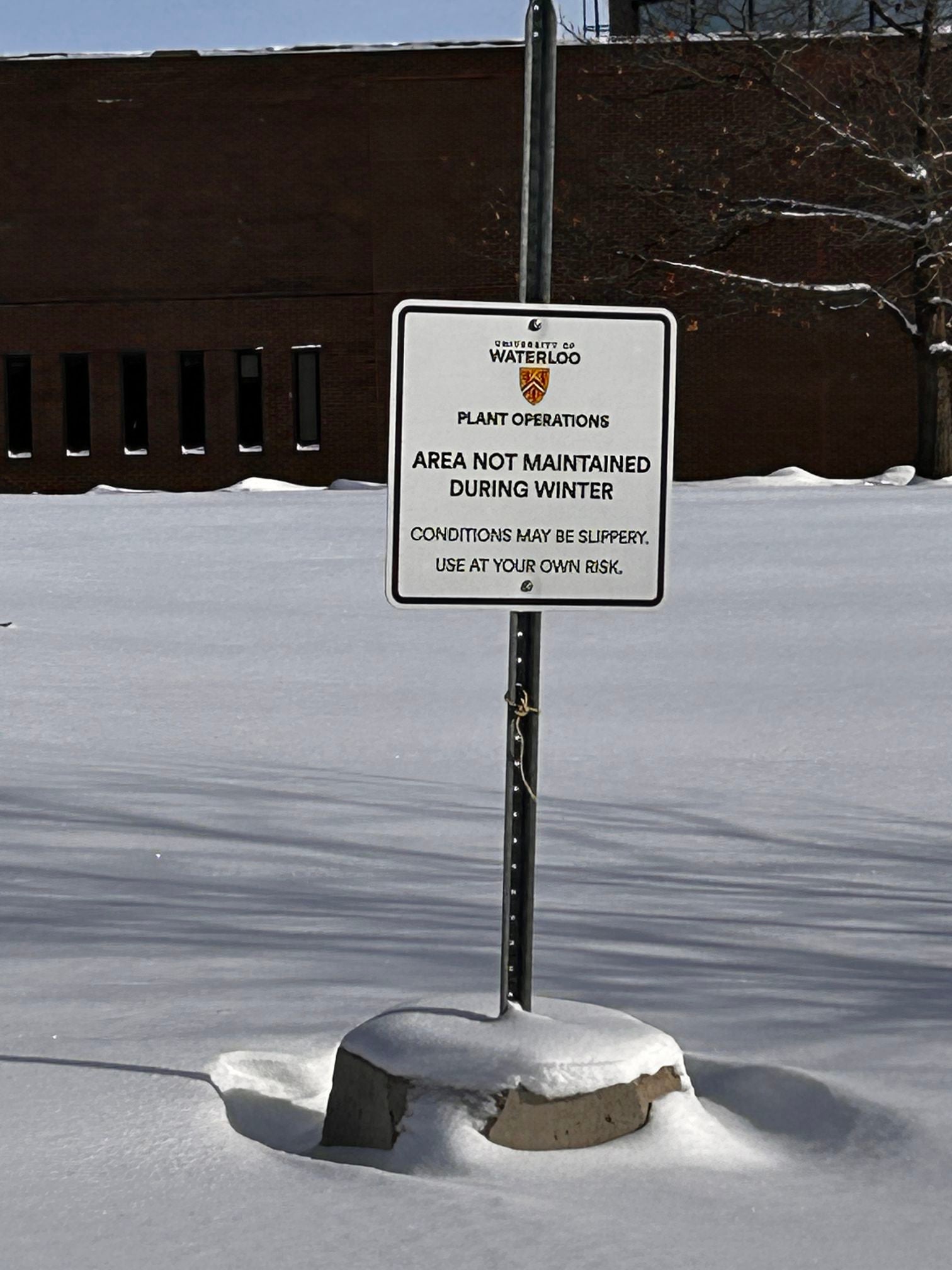
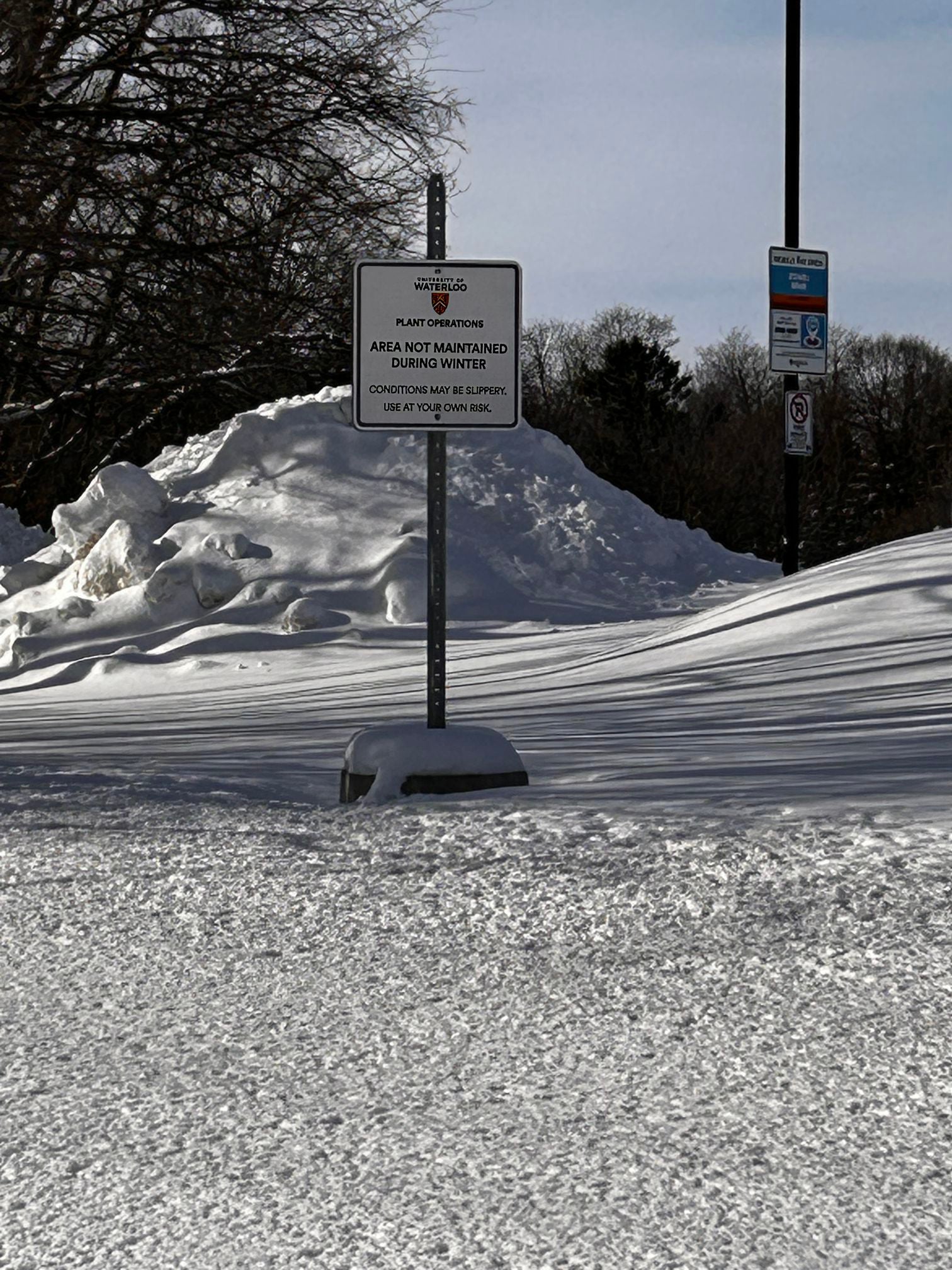
Despite regular snow and ice removal, slippery conditions may still occur. Crews continue to monitor conditions, apply sand or other treatment materials as needed, and respond to reported hazards throughout winter weather events. Sand bins (green or yellow) are placed across campus to help improve traction where necessary.
Reporting Hazardous Conditions
During snow and ice events, we encourage the campus community to report any areas where conditions have made travel unsafe. If there are ongoing snow-clearing or winter maintenance concerns affecting members of the University community, please contact Plant Operations at 519-888-4567, ext. 43793, or submit an Archibus Work Request. We appreciate your feedback, as it helps us respond effectively and prioritize the most urgent safety concerns affecting staff and students within available resources.
Overnight Parking
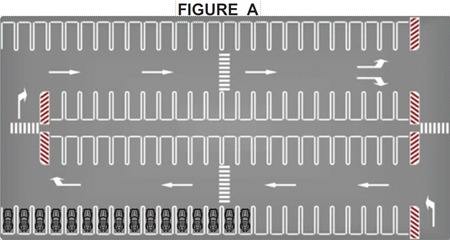
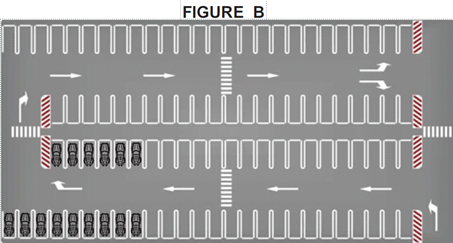
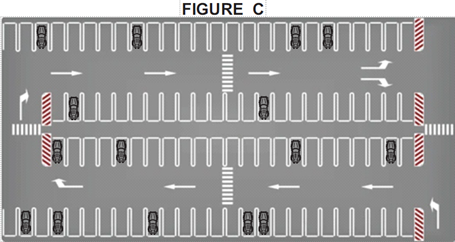
Parking is prohibited in all lots between 3:00 a.m. and 6:00 a.m. to allow for snow-removal operations. To support safe and efficient snow removal operations, staff parking between 8:00 p.m. – 6:00 a.m. are encouraged to park in groups, preferably in rows (Figure A) or in tandem (Figure B), and along the edges of lots. Random or scattered parking (Figure C) is not recommended, as vehicles may be more susceptible to damage and can become snow-covered or buried. Consistent row or tandem parking allows winter maintenance crews to clear lots more effectively, reducing ice buildup and preventing unserviced areas.
Recommended Parking (Figures A & B)
Parking not Recommended (Figure C)
Sustainable Land Care Standard
All winter maintenance practices align with the University’s Salt Use Reduction Plan, developed jointly between the University of Waterloo and the Region of Waterloo under the Source Water Protection Plan.
Key commitments include:
- Calibrating salt concentrations on spreaders and providing guidance for hand-spreading
- Avoiding salt application during temperatures where it is ineffective
- Exploring salt alternatives where appropriate and feasible
- Ensuring safe and responsible salt storage
For more details, the full Sustainable Land Care Standard (PDF) is available for download.
Weather Closing Guidelines
For information regarding weather closing guidelines, please visit Campus Status and Weather Closing Guidelines.