by Davandra Earle, Communications Officer
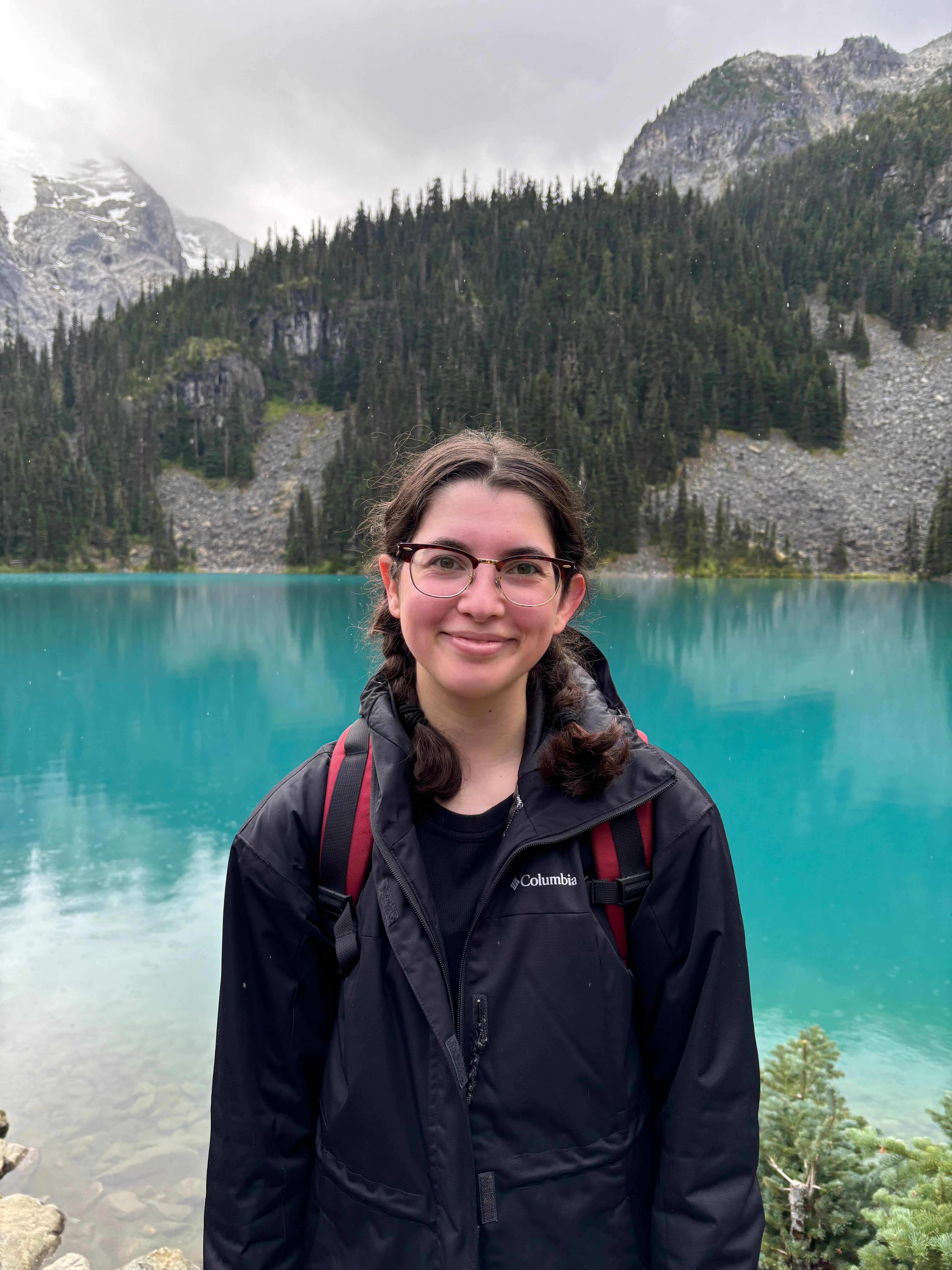
When Francesca Girmenia enrolled in INNOV 200: Theory & Practice of Social Innovation, she was looking to explore alternative business models and ways to create meaningful change. However, what she discovered went far
beyond a traditional classroom experience. It was a journey of self-discovery, systems thinking, and reimagining how communities can thrive.
A prior course on community wealth building, an approach focused on economic prosperity, social equity, and ecological sustainability was what first sparked her curiosity.
“Learning about community wealth building inspired me to explore alternative business models that better serve both people and the planet, such as social enterprises. The opportunity to participate in field visits with local organizations successfully using sustainable business models drew me to enrol in INNOV 200,” she explained.
Francesca said one of the most impactful activities for her was working with the Impact Gap Canvas, a tool that asks: “Who benefits from the challenge continuing to persist?” This exercise revealed how some systems contain perverse incentives that keep problems in place.
“It shifted my focus from trying to have all the answers to asking better questions. Social innovation isn’t about rushing into solutions, it’s about slowing down, listening, and working together. It’s not the work of one, it’s the responsibility of all,” she added.
This experience also challenged Francesca’s initial assumption that social change was formulaic and could be replicated by following previous successes.
“I learned that social change is just as much an inner journey as it is an external process. During the first week, we learned about the inner-journey of a changemaker, and I wrote this down ‘unless you know how to change yourself, you cannot change the world’. That really stuck with me,” she added.
And the skills gained in INNOV 200 have already proven valuable outside of class for Francesca. During a recent co-op position as a Young Researcher at Graz University of Technology, she relied heavily on systems mapping.
“My research focused on Microsoft’s carbon removal strategy, which required understanding the voluntary carbon removal market, including key actors, methodologies, and flows of money, information, and emissions. . . . Although I didn’t create a traditional systems map, INNOV 200 taught me what components to look for and how to critically examine their role in the system.”
Francesca admitted that before taking INNOV 200, she saw social innovation simply as “new ideas to solve social issues.” Now, after completing the course, her understanding has evolved.
“I would describe it as a dynamic, iterative process that transforms systems to create long-lasting benefits for both people and the planet. It must be inclusive and address root causes with evidence and care.”
Looking ahead, Francesca said she plans to stay actively engaged with her community. “Social innovation begins with connection. Volunteering with local organizations, attending events, having conversations with peers, and supporting values-driven businesses are all ways to stay involved and keep learning.”
For students considering INNOV 200, she also offered some advice: “INNOV 200 created a safe space to learn and grow. It can be daunting taking a course that emphasizes sharing your own opinions and ideas when you have no previous knowledge in the subject area. However, I found my confidence grew over the semester as I was given the opportunity to reflect and work on my personal development in addition to my academics,” she said.
Interested in exploring social innovation for yourself? Visit the United College Academic Programs page to learn more about INNOV 200 and other courses that will challenge you to think critically, act creatively, and make a lasting impact.