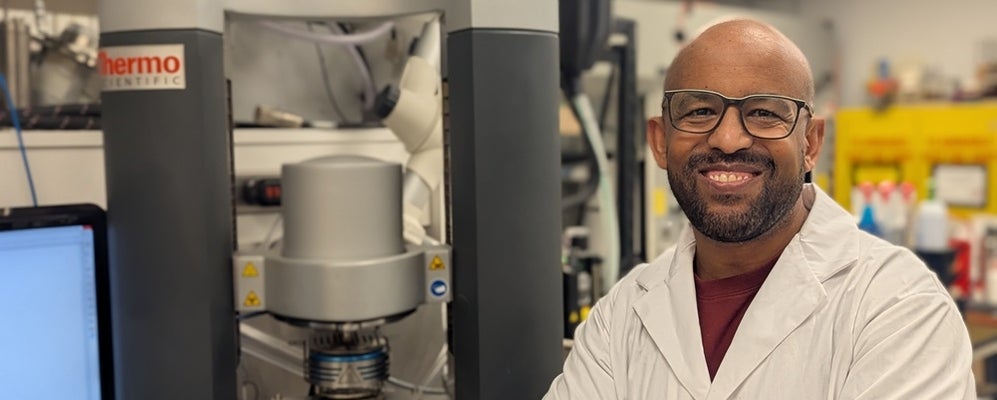
A chemical engineering research group led by Professor Tizazu Mekonnen has developed an eco-friendly super-absorbent hydrogel that could dramatically reduce the environmental impact of personal hygiene products like diapers, menstrual pads and tampons.
Unlike current products, which take centuries to break down, this new material degrades harmlessly in soil within three months.
In North America, billions of disposable diapers end up in landfills annually, according to the U.S. Environmental Protection Agency (EPA) taking up to 450 years to decompose.
Around 1.8 billion women menstruate monthly, and most single-use menstrual pads and tampons also end up in landfills. These products are about 90 per cent plastic and can take up to 500 years to break down, according to the United Nations Environment Programme.
The reason these products take so long to decompose is that they rely on synthetic superabsorbent polymers (SAPs) like sodium polyacrylate and superabsorbent hydrogels (SAHs) made from non-renewable petroleum-based feedstocks.
The research team has developed a sustainable alternative. They created bio-based and biocompatible super absorbent hydrogels (SAHs) using sodium carboxymethyl cellulose and hydroxyethyl cellulose as the base polymers, which were made from plant-based feedstocks.
The research group used citric acid as a natural “crosslinker” and cellulose from plants. Crosslinking allows hydrogels to swell dramatically, often to hundreds of times their own weight.
“We employed a cross-linking chemistry using citric acid which can be obtained from fruits like orange peel. The amount of chemicals that are used as cross-link agents is very low. That is one of the novel aspects of this research,” says Mekonnen, a Canada Research Chair in Sustainable Multiphase Polymers.
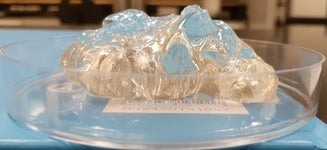
This eco-friendly plant-based hydrogel designed to replace non-biodegradable plastics used in diapers and menstrual pads and tampons.
With diapers in mind, researchers used synthetic “urine” to test the material, contaminating water with similar concentrations of protein enzymes and sodium chloride to make it salty and raised the temperature to 37 degrees to simulate body temperature.
“We tested the absorption capability and release under practical applications. Imagine a baby wearing a diaper and sitting on it. We wanted to make sure it would not leak under real-life conditions,” says Mekonnen.
Professor Evelyn Yim conducted tests to grow cells on the material to ensure that is safe for human use. Additional tests showed that as the hydrogel degrades in soil, it does not release any toxic by-products.
A patent has been filed and Mekonnen’s industrial partner CTK Bio Canada, a Vancouver-based company is preparing to commercialize this new technology.
Scale-up studies are the next step in for this research. The group applied for a follow up grant from NSERC Alliance to pursue the continuation of the work.
The study, Citric acid-crosslinked Cellulose Derivatives Superabsorbent Hydrogels (SAH) as Sustainable Alternatives for Personal Hygiene Applications was recently published in the Chemical Engineering journal.