Staff

Monday, September 17, 2018 2:30 pm - 2:30 pm EDT (GMT -04:00)

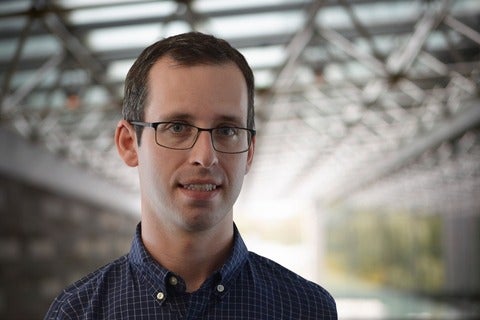
Quantum Annealing with Non-stoquastic Hamiltonians

IQC Colloquium - Layla Hormozi, IQC

We study the role of Hamiltonian complexity in the performance of quantum annealers. It is well-known that non-stoquastic Hamiltonians are more complex than stoquastic Hamiltonians and universal adiabatic quantum computing is possible when they are employed. Here we ask whether utilizing non-stoquastic Hamiltonians in quantum annealers can lead to a better performance in solving optimization problems.
Thursday, August 9, 2018 1:00 pm - 1:00 pm EDT (GMT -04:00)

Quantum computing at Alibaba Group

Yaoyun Shi, Director, Alibaba Quantum Laboratory (AQL)

I will take this opportunity to share with the Waterloo quantum community the thinkings behind Alibaba Group's quantum computing program and our main activities. Questions and comments from the audience are welcome.

About the speaker: Yaoyun Shi is a computer scientist trained at Beijing University, Princeton, and Caltech. He taught at University of Michigan before moving to Alibaba to launch its quantum computing program.

Thursday, August 9, 2018 12:00 pm - 12:00 pm EDT (GMT -04:00)

Spatial Isolation Implies Unconditional Zero Knowledge, Even With Entanglement

Nick Spooner, University of Southern California, Berkeley

Understanding the computational power of multi-prover interactive proofs where the provers may share entanglement -- the complexity class MIP* -- is a central question in quantum computation. In 2012, Ito and Vidick showed that this model is at least as powerful as MIP, i.e. NEXP is contained in MIP*.

Friday, August 3, 2018 2:00 pm - 2:00 pm EDT (GMT -04:00)

Past quantum state for continuous variable systems

Jinglei Zhang, Aarhus University

When a quantum system is monitored with a sequence of measurements, its evolution is given by a stochastic quantum trajectory. At any time the state, and therefore any prediction we can make about an observable, is dependent on previous measurement outcomes. Past quantum state, on the other hand, is a general theory that allows us to include the information collected about the system with later measurements.