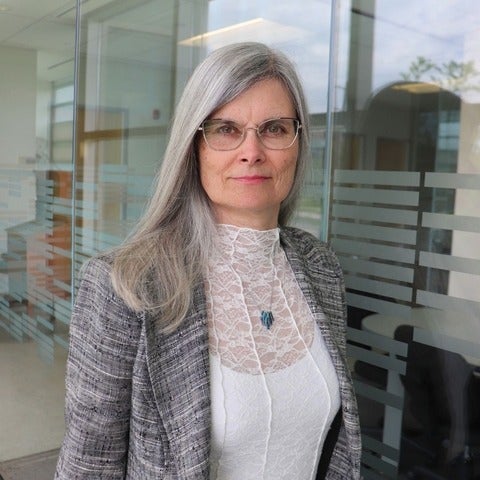
Following curiosity in different directions
Over his career, Trefford Simpson’s vision science research has included work in retinal aging, binocular vision, multiple sclerosis, contact lenses, ocular pain and more.
Our Waterloo Optometry Clinic has moved to the nearby location of 419 Phillip St., Unit C, as of October 21, 2024. This location will be open until late 2026 while the Waterloo Eye Institute is under construction. Our downtown Kitchener location (Health Sciences Optometry Clinic) remains open with no change to service.
Over his career, Trefford Simpson’s vision science research has included work in retinal aging, binocular vision, multiple sclerosis, contact lenses, ocular pain and more.
When fourth-year student Brandt Burdeniuk graduates next year, his experiences in the Doctor of Optometry (OD) program will have taken him from coast to coast.
Dr. Murchison Callender, one of the first Black faculty members at the University of Waterloo, is finally taking a step back after his official retirement nearly 30 years ago.
The new cohort of University of Waterloo School of Optometry and Vision Science residents have begun their 13-month program. Drs. Natasha Bhanot, Joanne Jin, Ivana Latatisa and Bella Plan were welcomed on August 1.
Amblyopia, also known as lazy eye, is a condition where one or both eyes have impaired vision because the eyes and brain aren’t working together properly. Learn what causes amblyopia and how the condition can be diagnosed and treated.
Piyush Garg is a PhD candidate at the School of Optometry and Vision Science working under the supervision of Drs. Lyndon Jones and Chau-Minh Phan.
Dr. Daphne McCulloch is retiring nearly 50 years after she first came to Waterloo to start a Bachelor of Science degree. Over the course of her career, she has done extensive work in clinical electrophysiology and travelled all over the globe.
Dry eye disease is a chronic condition that occurs when an individual does not produce enough quality tears to properly lubricate their eyes. It is estimated that up to 30% of Canadians suffer from dry eye. In the coming years, this number is expected to increase as the population ages.
An interdisciplinary group of University of Waterloo researchers is trying to improve adherence to 'lazy eye' treatment through use of a social robot that can educate and motivate children and their caregivers.
Dr. Jeff Hovis is retiring after 38 years of research, teaching and clinical work mostly focused on colour vision, vision standards and binocular vision.