Chair's message: Fall 2019
The Fall 2019 edition of The Entangler will update you on exciting research developments and superb accomplishments by our students, faculty, and alumni. Waterloo is a fantastic place to explore and learn about the Universe from subatomic to cosmic scales. Join us and see why.

Introducing Dr. Brenda Lee
Dr. Brenda Lee, a new continuing lecturer in the Department of Physics & Astronomy, has always been passionate about seeing things through a different perspective. Combining her love of Physics and Biomedical Sciences allowed her to pursue Nanobiophysics research and teaching opportunities to share her passion with future generations of students. Learn more about Dr. Lee, her work, and her journey from student to faculty at UofWaterloo.

What Makes Physics Education Successful?
New faculty member Dr. Karen Cummings has spent her career researching the most effective methods of University-level physics education.

Dr. Michel Gingras: What We Can Learn from Frustrated Magnets
In the field of frustrated quantum magnetism, there are no textbooks. At least not yet. Dr. Michel Gingras, a leading physicist in the field of theoretical condensed matter, is engaged in a search for quantum magnets. That search has led him to study "spin ice", a magnetic material that has atomic magnetic moments as elementary degrees of freedom that are subject to "frustrated" interactions. Learn more about Dr. Gingras, spin ice, and what the future of theoretical condensed matter physics might hold.

Sainath Motlakunta wins UW Dean of Science Award
The Dean of Science Award honours Master’s students in the Faculty of Science who demonstrate outstanding performance. Sainath Motlakunta, now a PhD student in the Department of Physics & Astronomy and Institute for Quantum Computing (IQC), was awarded the Dean of Science Award for Physics at the Spring 2019 Convocation.

Schulich Award Winner to study Physics at the University of Waterloo
A self-proclaimed “toddler at heart,” Patel’s innate curiosity for uncovering the world’s mysteries influenced her with dreams of one-day becoming an astronaut.

Let’s get Astrophysical
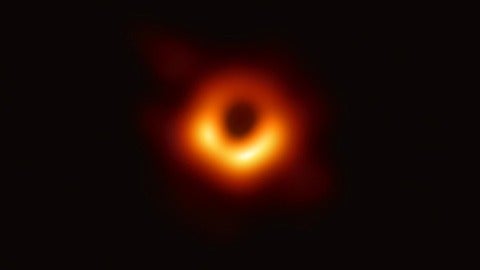
The Waterloo Centre for Astrophysics (WCA) looks to the cosmos to solve the greatest mysteries of the universe. Here, world-class researchers and students come together in an atmosphere of curiosity, creativity and collaboration; exploring our cosmic origin to truly understand the physical processes at work in the Universe. From black holes to cosmology, we aim to understand what lies beyond the Earth. The possibilities for new discovery are limitless.

Clone of Let’s get Astrophysical
Two professors of the Department of Physics and Astronomy were named fellows of the Royal Society of Canada.

Alumni Spotlight - Brent Plumley
From Mathematical Physics to Highlining, Brent Plumley integrates his physics background into an exciting outdoor business activity.

Designing quantum computers to tackle fundamental questions of particle physics
Professor Christine Muschik came to the University of Waterloo in November 2017 as an assistant professor to join the Department of Physics and Astronomy and the Institute for Quantum Computing (IQC) where she is leading the field of quantum simulations for high- energy particle physics.

Observing the Acceleration of the Expanding Universe
Dr. Will Percival, the department’s Distinguished Chair in Astrophysics, is a relatively new arrival at the University, where he is building a team to study one of the most challenging problems in contemporary physics —understanding why Universe’s expansion is currently accelerating. In order to do this work, Dr. Percival's team works with new technologies, technologies that the team hopes will lead to a revolution in our understanding of dark energy.

Highlights of a Career in Audio and Electroacoustics
University of Waterloo Distinguished Professor Emeritus, John Vanderkooy, received 2018 Peter Barnett Memorial Award, for significant contributions to reproduced sound, and audio and electroacoustics education.

SIN Bin: 2011, Problem 11
Can you solve it? The Sir Isaac Newton Exam, as we all know and love it, continues to offer challenging problems to high school students around the world. Flex your Physics brains with this problem from the 2013 Sir Isaac Newton Exam!