Five Applied Mathematics graduate students receive $120,000 as part of the federal government’s CRTAS program
Congratulations to PhD candidates Zoya Abbasi, (she/her), Boris Ragula (he/him) and Jiayue Yang (she/her), and PhD students Ireneo James Membrere (he/him) and Morghan van Walsum (she/her), on receiving a Canada Graduate Research Scholarship – Doctoral (CGRS D). Valued at $40,000 per year, the scholarship runs for three years.
The unique opportunity to collaborate with researchers at the Perimeter Institute and Institute for Quantum Computing and the international reputation of the Department of Applied Mathematics were just some of the reasons why the graduate students chose Waterloo.
Membrere, Ragula and Yang’s research has a quantum focus.

Working with Dr. Martín-Martínez, Membrere seeks to improve the entanglement harvesting model. The entanglement harvesting is a quantum information protocol where within a quantum vacuum or field state, two separate particle detectors that are initially uncorrelated become entangled with each other. Motivated by experimental proposals, he looks at analyzing previously unexplored setups outside the validity of perturbation theory. He says, “I look to lay the foundation for a fully non-perturbative description of the entanglement harvesting protocol on superconducting circuits.”
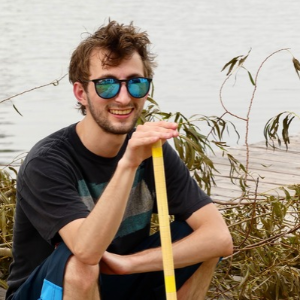
Ragula also studies with Martín-Martínez. His research focuses on the intersection between quantum field theory (our physical descriptions of the subatomic world), and gravity (Einstein's theory of how matter and energy affect spacetime). Specifically, I am trying to answer the questions "How does a subatomic particle curve spacetime, and in turn, how does this curvature affect the motion of the particle?" He hopes to “gain insight into how quantum phenomena, such as regions of local negative energy density, are influenced or constrained by gravity, and why these effects are not apparent on the scales we experience in everyday life.”
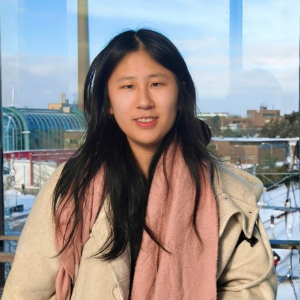
Working with Dr. Mann, Yang explores the connections between quantum information and gravity. She explains that she does this “with black holes serving as a fascinating theoretical laboratory for investigating this relationship.” She studies how quantum entanglement, quantum complexity, and related information-theoretic measures behave in curved spacetime, and what these phenomena can reveal about the quantum nature of black holes. Through her research, she hopes to understand how gravity shapes the processing of quantum information and how insights from quantum information theory can illuminate the fundamental structure of spacetime.
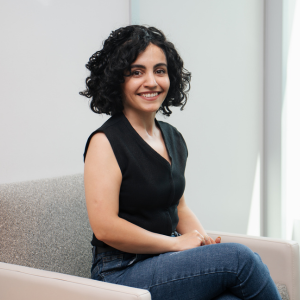
Abbasi and van Walsum’s research focuses on mathematics and health. Abbasi uses mathematics to help public-health systems make better decisions during epidemics under the supervision of Dr. Xinzhi Liu. She says that she “designs strategies, like when and where to vaccinate or isolate, so that different regions can coordinate without one central decisionmaker, which suits countries like Canada, where each province runs its own health system.”
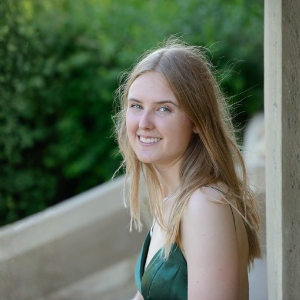
Working with Dr. Mohammed Kohandel,van Walsum focuses on mathematical oncology, with a focus on non-traditional cancer therapies. She says, “My work integrates machine learning and mathematical modelling methods to predict and optimize treatment outcomes.”
The CGRS D aims to recognize and support the next generation of outstanding research trainees. By funding a high-quality research training experience, the program seeks to create impact both within and beyond the research environment. The federal research funding agencies assessed applications equally on two criteria: research potential and relevant experience and achievements obtained within and beyond academia.
Both scholarships are part of the Canada Research Training Awards Suite (CRTAS), announced in Budget 2024. The harmonized talent program includes the Canadian Institutes of Health Research (CIHR), the Natural Sciences and Engineering Research Council (NSERC) and the Social Sciences and Humanities Research Council (SSHRC). The CRTAS supports emerging innovators with funding and research training that builds research skills, fosters creativity and prepares them to contribute to Canada’s research ecosystem, economy and prosperity. It also helps graduate students and postdoctoral researchers move into careers across all sectors that rely on strong research skills.