From performing arts to corporate banking
Karen Xie’s co-op journey showed her that a Psychology background can open doors in arts, fintech and banking.
Karen Xie, an Honours Arts and Business student majoring in Psychology, used her co-op journey to explore industries she never expected to enter. After beginning in the non-profit performing arts sector, Karen moved into fintech and corporate banking, discovering that her understanding of human behaviour was a strength in every workplace she entered.
Karen's co-op journey
Performance Hall Management Intern, Canadian Opera Company, Toronto, ON
Karen began her co-op journey at the Canadian Opera Company, located at the Four Seasons Centre for the Performing Arts in downtown Toronto. As a Performance Hall Management Intern, she conducted facility research, created marketing content and developed standardized onboarding templates for departments such as security. She also supported live event operations during performances and other activities at the venue.
Client Delivery Management Intern, Interac, Toronto, ON
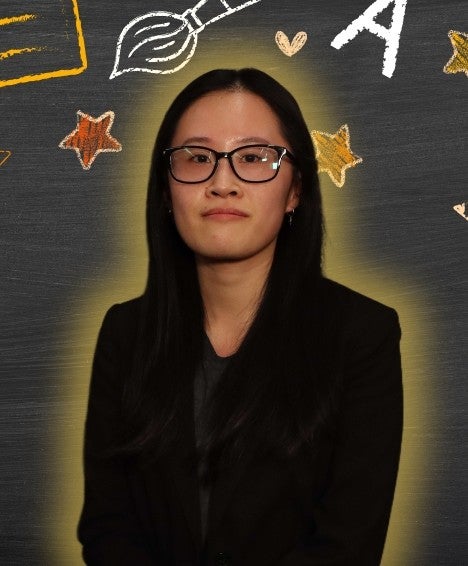
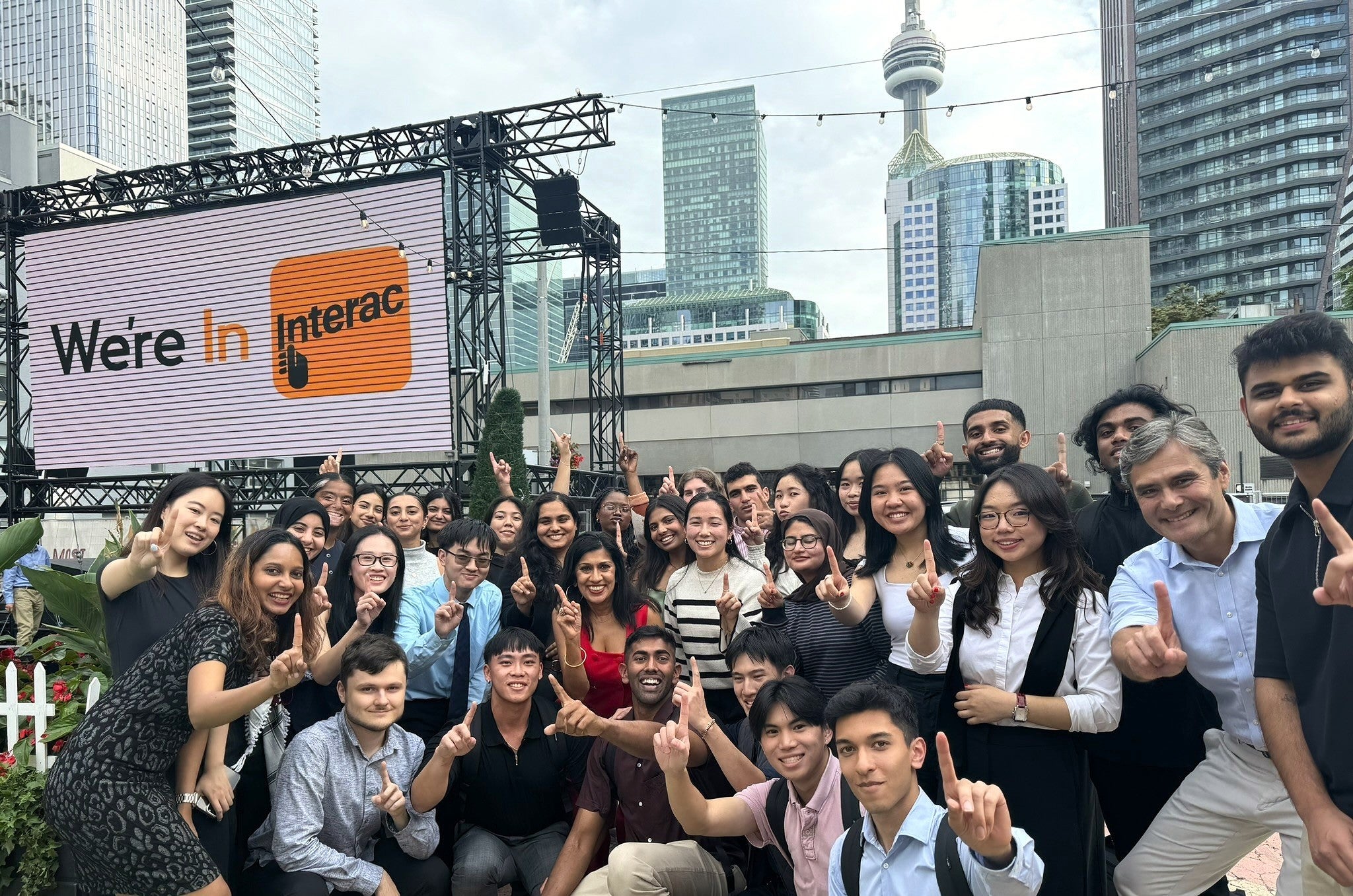
For her second co-op term, Karen joined Interac as a Client Delivery Management Intern in downtown Toronto. In this role, she acted as a bridge between technical teams at Interac and major Canadian financial institutions. She helped manage client deliverables, delivered presentations to major banks and created internal service-level agreement tracking manuals.
Process Analyst, BMO, Toronto, ON
Karen’s third co-op term brought her to BMO as a Process Analyst. Her work involved handling high-volume account closures, processing daily change requests and supporting regulatory compliance for investments across Canada.
Project Co-ordinator, BMO, Toronto, ON
Karen returned to BMO for her most recent co-op term as a Project Coordinator in payment solutions. Working closely with project managers, she coordinated cloud intake workflows, led daily stand-ups and managed cross-functional communication with senior leaders on payment and banking initiatives.
Q&A with Karen
What connected your experiences across arts, fintech and banking?
“I think what connects them is how transferable my degree is. Being in Arts and Business and specifically majoring in Psychology allowed me to use my background in the arts, fintech and finance, which were industries I never thought I would be able to get into.”
“In the past, I thought roles in fintech or banking required a more traditional finance or technical background. My co-op experiences showed me that my education could still be valuable in those fields. It became a stepping stone into industries I didn’t originally picture for myself.”
When did you realize Psychology could be an asset in fintech and banking?
“I think I realized it when I started working at Interac, and it became even clearer when I worked at BMO. When I first did my internship at the Canadian Opera Company, I thought the arts or humanities field was probably where I would go with my degree. I wasn’t really sure how many opportunities I would have outside of that.”
“After completing these internships, I realized how impactful the combination of business and psychology could be. Psychology gave me strong analytical reasoning, problem-solving skills and a deeper understanding of stakeholder dynamics, while the business side gave me a foundation for understanding how organizations operate.”
“That combination helped me see how I could apply my degree across different industries. It wasn’t just about what I studied, but how I could use those skills in different environments.”
How did your Psychology background help you work with people in corporate settings?
“During my most recent internship as a Project Co-ordinator, I had to interact with a lot of internal and external stakeholders. A big part of the role was understanding everyone’s priorities, what they were thinking, what their reasoning was and how to find common ground.”
“I had to use the business psychology side of my degree to understand human behaviour and help meet the organization’s deliverables. It was about finding compromises that worked for different people while still moving the project forward.”
“I also think empathy and compassion are really important, even though they can be harder to practice in corporate settings. Being able to bring that into my work helped tasks move more smoothly and made stakeholder communication more effective.”
What was the biggest adjustment when moving from the non-profit arts sector into fintech?
“One of the biggest adjustments was how rigid everything was. In fintech, there are a lot of compliance, risk and regulatory policies, and everything has to be followed according to the guidance that has been set.”
“I also had to learn very quickly. There was new softwares, new terminology and bigger stakeholders, including major banks, which I never thought I would be working with. I had to understand how to speak with senior leaders properly and deliver presentations effectively.”
“It was a huge transition for me. I had to get used to the corporate world, understand how it operated and adapt quickly to a very different environment.”
What surprised you most about working in corporate banking?
“What surprised me most was the culture. BMO really values its interns and encourages them to come back for future co-op terms. That’s why I was able to complete two co-ops there in different departments and with different teams.”
“Being able to learn about different sectors within banking helped me understand how they all come together. It gave me a much better understanding of both banking and the corporate world.”
“BMO also had strong mentoring programs. Through Women in Banking, I was able to have a dedicated mentor who helped guide my professional development, taught me how to network properly and provided tips and guidance along the way. I still talk to her outside of my internship, which is something I really value.”

What surprised you most about working in corporate banking?
“What surprised me most was the culture. BMO really values its interns and encourages them to come back for future co-op terms. That’s why I was able to complete two co-ops there in different departments and with different teams.”
“Being able to learn about different sectors within banking helped me understand how they all come together. It gave me a much better understanding of both banking and the corporate world.”
“BMO also had strong mentoring programs. Through Women in Banking, I was able to have a dedicated mentor who helped guide my professional development, taught me how to network properly and provided tips and guidance along the way. I still talk to her outside of my internship, which is something I really value.”
What skills carried across all of your co-op roles?
“Stakeholder relationship management carried across all of my roles. In every position, I had to interact with a lot of stakeholders, both internally and externally. I also had to deliver presentations, whether that was to senior leadership, major banks or internal teams.”
“A lot of the work involved making sure everyone understood what was happening with a project, whether we were meeting deadlines and whether we were achieving our objectives.”
“Another skill that carried through was creating standardized operating procedure documentation. I never thought that something I did in my first co-op would become a skill I used throughout all of my internships, but it ended up being very transferable and useful.”
How has co-op changed the way you see your Psychology degree?
“Co-op has given me opportunities I never thought I would come across. Originally, I thought I would go into one narrow pathway, maybe something closer to psychology itself, but that’s not the path I’m pursuing right now.”
“With this degree, I was able to enter the corporate world, specifically in finance and fintech. That helped me gain corporate experience and deepen my interest in that environment, which is the path I may pursue after graduation.”
“The co-op program allowed me to explore what I like and don’t like. Even though my degree is not a traditional finance or technology background, I was still able to use it in a way that helped me enter the industry.”
What advice would you give to Arts or Psychology students interested in banking, fintech or corporate roles?
“A lot of people might question why you’re applying to those roles, especially in interviews, so you have to emphasize the transferable skills within Psychology. Analytical thinking, research and stakeholder communication are skills you learn in Psychology and can use in every industry.”
“Those are three of the biggest traits you need to have regardless of which world you’re in. That’s what I highlighted in my interviews and throughout my co-op roles.”
“Don’t let your degree narrow you to one specific field. You can use it to try different industries you never thought you would be able to enter. I wanted to get into corporate and banking, but I didn’t think I could do it until I actually did it through this degree and program.”
“There are endless opportunities. You just have to push through and pursue them, even if there are obstacles along the way.”
What’s next for you?
“I’ve just finished my studies, and I’ll be returning to Toronto. I’ve also secured a full-time position with one of my previous employers.”
“I’m hoping to start my career journey in project management. After exploring different industries through co-op, I feel like this is the direction I want to continue pursuing.”