quantum

Thursday, April 19, 2018 12:00 pm - 12:00 pm EDT (GMT -04:00)

The Polynomial Method Strikes Back: Tight Quantum Query Bounds via Dual Polynomials

Robin Kothari, Microsoft Research (PLEASE NOTE NEW DATE AND TIME)

We use the polynomial method to prove optimal or nearly optimal lower bounds on the quantum query complexity of several problems, resolving open questions from prior work. The problems studied include k-distinctness, image size testing, k-junta testing, approximating statistical distance, approximating Shannon entropy, and surjectivity.​ Paper available at https://arxiv.org/abs/1710.09079. This is joint work with Mark Bun and Justin Thaler.
Friday, April 6, 2018 11:45 am - 11:45 am EDT (GMT -04:00)

RAC1 Journal Club/Seminar Series

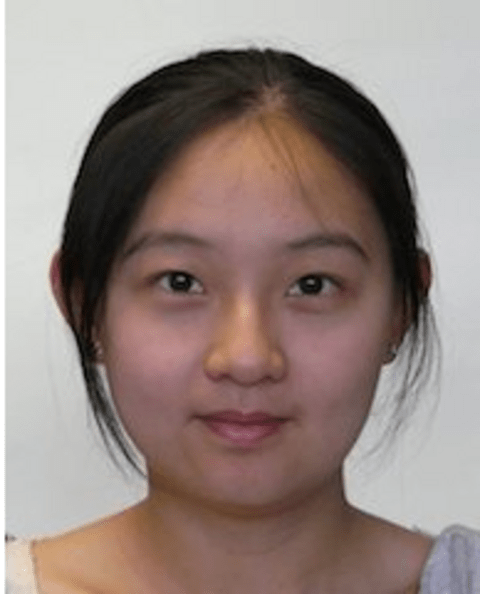
Xiaodong MaXiaodong Ma: Topological insulator and the quantum anomalous Hall effect

The quantum anomalous Hall effect (QAHE) is defined as a quantized Hall effect in a system without an external magnetic field. Its physical origin relies on the intrinsic topological inverted band structure and ferromagnetism.

Wednesday, April 4, 2018 10:30 am - 10:30 am EDT (GMT -04:00)

‘Free-space’ Chiral Quantum Optics and a ‘Few-Atom’ Quantum Antenna

Peter Zoller - University of Innsbruck

We start with an overview of chiral quantum optics as quantum light-atom interfaces with broken left- right symmetry and associated quantum optical phenomena and applications. While chiral quantum optics is traditionally discussed in context of nano-photonics and nano fibers , we propose here a novel ‘free-space’ chiral quantum optics realized as atoms in free space coupled to a ‘few-atom’ quantum antenna. In particular, we discuss free space photonic quantum links between atoms (qubits) equipped with sending and receiving quantum antennas.

Thursday, March 8, 2018 4:00 pm - 4:00 pm EST (GMT -05:00)

Deterministic Quantum Dense Coding Networks

Titas Chanda, Harish-Chandra Research Institute

Emergence of quantum information science has led to a paradigm shift in communication systems. In the past couple of decades, quantum information processing tasks like quantum cryptography, dense coding, quantum teleportation etc. have been shown to have advantages over their classical counterparts and have also been successfully implemented in laboratories.

Monday, March 26, 2018 4:00 pm - 4:00 pm EDT (GMT -04:00)

All no-signalling theories are local-realistic

Gilles Brassard, Université de Montréal

It is generally believed that experimental violations of Bell's inequalities (especially the recent so-called loophole-free experiments) provide evidence that quantum theory cannot be both local and realistic. We demonstrate to the contrary that all reversible-dynamics no-signalling operational theories (including unitary quantum theory) can be given a local-realistic interpretation.

Monday, March 5, 2018 4:00 pm - 4:00 pm EST (GMT -05:00)

Deterministic Quantum Dense Coding Networks

Seminar featuring Titas Chanda, Harish-Chandra Research Institute

Emergence of quantum information science has led to a paradigm shift in communication systems. In the past couple of decades, quantum information processing tasks like quantum cryptography, dense coding, quantum teleportation etc. have been shown to have advantages over their classical counterparts and have also been successfully implemented in laboratories.

Wednesday, February 28, 2018 10:00 am - 10:00 am EST (GMT -05:00)

Correlated dissipation: inhibiting atomic decay via cooperative dynamics

Ana Asenjo Garcia - California Institute of Technology

Dissipation is a pervasive problem in many areas of physics. In quantum optics, losses curb our ability to realize controlled and efficient interactions between photons and atoms, which are essential for many technologies ranging from quantum information processing to metrology. Spontaneous emission - in which photons are first absorbed by atoms and then re-scattered into undesired channels - imposes a fundamental limit in the fidelities of many quantum applications, such as quantum memories and gates.

Thursday, March 22, 2018 1:30 pm - 1:30 pm EDT (GMT -04:00)

Quantum acoustics with superconducting qubits

Yiwen Chu - Yale University

The ability to engineer and manipulate different types of quantum mechanical objects allows us to take advantage of their unique properties and create useful hybrid technologies. Thus far, complex quantum states and exquisite quantum control have been demonstrated in systems ranging from trapped ions to superconducting resonators. Recently, there have been many efforts to extend these demonstrations to the motion of complex, macroscopic objects.

Monday, February 26, 2018 11:00 am - 11:00 am EST (GMT -05:00)

Quantum optimization using superconducting qubits: A new platform

Rakesh Tiwari, McGill University

Quantum phenomena have the potential to speed up the solution of hard optimization problems. For example quantum annealing, based on the quantum tunnelling effect, has recently been shown to scale exponentially better with system size as compared with classical simulated annealing. However, current realizations of quantum annealers with superconducting qubits face two major challenges. First, the connectivity between the qubits is limited, excluding many optimization problems from a direct implementation.