News

Filter by:

Limit to news where the title matches:
Limit to items where the date of the news item:
Date range
Limit to news items tagged with one or more of:
Limit to news items where the audience is one or more of:

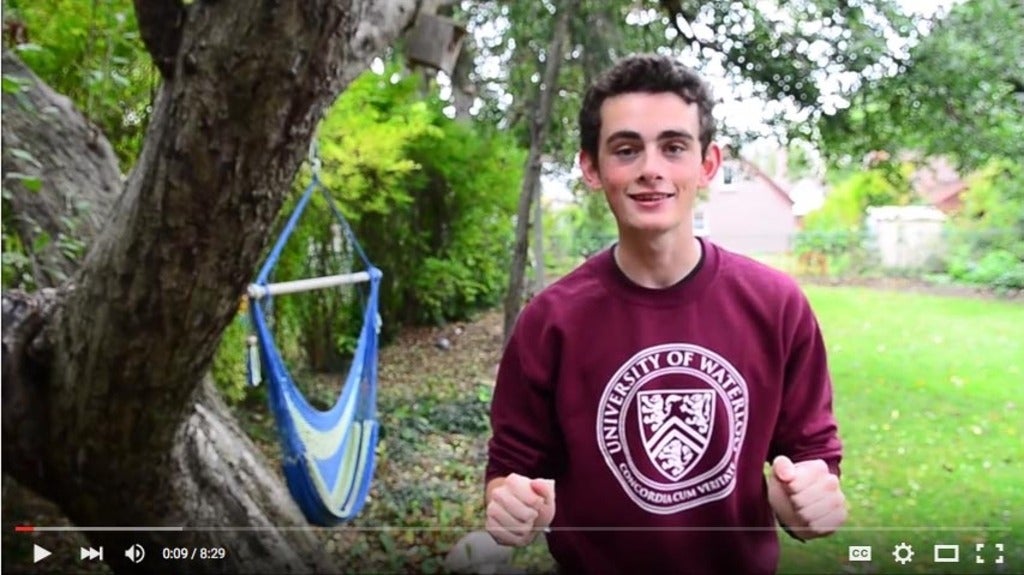
John Fish could end up travelling to the Silicon Valley later this week as the winner of the Breakthrough Junior Challenge. He is one of the 15 finalists out of more than 2,000 students from 86 countries, and only one of two Canadians to get this far in the annual challenge that invites students, ages 13-18, to share their passion for math and science with the world through video.

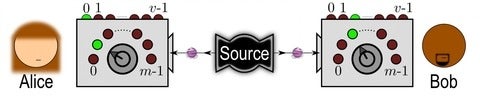
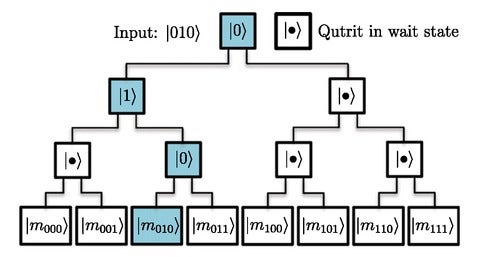
Computer scientists, including Institute for Quantum Computing (IQC) members John Watrous and Richard Cleve have long been looking at protocols where quantum communication offers an advantage compared to the classical case. However technology hasn’t progressed as quickly, so researchers had previously been unable to implement the protocols.

Researchers from the Institute for Quantum Computing (IQC), led by Professors Kyung Soo Choi and Thomas Jennewein, both faculty members with the Department of Physics & Astronomy at the University of Waterloo, received funding from the Korea Institute of Science and Technology (KIST) to develop critical building blocks of a quantum network.

Monday, September 28, 2015

The quantum vacuum takes shape

The concepts of a quantum vacuum and quantum vacuum fluctuations are still not accepted by everyone. However, a group of researchers including Christopher Wilson of the Institute for Quantum Computing have found further evidence that the two concepts are a reality. Through experiments conducted at Chalmers University of Technology, the researchers were able to probe the quantum vacuum fluctuations and not only measure their strength, but also map out their shape them.

An experiment by a team of researchers led from the University of Waterloo’s Institute for Quantum Computing (IQC) shows, for the first time, that a wave property of neutrons, Orbital Angular Momentum (OAM), can be controlled.

This newfound control of neutron OAM states means that researchers can now use neutron OAM beams to see inside materials that optical, x-ray or electron OAM beams can’t penetrate.

This control can help measure the magnetism, for example, in magnetic materials, as well as deeper probes of superconducting and chiral materials.

Four professors from the University of Waterloo are among the new fellows of the Royal Society of Canada (RSC) announced today, peer-elected as the best in their field.

The fellowship of the RSC consists of individuals who have made outstanding contributions in the arts, the humanities, science, and Canadian public life.