Current students

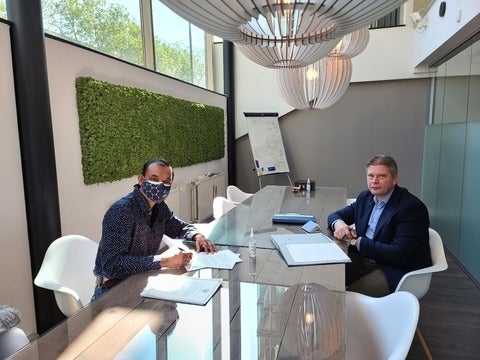
SLE Enterprises B. V., a new Dutch start-up, has been created based on the breakthrough technology of scalable liquid encapsulation (SLE). This start-up was created with assistance from Brainport Eindhoven's innovative ecosystem. Located in Southeast Brabant in the Netherlands, Brainport Eindhoven consists of high-tech manufacturing industry, an extraordinary design sector, and a unique cooperative model.


Tuesday, October 19, 2021 10:00 am - 11:00 am EDT (GMT -04:00)

WIN Seminar Series: Professor Jason R. Hattrick-Simpers

The Waterloo Institute for Nanotechnology (WIN) is pleased to present a WIN Seminar talk by Professor Jason R. Hattrick-Simpers from theDepartment of Materials Science and Engineering, University of Toronto, and a Research Scientist at CanmetMATERIALS.

Registration is required. If you have any questions or issues registering, please contact win-office@uwaterloo.ca 

How Robots Can Teach Us To Trust A.I.

Abstract

A WIN member was recently honoured by the National Academy of Sciences of America for research involving a gel-like robot, inspired by sea slugs and snails, that is steerable by light.

Hamed Shahsavan, who joined Waterloo as a professor of chemical engineering last year, was lead author of a paper chosen as a finalist for a Cozzarelli Prize recognizing the top work published by the Proceedings of the National Academy of Sciences (PNAS) in 2020.

Saturday, October 8, 2022 (all day)

NanoCanada: From Earth to Space Conference

Exploring the Enabling Power of Nanotechnology and Advanced Materials

Join global innovators and thought leaders at From Earth to Space, an international conference organized by NanoCanada. From Earth to Space brings together the best of industry and science innovation for a truly experiential conference. Showcase your idea, product, or organization. See, discover, and touch the latest tech advancements.

Researchers studying two-dimensional crystalline materials have observed an electromagnetic effect, called the nonlinear anomalous Hall effect, of unprecedented size. Their finding opens the door to exploring other quantum materials using their techniques and hints at promising applications in spintronic devices.

To a scientist, trial and error are common in laboratories to refine new tests and methods and look for potential problems on the small scale. But what happens when these techniques are meant for human tissues, such as for surgeries, medical tests, and treatments, where multiple different trials are not possible?

Tuesday, April 27, 2021

Adding speed to COVID-testing

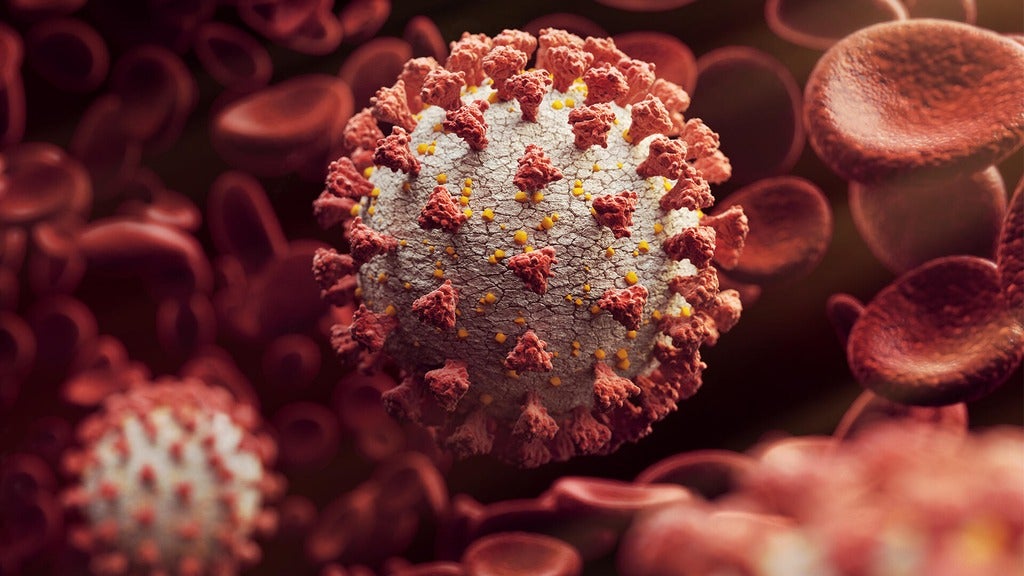
Researchers at the University of Waterloo are developing a new COVID-19 test that can be administered at home using saliva, aiming to deliver a positive or negative result in less than 20 minutes.

It’s a possible solution to the current delays in receiving test results and a much more pleasant option for those requiring frequent tests, researchers said. They hope the tests will become available over the counter at pharmacies across Canada.

“The use of paper devices coated with nanoparticles for COVID detection is a game changer.