
The Waterloo Institute for Nanotechnology (WIN) and the Center for Nanointegration Duisberg-Essen (CENIDE) are pleased to present Assistant Professors Teng Cui and Conrard Giresse Tetassi Feugmo for a joint 2D-MATURE seminar.
When: March 6 @ 10:00 AM - 11:00 AM
Where: QNC 1501
About the seminar
10:00 AM - 10:30 AM : Dynamic mechanical reliability of 2D materials by Teng Cui
2D materials have been widely explored for applications ranging from flexible electronics and structural nanocomposites to functional coatings, where atomically thin layers are often subjected to dynamic mechanical loading. However, the dynamic mechanical reliability of 2D materials remains poorly understood. In this talk, Dr. Cui will present his work on elucidating the intrinsic and interfacial fatigue behavior of graphene and transition metal dichalcogenides using atomic force microscopy and in situ characterization techniques. He will also discuss how the mechanics of 2D materials complements and contributes to multiple project themes within 2D-MATURE.
10:30 AM - 11:00 AM : Conrard Giresse Tetassi Feugmo
In his talk, Conrard Tetsassi Feugmo will present his computational platform — integrating density functional theory, machine learning, and physics-informed neural networks — and outline its direct relevance to Projects P4, P5, and P8 of 2D-MATURE, highlighting opportunities for collaboration with the current PI team on scalable manufacturing, structure-property relationships, and electrochemical energy storage design
About the speakers
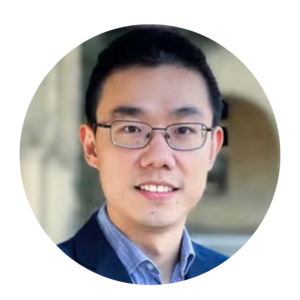
About Teng Cui
Dr. Teng Cui is an Assistant Professor in the Department of Mechanical and Mechatronics Engineering at the University of Waterloo, where he leads the Extreme Mechanics and Energy Materials – (EM)²Lab. His research focuses on fundamentally understanding how materials fail across length and time scales under extreme conditions, with the goal of designing reliable materials and devices for energy and sustainability applications.
Prior to joining the University of Waterloo, Dr. Cui was an NSERC Postdoctoral Fellow at Stanford University, where he investigated electro-chemo-mechanical coupling and failure mechanisms in solidstate batteries. He received his Ph.D. from the University of Toronto, where his research centered on the nanomechanics of two-dimensional (2D) materials. He earned his bachelor’s degree in Engineering Mechanics from Nanjing University of Aeronautics and Astronautics. Dr. Cui has authored over 20 publications in high-impact journals, including Nature Materials, Nature Energy, and Science Advances.
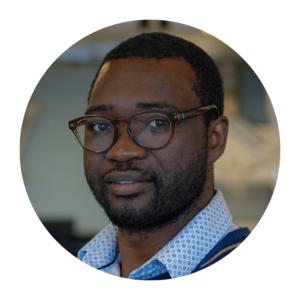
About Conrard Giresse Tetassi Feugmo
Dr. Conrard G. Tetsassi Feugmo is Assistant Professor in the Chemistry Department at the University of Waterloo. He holds a Master's in Nanotechnologies from the Louvain School of Engineering in Belgium and a Ph.D. in Computational Chemistry from the University of Namur, Belgium.His research focuses on multi-scale modeling and machine learning approaches to understand and optimize electrochemical systems, with particular emphasis on graphite, batteries material, molten salts, solid oxide electrolyser cells (SOECs), and corrosion in extreme environments. His group combines classical density functional theory with dynamic modeling to advance the fundamental understanding of many-body and non-equilibrium phenomena across states of matter. Leveraging AI and physics-informed neural networks, the team accelerates materials discovery and reveals the complex mechanisms driving behavior in harsh and reactive environments — bridging theoretical insight with practical applications in energy, corrosion resistance, and electrochemical technologies.