
Joint Workshop
The Waterloo Institute for Nanotechnology (WIN) and Semiconductor Technology Co‑creation (STC2), Tohoku University, invite WIN members to participate in the UW–TU Joint Workshop on Materials and Devices, an online workshop focused on strengthening research engagement and building bottom‑up collaborations in materials, devices, and semiconductor technologies. This workshop supports the development of a UW–TU Joint Seed Funding Program and will help identify complementary expertise and potential project matches.
Workshop purpose
- Expand research engagement between WIN and Tohoku University (TU)
- Identify complementary expertise for future collaboration
- Explore new research themes in materials, devices, and semiconductors
- Build momentum toward the UW–TU Joint Seed Funding framework
Date & Time
- EST: Wednesday, March 4, 2026 — 7:00 p.m. to 8:30 p.m.
- JST: Thursday, March 5, 2026 — 9:00 a.m. to 10:30 a.m.
- Platform: Microsoft Teams (connection details will be shared with confirmed participants)
Agenda Overview
- Opening remarks by WIN and TU leadership
-
Research presentations (5‑minute talk + 2‑minute Q&A)
- Wrap‑up and discussion of next steps toward project matching
Presentation Format (for WIN presenters)
- Up to five content slides (excluding the cover slide)
-
Content must be suitable for public disclosure
- A slide outlining potential collaboration with TU is welcome
Speakers from Tohoku University
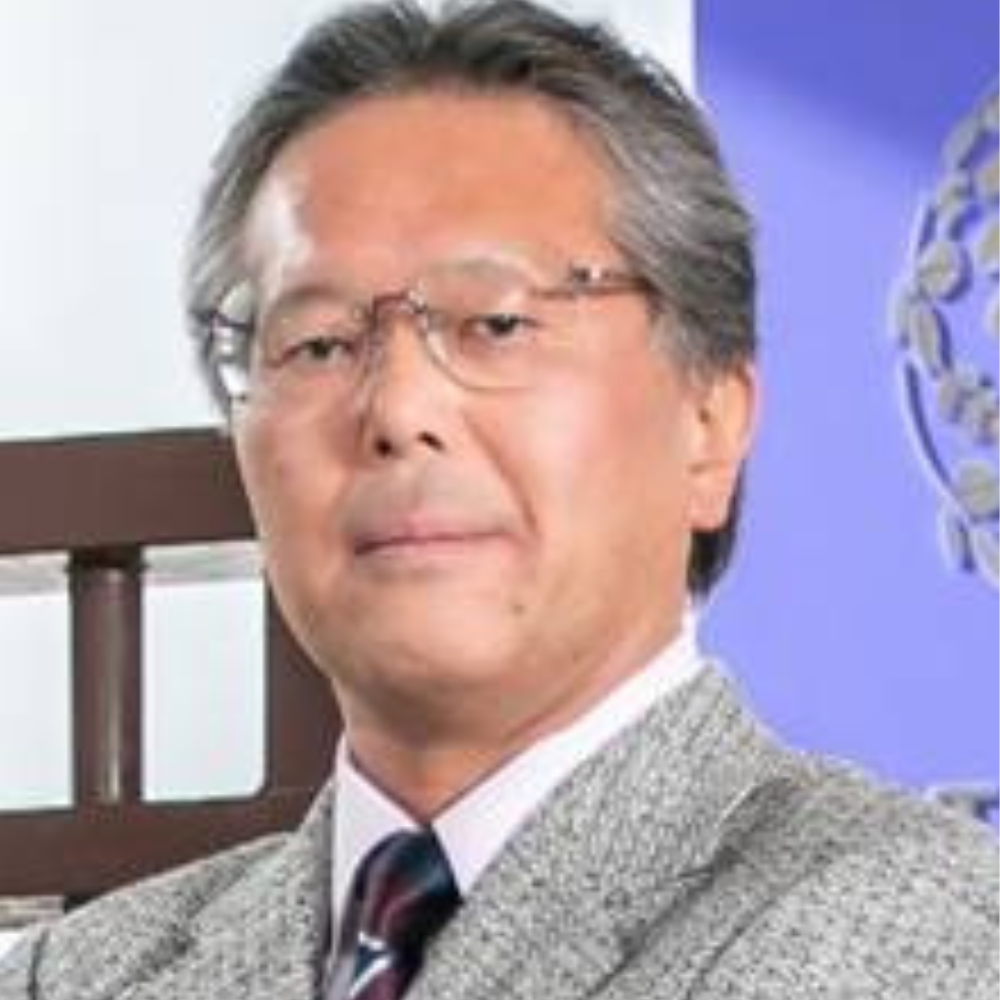
| Itaru Homma – Institute of Multidisciplinary Research for Advanced Materials
A 3D printable all-solid-state Li-ion battery : 3D printing technologies have been adapted to enable all solid-state lithium-ion battery (LIBs) fabrication, allowing flexible designs such as scalable 3D shapes. We studied quasi-solid state electrolytes composed of ionic liquids and silica nanoparticles, that show liquid-like mobility within solid state matrix. The electrolyte maintains its structural integrity and high Li-ion conductivity, enabling quasi-solid state (QSS) Li-ion batteries. Keywords : All solid state Li- ion battery, Nanomaterials, 3D printing, Battery manufacturing |
 |
| Toshiaki Kato – Graduate School of Engineering
Cutting-Edge Synthesis of 1D and 2D Atomic Layer Materials Atomic layer materials exhibit extraordinary electronic, optical, and quantum properties arising from their reduced dimensionality and tunable symmetry. We develop advanced synthesis strategies for both 1D and 2D atomic layer materials with atomic-scale structural precision. Using plasma-assisted chemical vapor deposition, we have achieved scalable integration growth of graphene nanoribbons with controlled width and alignment, establishing a platform for low-dimensional carbon electronics [1,2]. Building on this capability, we have discovered a new catalyst that enables selective growth of (6,5) carbon nanotubes, providing a pathway toward chirality-pure nanotube production [3]. We further extend our structural engineering approach to transition metal dichalcogenides (TMDs), achieving Janus engineering and curvature-induced structural transformation [4,5]. Beyond materials synthesis, we are advancing these materials into quantum devices, such as Josephson junctions and superconducting hybrid structures, to explore next-generation quantum functionalities. [1] Nature Nanotechnology, 7 (2012) 651-656. [2] Nature Communications, 7 (2016) 11797-1-10. [3] ACS Nano, 18 (2024) 23979-23990. [4] ACS Nano, 18 (2024) 2772−2781. [5] ACS Nano, 19 (2025) 34918–34927. Keywords : Nanotechnology, Materials, microsystems |
 |
| Tomohiro Otsuka – Advanced Institute for Materials Research
Semiconductor Quantum Technologies Using Artificial Nanostructures and Emerging Materials Semiconductor qubits are considered one of the candidates for realizing large-scale quantum computing, and silicon-technology-based quantum chips have recently seen rapid progress. Further improvements in performance and functionality require not only the optimization of conventional device structures but also the incorporation of emerging materials that expand controllability and quantum properties. This presentation introduces qubit devices based on artificially engineered nanostructures and discusses material characteristics that strongly influence quantum behavior. It further outlines the potential for advancing quantum devices through the use of new materials and highlights research directions that may foster collaboration between materials science and quantum-device research communities. Keywords : Nanotechnology, Materials, Semiconductors, optical and atomic physics |
 |
|
Hirokazu Fukidome (tentative) – Research Institute of Electrical Communication Fabrication and Electical Validation of Ultimately Scaled 2D Transistors Toward THz ICT, Supported by Operando X-ray Nanospectroscopy Next-generation information and communication technologies (ICT) demand radical advances in device performance and energy efficiency, including power amplification in the THz regime. I study ultimately scaled transistors, with an emphasis on fabrication and electrical validation, aiming for high energy efficiency and order-of-magnitude gains in output power. By orthogonally integrating graphene and transition-metal dichalcogenides (TMDs), I achieve sub-nanometer effective gate lengths and channel thicknesses (<1 nm) without advanced lithigraphy and demonstrate DC transistor operation. To support optimization and reliability, I use operando X-ray nanospectroscopy under electrical bias—an approach I developed—to map electronic and chemical states with elemental selectivity at synchrotron facilities such as NanoTerasu (situated in the campus of Tohoku University) and SPring-8. This workflow links fabrication, operation, and in-device diagnostics, providing quantitative feedback for nanoscience-guided design toward future THz ICT. Keywords : Nanotechnology, Materials, Thin-film surfaces and interface |
 |
Secretariat
-
University of Waterloo (WIN): Dennis Wong, Business Development Manager
Email: dennis.wong@uwaterloo.ca -
Tohoku University (TU): Hiroko Shimizu, Head Office of Enterprise Partnerships
Email: hiroko.shimizu.c4@tohoku.ac.jp
Requested Information from WIN Members
WIN members, please send an email to Dennis Wong (dennis.wong@uwaterloo.ca) with the title of your presentation, your photo, and a brief abstract. Joining as an audience is also welcome.