
An undergraduate degree at the University of Waterloo opens the door to experiential learning opportunities around the world. That was the case for Gabriella Ardila, who jumped at every opportunity to take her learning to Canada’s coasts and South America.
Ardila began her journey at the University of Waterloo in Environmental Engineering, where she completed a co-op placement in Halifax at Environment and Climate Change Canada (ECCC). Working in ECCC’s water division, she became increasingly interested in ecology-focused projects, including species-at-risk and environmental site assessments. Her newfound passion for scientific research led her to switch majors to Environmental Sciences, allowing her to specialize in ecology.
As a Science student, Ardila fully embraced opportunities to explore and take her learning global. In the summer of 2024, she spent three months in the Dominican Republic through the Global Skills Award, where she taught at a local school and developed a science curriculum to engage children in learning. While the curriculum was taught in English, Ardila is bilingual in Spanish, which helped her in the classroom.
Her next placement brought her to Montreal, where she completed an eight-month co-op at McGill University working in the lab of University of Waterloo alum, Professor Mary Kang (BASc ’04, MASc ’06).
In the lab, she gained hands-on experience in environmental research. Travelling to Vancouver alongside a master’s student, they built specialized chambers to measure methane emissions from post-meter sources such as appliances, natural gas systems, fireplaces, and stoves.
Ardila’s role also involved organizing research campaigns in Colombia and Argentina. Fieldwork in Colombia will commence this summer, and while she is unable to attend, she played a vital role in connecting with officials at oil and gas companies to coordinate logistics for the project, thanks to her bilingual background.
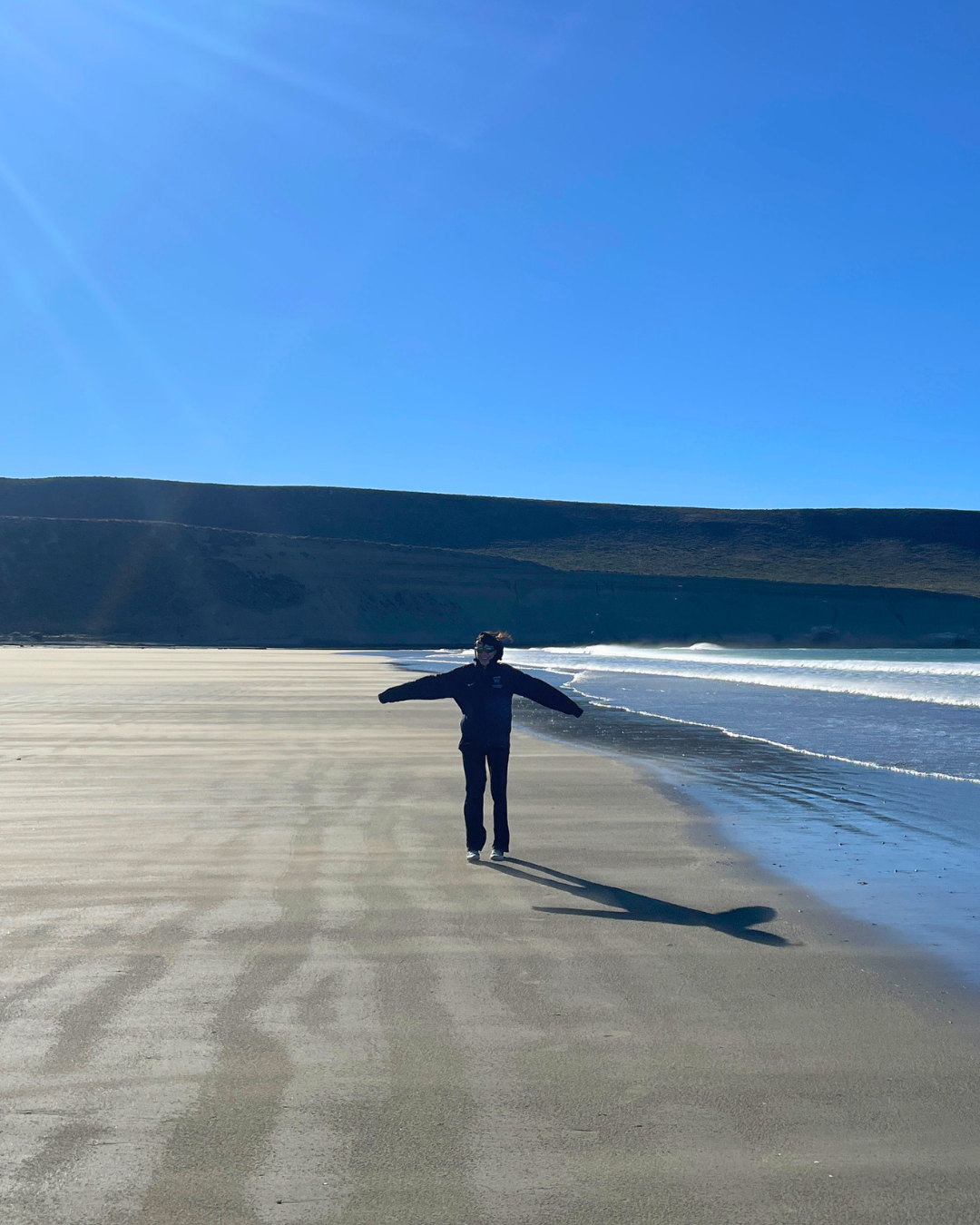
While the project in Colombia was in its planning phase, she was travelling through Argentina on a month-long field campaign in Comodoro Rivadavia, an oil and gas town in the province of Chubut. Partnering with Argentina’s environmental agencies, the research team measured emissions from plugged and abandoned wells in the area to understand the environmental impacts of aging infrastructure.
“These experiences showed me how much work it takes to be a master’s student,” says Ardila. “It has been rewarding and has inspired me to pursue a thesis-based master’s degree. I feel prepared because I got to be part of one and see it all come to fruition.”
Ardila will be heading to Concordia University for her master’s degree, working under the supervision of Dr. Pedro Peres-Neto on quantitative insect ecology. It is a path rooted in her love for insects, keeping beetles and millipedes as pets. At Waterloo, she was able to customize her degree to her passions, taking Invertebrate Zoology (BIOL 310), which inspired her to continue learning more in graduate school.
“When you graduate from Waterloo, you’re prepared to achieve any special interest post-grad,” says Ardila. “For me, that is insect quantitative ecology, but I would have felt just as prepared if I branched out to groundwater science, or marine animal physiology.”