


As part of Canada's largest engineering school and most innovative university, the Department of Chemical Engineering at the University of Waterloo is home to approximately 1,000 students, faculty and staff, and has thousands of alumni worldwide.
Our Department consistently ranks among the top two universities in Canada and the number one university in Ontario in Chemical Engineering according to the Shanghai Academic Ranking of World Universities.
In addition to offering undergraduate and graduate programs in chemical engineering, the Department provides academic expertise and support to Waterloo's collaborative nanotechnology and biomedical engineering programs.
The department's collaborative research culture, engaging teaching practices and state-of-the-art facilities create a vibrant learning environment where students are empowered to solve the problems our world faces.


Capstone Design Projects
Participation in Capstone Design Projects synthesizes theory learned in class, lab work, and real-world experience from co-op programs. Students are able to create design projects in areas that interest them. Capstone Design projects often lead to the creation of a marketable product and entrepreneurial opportunities for the graduating students.
Professor Hamed Shahsavan's micro-medical robotics research
Check out this video about Professor Hamed Shahsavan’s research into developing smart polymers for applications in biomedical robotics. Shahsavan’s research group utilizes shape change to produce movement in the micro-robots. The micro-medical robots have the potential to be used for biopsies, cell transport and drug delivery. He also discusses the critical role of graduate students in research labs.
Chemical Engineering Lab Tour
Join us for a tour of the Chemical Engineering undergraduate labs in the Douglas Wright Engineering Building at the University of Waterloo.
Find out more by exploring the programs, research and news stories on this site.
News
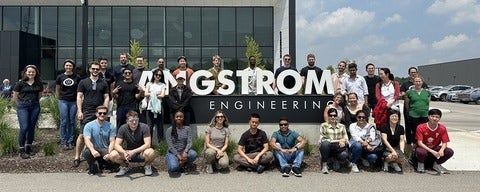
International Research Training Group arrives on Campus: Advancing 2D Materials Research with Sustainability and Indigenous Perspectives
Researchers from the Universitat Duisburg-Essen in Germany and the University of Cambridge arrived at the University of Waterloo in June to participate in ongoing graduate student training aimed at leveraging 2D materials for various manufacturing applications. This international collaboration is supported by an NSERC CREATE grant, with Professor Michael Pope from the Department of Chemical Engineering serving as lead Principal Investigator. Researchers from the Faculty of Engineering, the Faculty of Science and the Waterloo Institute for Nanotechnology are involved in the collaboration.
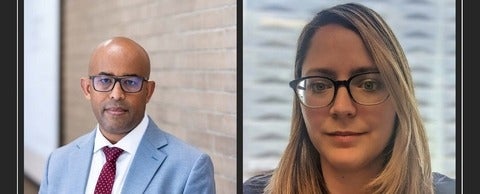
Professors Valerie Ward and Tizazu Mekonnen are designated as Canada Research Chairs
The Department of Chemical Engineering is proud to announce the appointment of two of its faculty members as Canada Research Chairs (CRC). The designation of Canada Research Chair is an honour bestowed upon exceptional emerging researchers. Professors Valerie Ward and Tizazu Mekonnen are both trailblazers in their respective fields.
Ward now holds a CRC in Microalgae Biomanufacturing. Her research group uses microalgae to make a variety of products.
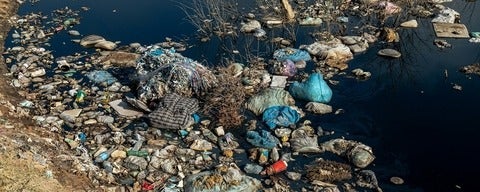
Professor Elisabeth Prince participates in UN Conference Delegation to combat plastic pollution
Last month, negotiators and interested parties met in Ottawa for the INC-4 to discuss progress on a plastics treaty. A delegation of plastics and microplastics experts from the Water Institute at the University of Waterloo participated with special accreditation from the UNEP. Professor Elisabeth Prince was part of that delegation.
“We had the opportunity to share our expertise in the emerging technologies for mitigating the plastic waste crisis with key decision-makers,” says Prince.
Prince has expertise in synthetic polymer chemistry and polymer science. The delegation from the Water Institute hoped to lend their scientific knowledge to ensure the treaty was well-informed by science because there were many parties with many different interests and motivations throughout the negotiation.
Events
MASc Oral Exam| CO2 conversion through Reverse Water Gas Shift over Molybdenum and Tungsten Carbides: Catalytic Performance Evaluation
You are welcome to attend Anik Ashirwadams MASc oral exam
MASc Oral Exam| Transition metal doped ceria catalyst prepared by direct precipitation method for thermocatalytic conversion of carbon dioxide via reverse water gas shift
You are welcome to attend Wenxuan Xia MASc oral exam
PhD Comprehensive| The Effects of Temperature on Lithium-Ion Battery Cells and Packs
The Effects of Temperature on Lithium-Ion Battery Cells and Packs