Faculty

In 2022, Woodford et al. released a series of reports on the experiences and perceptions of 2SLGBTQ+ students on university campuses in Ontario. Findings indicate that while 17% percent of overall students reported being verbally threatened, bullied, or intimidated and 14% overall reported being sexually harassed or assaulted, these rates were considerably higher for students belonging to 2SLGBTQ+ community, with trans and nonbinary students being at the highest risk.


It’s June, which means green and yellow bean season has begun. Beans have been cultivated in the Americas as far back as 7000 BC. In 2018, Ontario produced more than 68 million pounds of green and yellow beans. (That’s a lot).

Green and yellow beans are high in fiber and other nutrients. One cup of beans provides 12% of the daily fiber requirements, 27% of daily vitamin C requirements and 18% of daily vitamin K requirements. Beans also contain smaller amounts of potassium, iron, vitamin B6 and magnesium. Beans are also low in sugar, sodium, and are cholesterol free.

500 g (1 pound) of fresh yellow or green beans costs around $3.50.

There are close to 5 billion smartphone users worldwide (Statista, 2024). The average person spends 4 hours a day on their phone (Statista, 2023), and almost half of all smartphone users describe themselves as having a smartphone addiction (Ratan et al., 2022). Unsurprisingly, almost all university students have a smartphone (Huey & Giguere, 2023). In people aged 25 and under, 25% of them meet the criteria for problematic smartphone usage (Sohn et al., 2019).

It’s March and the sounds of Spring are in the air. By sounds of Spring, we mean the excessive honking of geese as they return from their winter vacays. Watch your step. 

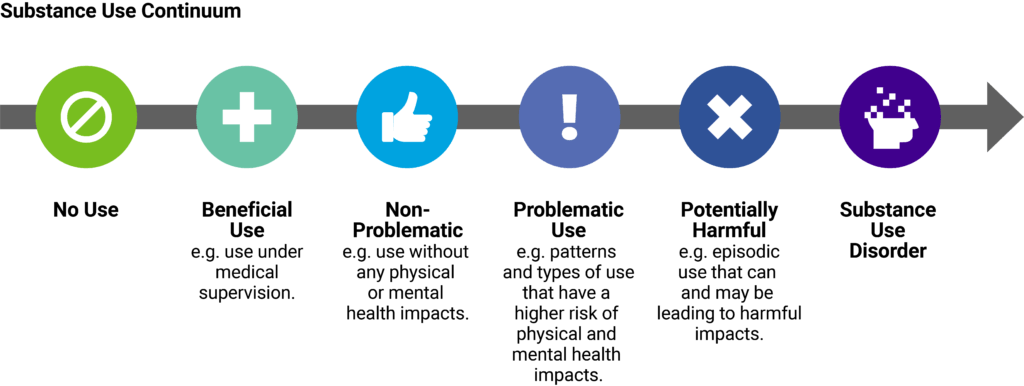
As we head into the weekend and one of the most celebrated holidays around the world (St Patrick’s Day), it is a great time to talk about substance use health. 

Whether it’s green beer, regular beer, tobacco, caffeine, cannabis, or illicit drugs, substances are a fact of life.  In Canada, it is estimated that 78% of people over the age of 15 regularly use substances of some kind. With substances playing a consistent role in our lives, it’s important that we develop healthy relationships with them.

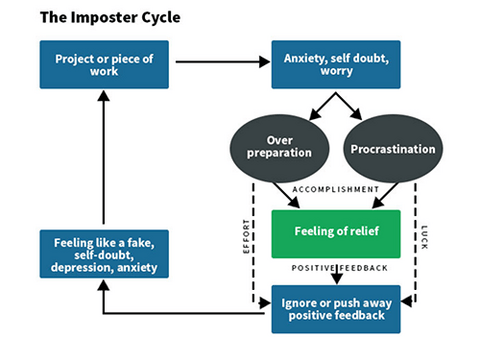
Concerns about the impacts of imposter phenomenon on students and employees in higher education has been the focus of concern (and research) for some time. In recent years, the narrative around imposter phenomenon has begun to change. In this month’s newsletter, we will explore historical perspectives as well as the changing narrative around imposter phenomenon.

As of Nov 30, 2023, people across Canada can  call and text 9-8-8, a new three-digit service, for help when they need it most. The service offers trauma-informed and culturally affirming support to anyone who is thinking of suicide, or who is worried about someone they know. While the focus is on suicide prevention, the service can be accessed for any mental health concern.

Substance use and mental health concerns among graduate students has been growing for some time. Allen, et al. (2017) explored how mental health symptoms and substance use varies between professional doctoral (engineering and business), academic doctoral (arts and behavioral science), and master’s students. 

Research dating back to 1989 (possibly further) identified concerns about increasing employee stress levels occurring in higher education. As a result of the pandemic, numerous new studies on faculty burn-out have been initiated. A recent qualitive study by Koster and McHenry (2023) analyzed narrative comments on a survey assessing burnout and well-being to identify factors that contributed to faculty feelings of disengagement and exhaustion.


Wednesday, February 14, 2024

Employee Burnout in Higher Education

"Here’s a quote I once heard from a priest: If you don’t want to burn out, stop living like you’re on fire.” -Brene Brown

The term “burnout” was first introduced in 1974 by American psychologist Herbert Freudenberger to describe the consequences of severe stress and high ideals in human professions (social workers, teachers, nurses, police officers, physicians, etc.). Freudenberger defined burnout as “the extinction of motivation or incentive, especially where one's devotion to a cause or relationship fails to produce the desired results” (1974). In 1989, Byrne and Hall explored the impacts of the three dimensions of burnout (exhaustion, depersonalization/cynicism, and reduced personal accomplishment) on teachers, including university instructors, as well as the work-related stress factors that contribute to burnout. Byrne and Hall found that a combination of personal traits and organizational factors directly contributed to feelings of burnout.  

Monday, February 5, 2024 (all day)

Mirrorless Monday

Mirrorless Monday is an annual, campus wide campaign to encourage body positivity through various messages on mirrors and a campaign that seeks to remind everyone that their self-worth is not tied to a reflection in a mirror. The campaign is a partnership between Campus Wellness and Plant Operations. For the one-day campaign today, a portion of washroom mirrors in various locations on campus will be covered with positive messages and supportive resources including Counselling Services, MATES, Good2Talk, etc. The messages will be placed on the mirrors at the beginning of the day (Feb 5th) and removed by 10:00 a.m. on Tuesday.