Industrial research institute, JITRI, is accelerating innovation in AI with help from Waterloo co-op students
By: Mary Lynne Bartlett
Based in one of China’s most active economic regions, the Jiangsu Industrial Technology Research Institute (JITRI) hires University of Waterloo co-op students who contribute to research and industry projects while gaining international experience.
With a network of more than 100 industrial research institutes, JITRI companies advance transformative work in artificial intelligence (AI), advanced materials, intelligent manufacturing, energy and environmental technologies, biology and high-end equipment manufacturing. JITRI integrates co-op students directly into this innovation engine to bring fresh thinking, accelerate projects and help turn breakthrough research into real-world results.
Early in its development, Professor Qing Liu, president of JITRI, incorporated co-op into the company’s hiring practices and operations; he knew he wanted to partner with leading universities like Waterloo.
“JITRI puts a lot of emphasis on the co-op model. We encourage students and young professionals to work directly on real-life challenges and real industrial challenges, not just in the classroom,” says Wenjing Zhen, Vice Director, JITRI Co-op Education Division.

From classroom to impact
JITRI champions an “action-oriented education” approach that mirrors the University of Waterloo’s co-op principles. At Waterloo, students alternate between academic study and hands-on work experience, where they develop skills in real time rather than through theory alone. Waterloo's reputation and the scale of its co-op program stood out to JITRI. “Waterloo students are not only technically knowledgeable and capable, but also highly independent and fast learners,” Zhen says. For JITRI, the partnership offered a solution to a challenge the organization saw across many systems: students often leave university with theoretical knowledge but also with uncertainty about their desired career path or industry needs.
At JITRI, co-op students don’t observe; they lead. The organization integrates students directly into teams, assigns meaningful responsibilities and pairs them with dedicated mentors. Students contribute across a wide range of projects, from engineering development and AI applications to market analysis and international business strategy.
JITRI brings the strength of co‑operative education to life by connecting classroom learning with real industry challenges across its extensive network of research institutes. Through Waterloo co‑op, the company accesses talented students who contribute immediately and turn ideas into impact.
At JITRI, Waterloo co-op students are tackling production challenges and boosting efficiency while also applying their analytical strengths to global market development. Co-op students use AI to decode customer behaviour and support international expansion. They also introduce workflow automation that redefines how teams get work done. “Waterloo co-op students bring fresh perspectives, strong initiative and practical problem-solving abilities,” says Zhen. “They help drive innovation and collaboration across our ecosystem.”
Benjamin Wen, a first-year Honours Math co-op student, is one of those hires driving innovation and collaboration.
Unsure what to expect from his first co-op term, especially one abroad, Benjamin took a leap and secured a position at Nice CART, an agri-tech company within one of JITRI’s research institutes. His co-op experience has opened his eyes to new career paths (e.g. using software development to support agriculture) and deepened his understanding of work-integrated learning.
Benjamin has seen how his classroom learning and hands-on experience work together to build his professional skills.
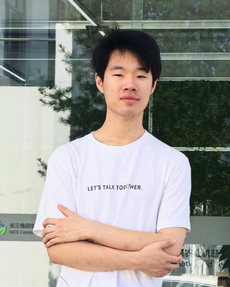
Benjamin Wen, first-year Math co-op student
Waterloo taught me transferable skills that have been really beneficial in the workplace. I enjoy helping my coworkers on their projects and contributing through my knowledge and skills. This is my first time using product management software to manage tasks for large projects, and I regularly connect with team leaders. Their advice plays a key role in my success as a co-op student. I’m not here as a full-time hire, I’m here to learn and grow.
The work term experience often leaves a lasting impression with students. While many initially commit to a four-month work term, some choose to extend their employment term to eight months. This outcome reflects both the meaningful work and supportive environment in which students thrive. “We treat these students as real team members, rather than just temporary observers,” says Zhen.
Future-focused talent
Looking ahead, JITRI continues to expand its focus in areas such as AI-enabled engineering, semiconductors, robotics, and nano-manufacturing, as artificial intelligence increasingly shapes all fields. As these domains evolve, JITRI expects the need for adaptable, industry-ready talent will only grow stronger.
For organizations considering similar partnerships, JITRI offers a simple but powerful piece of advice: don’t underestimate co-op students. Give them real responsibility, challenge them with meaningful work and support them with mentorship. By integrating co-op into its innovation ecosystem, JITRI doesn’t just recruit talent, it cultivates, accelerates and puts it to work solving real-world problems.
As JITRI continues to grow in emerging fields, they see co-op as an important way to connect students with meaningful industry challenges. For both students and employers, the partnership demonstrates how workplace learning can support innovation while helping future talent develop in real-world environments.