Why FSRA invests in early-career co-op students
Financial Services Regulatory Authority of Ontario (FSRA) provides students meaningful opportunities to contribute while building skills and confidence they can carry into their future careers.
By: Matthew King
The Financial Services Regulatory Authority of Ontario (FSRA) regulates Ontario’s financial services sectors, including pensions, insurance, credit unions, mortgage brokering and financial planners and advisors. Across the organization, co-op students work in a range of areas, bringing knowledge from disciplines such as actuarial science, finance, risk management, data science, computer science and systems development.
Hiring co-op students at FSRA goes beyond looking for prior experience. Hiring managers value curiosity, initiative and a willingness to learn.
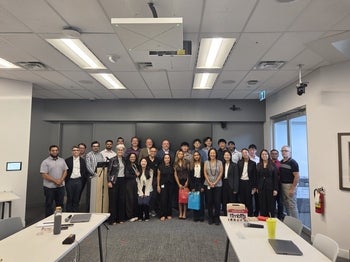
“We don't look at whether a student is in first year or fourth year. Everyone needs training,” says Victor Wong, Director of PBGF and Strategic Transformation at FSRA.
“What matters is their attitude, how they communicate and how they think.”
That approach gives students the opportunity to take on meaningful responsibility early in their work terms, while receiving the coaching and support they need to succeed.
From learning to ownership
FSRA was Nyra Rodrigues’ first traditional co-op term after completing WE Accelerate. A Computing and Financial Management student, she joined the pensions team and contributed to analytics and process-improvement initiatives.
“I didn’t expect to take ownership of an entire project for myself, but I ended up working on three projects,” Rodrigues says.
Her work gave her an opportunity to apply technical skills in a real regulatory environment while developing her ability to approach unfamiliar problems, communicate with colleagues and take ownership of her work.
For Jessica Yu, her third co-op term at FSRA was her first technical role connected closely to her mathematics studies.

Nyra Rodrigues, Computing and Financial Management student
She was given the opportunity to develop a financial risk model to support the assessment of selected Canadian pension plans.
The project team gave her guidance and support, but also room to make decisions, collaborate with other teams and present her findings.
It felt good knowing that I had done something that could make an impact. It helped me learn a lot more about different concepts and different factors that are important when you're looking at an entire project.
For FSRA, that balance is intentional. Students are given work they can take ownership of while having access to managers and colleagues who can help them work through challenges and learn along the way.
“We want them to step forward, ask questions and not be afraid to say, ‘I don't understand,” Wong says. “Rather than spending weeks on something that isn't what the manager needs, we'd rather they communicate early.”
That environment helped Rodrigues build confidence and become more willing to take on unfamiliar challenges.
“FSRA really improved my confidence and also improved my willingness to take risks,” she says.
Building skills that last
The experience students gain at FSRA extends beyond their individual projects. Yu and another co-op student also created training resources to help future students navigate the technical concepts they encountered during their terms.
Yu developed a pension guide while her colleague created Excel templates, giving future co-op students resources they could build on.
“Having made a pretty comprehensive document of terminology and concepts and then being able to keep that in files and having my manager use that for the next co-ops felt pretty good,” Yu says.
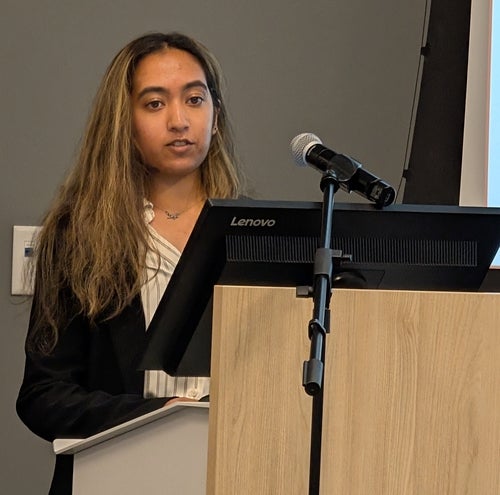
Students also have opportunities to participate in capstone experiences, bringing together what they have learned during their work terms and presenting their work to senior leaders. These experiences give students an opportunity to strengthen their communication and presentation skills alongside their technical and analytical abilities.
Student development at FSRA is about more than preparing the next generation of employees. The goal is to give students meaningful experiences, coaching and opportunities to build skills and confidence that can support them wherever their careers take them. That can mean returning to FSRA, moving into a different role or taking their experience somewhere new.
Rodrigues sees the relationship as a mutual investment.
“I helped them lay the bricks of their project’s foundation to some extent, and they helped me lay mine because I was able to actually accelerate and grow from that,” she says.
“And I think if you asked me two co-op terms ago, I didn't think I'd be able to get my next co-op as a data scientist, especially not in California. So, I think we both helped each other in many ways.”

Her next opportunity is one example of what FSRA hopes students take away from their co-op experience: not just a line on a résumé, but the confidence, skills and experience to take their next step.
For FSRA, investing in co-op students means giving them the opportunity to contribute today while helping them build the foundation for wherever their careers take them.